




Three lit brick homes on a tree-lined residential street photographed at dusk.

Heat Pump Repair in West Plains, MO

Tell us about the job

Takes about a minute. No obligation.

RepairHeat PumpHowell County, MO
Step 1 of 2

What ZIP code is the job in?

Howell County saw 183 severe weather events between 2015 and 2024. Damaging wind caused 100 of those, hail another 66, and five tornadoes touched down in that span. A heat pump's outdoor unit sits right in the path of all of it, exposed to wind-driven debris and hail while the indoor half of the system stays protected inside. A dented cabinet or a bent fin doesn't always stop the unit from running, but it can mean a coil that's losing efficiency or a fan that's slowly working itself loose. If a storm has come through and your heat pump still kicks on, that's not the same as it being fine.

7 months
October through April, your system heats
4 months
June through September, it cools
26°F
the average winter night it heats against
87°F
the average summer afternoon it cools against
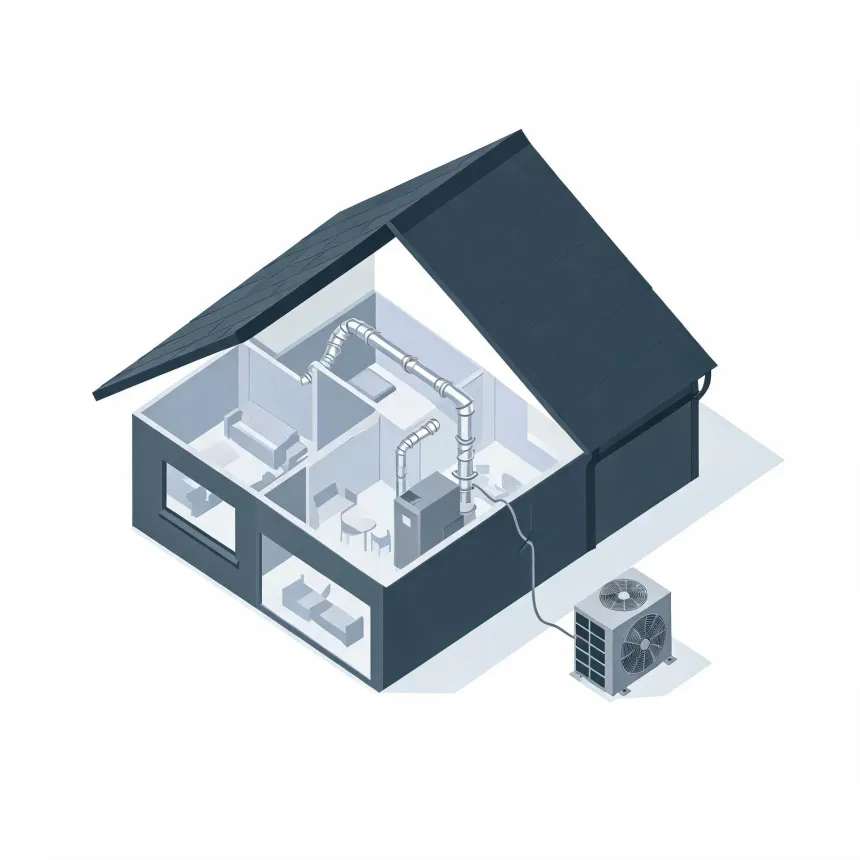
Isometric illustration of a cutaway house showing interior rooms with furniture, a furnace and ductwork, connected by a line to an outdoor condenser unit on the ground outside.
Your system heats October through April and cools June through September.

NOAA nClimDiv, 1991–2020 normals

Heat starts running in October here.

A weak part that made it through summer usually gives out in the first cold snap.

Half the homes here were built by 1982, so the system itself is often not the problem

Half the homes here were built by 1982
100 damaging wind events from 2015 to 2024
66 hail events from 2015 to 2024

If your house was built in 1982 or later, that doesn't tell you how old the heat pump itself is. Units get replaced, upgraded, swapped out after a storm. What it does tell you is that the house wasn't built around an old, outdated system, so if yours is original to the house, it's likely a newer one. A newer heat pump with a bad capacitor or a stuck reversing valve is worth fixing. That holds whether the house is a standard build or one of the mobile homes that make up a good share of the county, since both see the same wear from wind and heat. Check your paperwork or ask the contractor who comes out when the unit was installed. That number matters more than the year on the house.

Had a storm come through? Get the unit checked before you need it

If your heat pump has been through a storm, have it looked at even if it still kicks on. A coil that took hail or a fan that took debris can keep running while it loses ground.

Find a contractor
A dark gray heat pump unit mounted on a concrete pad next to a house with gray siding and a stone veneer wall.

A system that never gets the season off

A heat pump runs in both directions, so it wears in both directions. In summer it's moving heat out of the house. In winter it's pulling heat out of the cold outside air and putting it inside, and that's harder work on the system than most people expect. The reversing valve is what switches it between those two jobs, and that part only earns its keep because it's always being asked to do something. A heat pump that's always on duty gives you more chances to notice trouble early: short cycling, a unit that runs long without reaching the set temperature, ice building up on the outdoor coil and not clearing in the defrost cycle. Any of those is worth a call before the part it's stressing gives out completely.

Running on a bad part wears the next part too

A heat pump pulls strain somewhere else when one part is already failing. A weak capacitor makes the compressor draw harder to start. A low charge makes the compressor run hotter than it should. The system doesn't shut down just because something's off, so it keeps leaning on parts that were never meant to cover for another one.
Ice and moisture don't wait for a service call

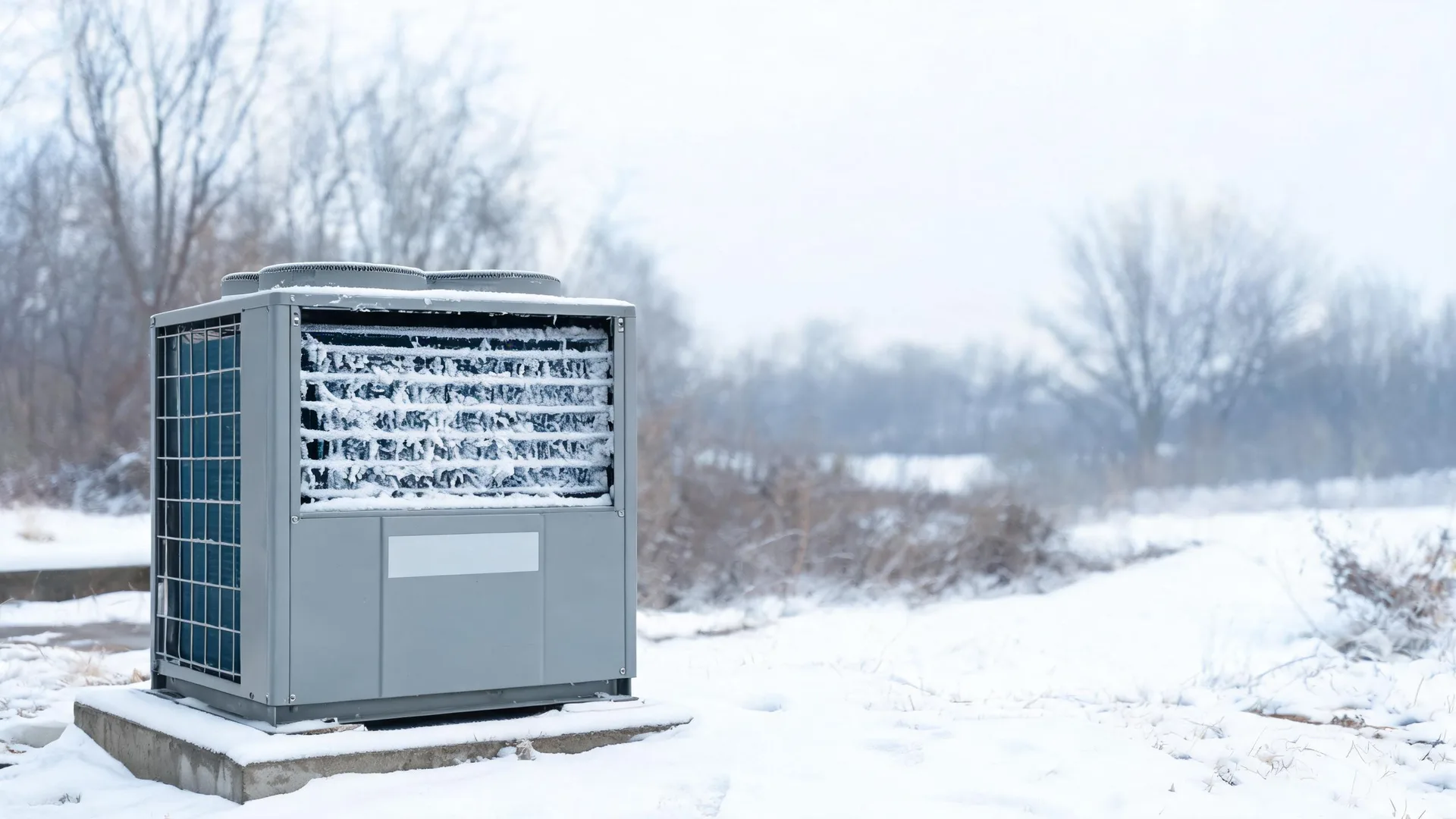
A coil that starts icing because of a refrigerant leak or a failing defrost control gets worse every hour it keeps running. More ice means less airflow, less airflow means the compressor works harder, and that cycle doesn't reverse on its own. Shutting the unit off and calling for repair stops that chain before the compressor itself takes the damage.

Most heat pump failures trace back to a handful of parts. The capacitor gives the compressor and fan motor the jolt they need to start, and it weakens over time until one day it can't. The contactor is the switch that sends power to the outdoor unit, and its contacts pit and burn with every cycle until they stop making good contact. The reversing valve, the part that switches the system between heating and cooling, can stick in one position, especially if it doesn't get exercised. Refrigerant leaks show up at fittings and coils and starve the system of what it needs to move heat at all. None of these announce themselves ahead of time. The unit runs fine until the day it doesn't.

At some point every heat pump owner asks whether a repair is worth it or whether the money's better spent on a new unit. Start with what actually failed. A capacitor, a contactor, a blower motor, these are routine wear parts, and replacing one doesn't say anything bad about the system around it. The compressor is different. It's the most expensive part in the unit, and if it's cracked a valve or seized up, a contractor will tell you plainly whether it's worth opening that door at all. Age matters less than how the unit has been running up to the point it failed. A heat pump that's kept its charge, cycled normally, and never needed more than a part here and there is a different case than one that's had three service calls this year for three different problems. Frequency is the real signal, more than any single repair on its own.