








Heat pump not cooling in Columbia, MO

RepairHeat PumpBoone County, MO
Step 1 of 2

What ZIP code is the job in?

Why is my heat pump not cooling my house?

It's hot and sticky outside and the air coming out of your vents isn't cold, or barely so. Before you call anyone, you want to know whether this is something small or whether the whole system is in trouble. A heat pump that won't cool usually points to one of a handful of causes, and some of them are worth checking yourself first.

Most often it's low refrigerant, a dirty outdoor coil, or the system stuck in the wrong mode

A heat pump cools by moving heat out of your house, and that depends on refrigerant, airflow, and the reversing valve all working together. If refrigerant has leaked out, the system can't absorb enough heat to cool the air. If the outdoor unit's coil is caked with grass clippings or dust, it can't release that heat outside, so the whole cycle slows down. Sometimes the fix is simpler: the thermostat is set to heat instead of cool, or the reversing valve that switches the system between the two hasn't shifted the way it should. With Boone County summers running long and muggy, a heat pump working harder than it should will fall behind fast, and a small problem now usually means a bigger repair bill if it sits through July and August.

A smiling man in a blue denim shirt over a white tee sits at a light stone kitchen counter with a grey mug and a bowl of oranges and bananas, with pendant lights and shelving behind him.
A smiling bearded man in a grey long-sleeved shirt sits at a kitchen counter with a dark mug, with a dining table, pendant light and glass doors onto greenery behind him.
A bearded man in a dark green knit sweater smiles and looks off to the side while standing at a kitchen counter with a white mug of coffee, with open shelving, a potted tree, and a dining table near large windows behind him.
A man with dark curly hair in a dark green sweater stands smiling and looking to the side in a kitchen with white cabinets, a potted plant, a stone countertop with a ceramic mug, and a dining area with framed art in the background.
A gray outdoor condenser unit on a raised pad beside a house with horizontal lap siding, with refrigerant lines, conduit and an electrical disconnect box on the wall, and shrubs on a mulch bed to the left.
Coils and fins are clean, airflow is steady, and the unit cycles on and off the way it's supposed to.
An outdoor air conditioner condenser unit on a gray composite pad beside a house with horizontal lap siding, with refrigerant lines and a conduit running to a wall-mounted disconnect box, and a shrub at left.
A thick coat of dirt and grass clippings on the fins is choking off airflow and the coil behind it can't shed heat.

A heat pump that won't cool in July or August in Columbia isn't a problem you can put off. Humidity here sits heavy for most of the summer, and once your system stops pulling heat out of the house, indoor temperatures climb fast and stay there. You'll feel it first in the bedrooms upstairs, usually the last rooms to cool even when the system is working right. Run a dead or struggling heat pump too long and you risk the compressor, which is the most expensive part to replace. If ice has built up on the outdoor unit, running the system harder won't melt it, it will only make the coil work less. A thermostat that is set but not followed, with the house still climbing past 80, points to something the system can't fix on its own. The longer it runs this way, the more strain goes onto parts that were fine a week ago.

Why does my heat pump have so much work to do in Boone County?

  • Winter nights average 24°F

    Your system runs cooling from May through September, call it five months straight of asking the same unit to keep up.

  • Heat runs October through April

    Winter isn't a break either. Heat runs October through April here, about seven months, so this equipment works nearly year round.

  • Cooling runs May through September

    Overnight lows average 24°F in December, January and February, which is why the same unit that cools your house also has to work hard against real cold.

NOAA nClimDiv 1991-2020

A heat pump cools by moving heat from inside your house to the refrigerant, then releasing it outside through the outdoor coil. If that coil can't shed heat, the whole cycle backs up.

That's why a dirty outdoor coil or a low refrigerant charge stops cold air at the vent even though the indoor blower keeps running like nothing's wrong.

A bearded man in a navy T-shirt sits on a light-colored couch indoors, smiling while looking down at a laptop screen in the foreground, with a framed picture and a potted plant blurred behind him.
A bearded man in a plaid flannel shirt stands indoors looking out a window at snow-covered conifers, with a ceramic mug on the wooden sill and wooden cabinets behind him.
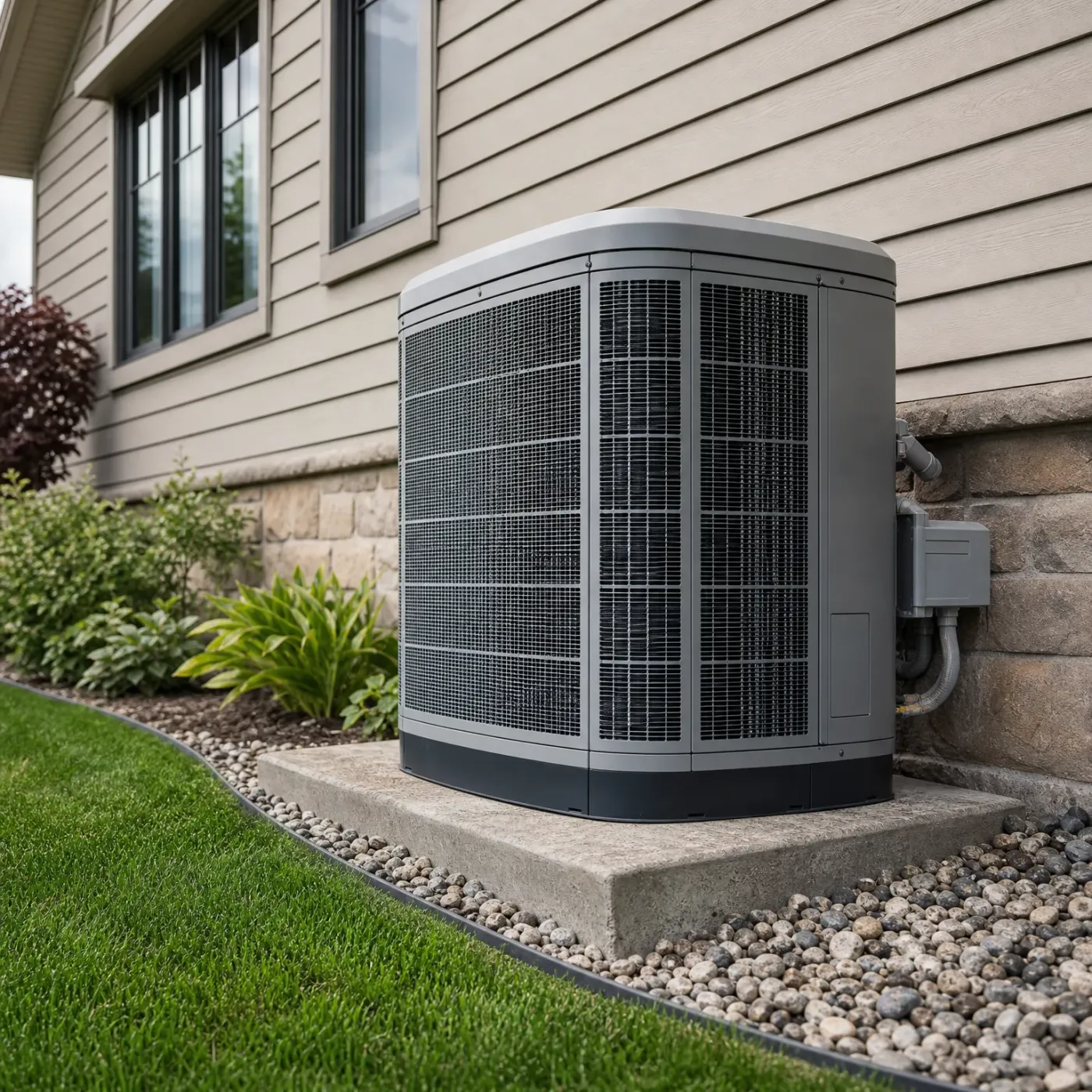
A gray outdoor condenser unit on a concrete pad beside a house with horizontal lap siding and a stone foundation, with a lawn, shrubs and decorative gravel nearby.

Hand off the search today

A licensed pro who works in Boone County gets your request.

Send the request today and let a heat pump pro reach out to you.

I'm done searching

You're not committing to anything by asking.

What are you noticing right now in your own house

Walk through your house and check a few rooms. The air from the vents feels warm or only a little cool, not the cold blast you expect. The thermostat might say 74 but the house feels more like 80. You may hear the outdoor unit running nonstop, or not running at all when it should be. Ice can show up on the refrigerant lines or the outdoor coil even though it's hot outside. Some homeowners notice a burning or musty smell near the indoor unit, or water pooling near it. If this drags on through a Columbia summer, the air inside stays damp as well as warm, and that dampness is its own problem for the house and for anyone in it who doesn't handle heat well.

A gray outdoor heat pump unit with a large fan grille sits on a concrete pad beside a house with horizontal lap siding, next to a green shrub, mulch bed, and lawn.

Running the way it should

This is a heat pump keeping up with the heat. It sits on its pad, lines run clean into the wall, and nothing is caked on the grille. Set it to cool and the air coming out of your vents actually feels cold within a few minutes.


A weathered outdoor condenser unit on a concrete pad beside a house with white horizontal vinyl siding, with refrigerant lines and conduit running to a wall-mounted electrical box.

Grime and age working against it

Years of weather have left this unit's grille coated and dull. Grime like that holds heat against the coil instead of letting it go, so the refrigerant inside stays hot longer than it should. An older unit in this shape is more likely to be the reason your house won't cool down.

Call a Pro or Check It Yourself

Call for repair

  • The outdoor unit is running but the air from your vents stays warm or barely cool after more than twenty minutes.
  • You can see ice building on the outdoor coil or the refrigerant lines even though it's hot outside.
  • The outdoor fan isn't spinning at all, or it spins but the compressor stays silent.
  • Your thermostat is set to cool but the system keeps switching between heat and cool, or won't hold a setting.
  • You hear a hard click or hum from the outdoor unit followed by nothing, over and over.
  • The breaker for the outdoor unit trips again after you reset it.

Check yourself first

  • The outdoor coil is visibly packed with grass clippings, cottonwood fluff, or dirt and hasn't been rinsed this season.
  • Your air filter hasn't been changed in a few months and looks gray or clogged when you hold it to the light.
  • Return and supply vents in the house are closed or blocked by furniture, rugs, or curtains.
  • The thermostat batteries are low or the display is dim, and a fresh set might be all it needs.
  • Tree branches or shrubs have grown in against the outdoor unit and are blocking airflow around it.
  • The outdoor unit has shifted off level on its pad after ground movement from this spring's rain.
An outdoor air conditioning condenser unit on a concrete pad beside a house with light horizontal siding and a concrete block foundation, with bare soil and small green plants around it.
Before you get your heat pump repair
A gray outdoor condenser unit on a concrete pad beside a white horizontal-siding house, with refrigerant lines and conduit running to a wall-mounted disconnect box, bare soil in front and a green shrub at left.
After you get your heat pump repair

Where This Leaves You

  • A heat pump blowing warm or weak air in Columbia almost always traces back to a dirty coil, a low charge, or a fan that won't run.
  • None of those are things to wait out through another humid week; the system won't fix itself while it's stuck in that state.
  • A contractor who works on heat pumps around Boone County every summer has likely already seen whatever is causing yours to struggle.
  • Your request goes to one licensed local contractor, not a batch of companies competing for the job.
  • Once you know which of these problems you're dealing with, the fix itself is usually straightforward for someone who does this work regularly.
  • Your house doesn't have to sit at 80 degrees while you figure out who to call.

A heat pump that won't cool your house in Columbia comes down to one of a few things. The coil outside is dirty, the charge is low, or the fan isn't turning. Sometimes it's ice on the lines even in July heat. Whatever it is, it's mechanical, and mechanical problems get fixed by someone who knows what to look for, not by waiting another day for the house to cool on its own.

That's the part worth remembering as you decide what to do next. This isn't a mystery. It's a specific failure with a specific cause, and a contractor working on heat pumps across Boone County through another humid summer has run into it before, probably more than once this season alone. They know what a choked coil looks like versus what a failing fan sounds like, and they know which one means a quick fix and which one means a bigger repair.

When you send a request through this page, it goes to one licensed contractor local to this area, not a pile of companies all calling you back at once. You get someone who already knows the equipment common around here and the summers it has to keep up with. You won't be sorting through competing bids while your house sits at 80 degrees. You'll be talking to the person who's going to look at your system and tell you what's actually wrong with it. That's the straightest path from where you are now, standing in a warm house wondering what's broken, to having it running right again.

A dark wood cabinet with a paneled door and a ceramic pot of green foliage on top stands in a beige-walled room with white baseboard, a window at left, hardwood floor, and a patterned area rug.
A dark wood glass-front cabinet holding folded towels, woven baskets and a ceramic vase stands in a bathroom corner beside a window, with a potted fern and stacked towels on top and a freestanding tub partly visible at left.
A woven basket holding a green cushion and a cream fringed knit throw sits on a wood floor in a room corner beside a window and a dark wooden cabinet.
Corner of a room with a dark wood cabinet topped by a round vase, a linen curtain at a window, white baseboard, oak plank flooring with sunlight patches, and a woven jute rug in the foreground.
A dark wood sideboard against a pale wall holds a shallow stone bowl and a round ceramic vase with leafy branches, with sunlight from a curtained window falling across the wall, wood floor and woven rug.

Stop chasing a heat pump pro

Your request stays with one local pro.

Hand it over

It costs nothing to send, and you don't have to hire anyone.





