
Profile view of a bearded man wearing a dark baseball cap and a dark gray T-shirt against a plain off-white background.

Heat pump blowing cold air in Springfield, MO

RepairHeat PumpGreene County, MO
Step 1 of 2

What ZIP code is the job in?

Why is my heat pump blowing cold air?

Cold air coming out of the vents feels like something is wrong, especially with a Greene County winter outside. Before you call anyone, it helps to know that heat pumps don't work like a furnace, and air that feels cool to your hand isn't always a sign of a broken system. Sometimes it is, and the difference matters for what happens next.

It depends on whether the air is cool or actually cold

A heat pump moves heat instead of burning fuel for it, so the air coming out of the vents is often only body temperature, around 95 degrees. Next to your skin at 98.6, that can feel cool even when the system is working right. If the air is genuinely cold, not just lukewarm, something is off: the system could be stuck in the wrong mode, low on refrigerant, or running the backup heat strip without the compressor. With winters as cold as they get around Springfield, a heat pump that's actually blowing cold air won't keep up with the house, and it's worth having a contractor check it before a hard freeze hits.

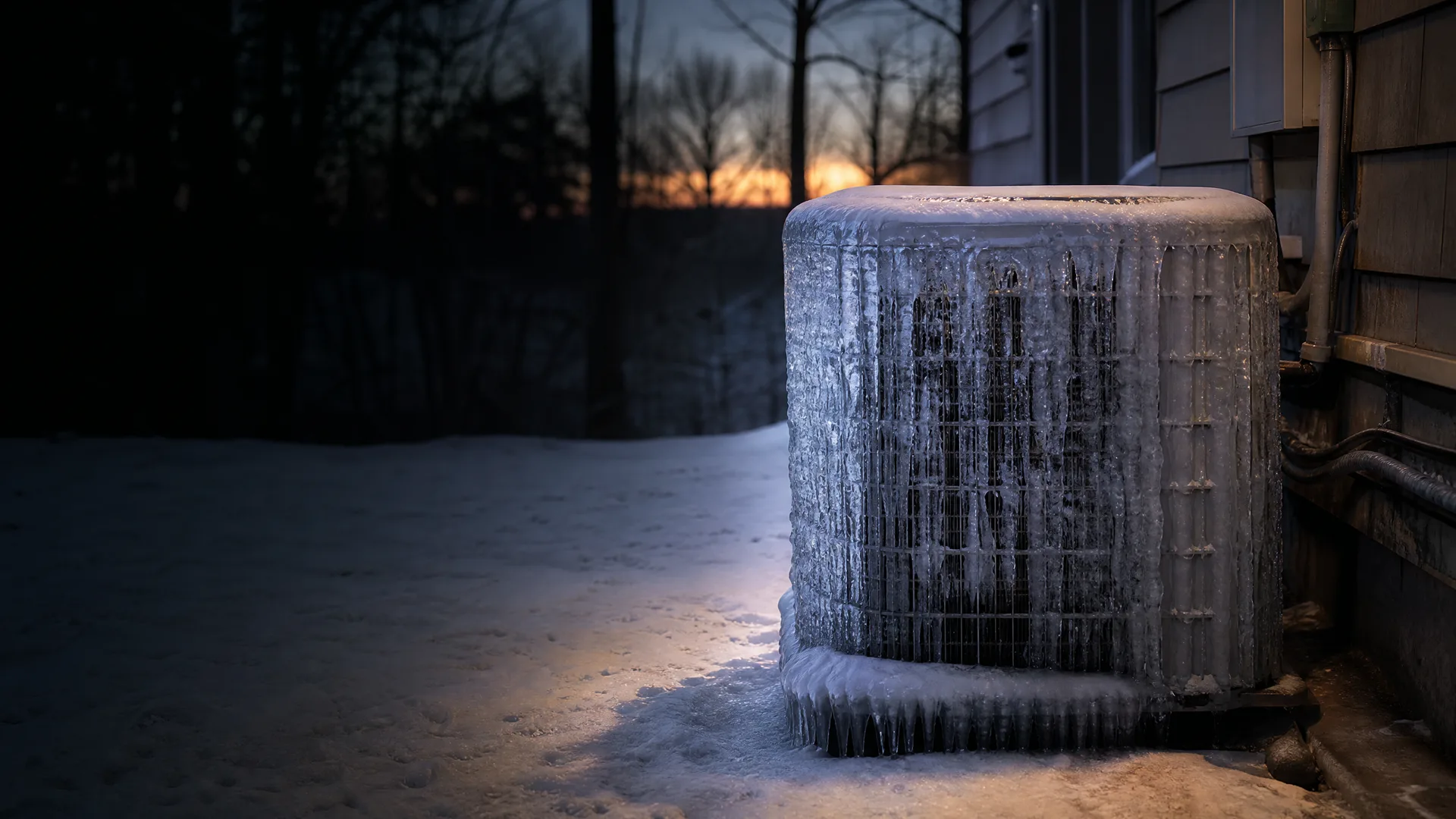
An outdoor condenser unit encased in thick ice stands on snow beside a house with horizontal siding and exterior pipes, with bare trees and a sunset glow in the background.

You go out for the paper a little after seven and see it before you feel the cold: the outdoor unit crusted in ice, thick over the coils, a January dawn with the yard still dark blue. Inside, the vents are running cool enough that you'd pulled a blanket off the couch back to your shoulders. You crouch down by the unit and touch the ice. It doesn't flake off. Somewhere behind you the house is still quiet, nobody else up yet, and the fan inside keeps pushing out air that doesn't feel like heat at all.

Normal Cycle or Real Problem

Normal Operation

  • A heat pump moves heat from outside air into your house, so the air at the vent runs cooler than a gas furnace's, usually in the body-temperature range.
  • During a defrost cycle the outdoor unit reverses briefly to melt ice off the coil, and the indoor vents will blow noticeably cold air for a few minutes.
  • You'll see steam or light fog rising off the outdoor unit right after a defrost cycle ends, which is normal and means the system is clearing itself.
  • If the thermostat is set to Auto and the air still feels warmer than your skin, the system is doing its job even if it's not furnace-hot.
  • The outdoor unit cycling on and off through a Greene County cold snap is expected, since it works harder as the temperature outside drops.

Needs a Repair Call

  • Air coming from the vents feels fully cold, not just cool, and stays that way for more than a few minutes at a stretch.
  • The outdoor unit is coated in thick ice that doesn't clear on its own, rather than the light frost that melts off during a normal defrost.
  • The system is stuck in defrost mode, running the reversing valve but never switching back to heat the house.
  • Auxiliary or emergency heat kicks on and stays on, which usually means the heat pump itself has stopped contributing heat.
  • A tripped breaker, a frozen outdoor fan, or refrigerant leaking out are all things that will show up as cold air and need a contractor to find and fix.
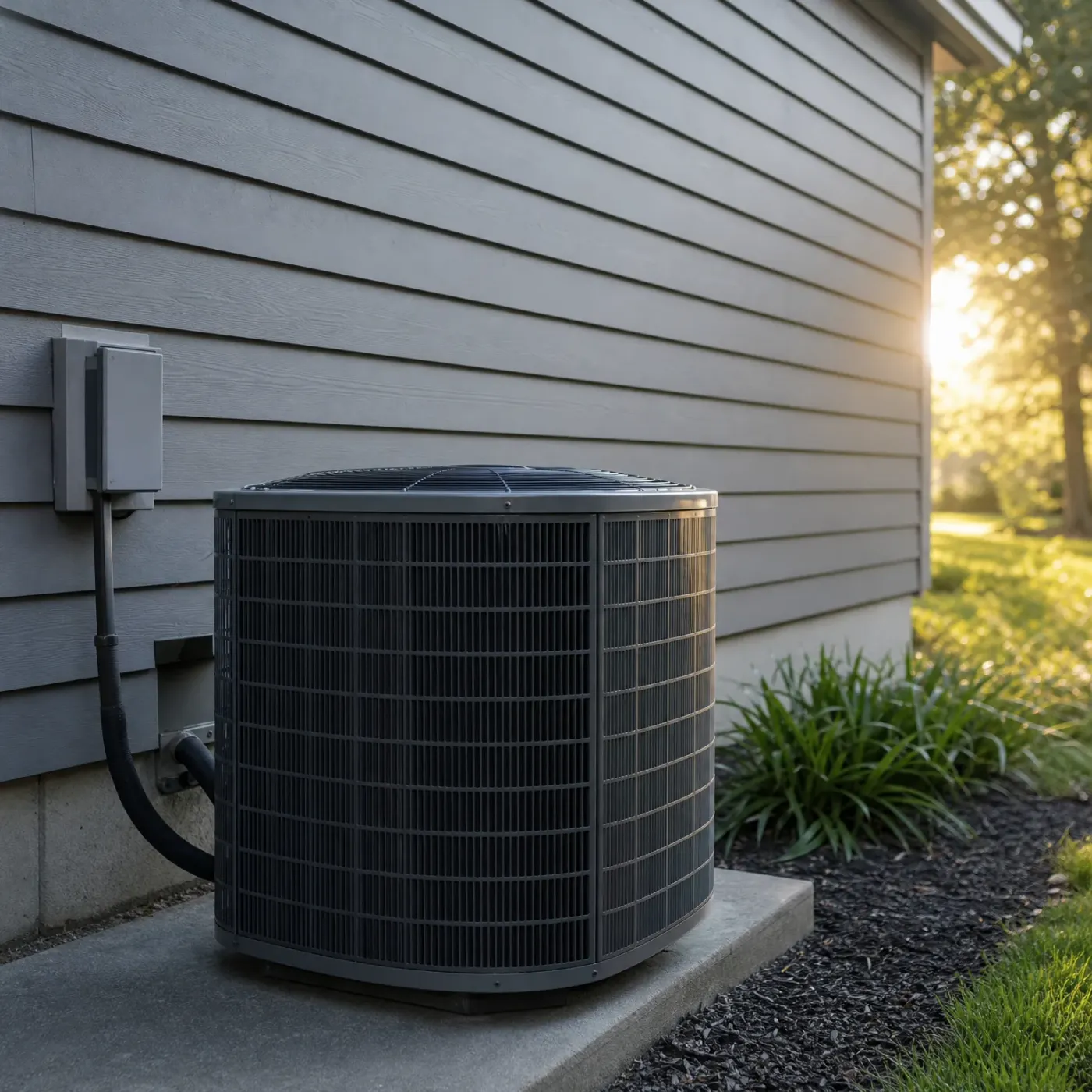
A gray outdoor condenser unit on a concrete pad beside a house with gray lap siding, connected by conduit and refrigerant lines to a wall-mounted disconnect box, with a green shrub and mulch bed at left.

Running the Way It Should

This is a heat pump doing its job. The disconnect box and conduit on the wall carry power to the unit, and the pad keeps it level and off the wet ground. No ice on the coils, no frost on the lines. When it looks like this, vent air that feels cool to the hand is still doing its work.


An outdoor air conditioning or heat pump condenser unit on a concrete pad beside a house with horizontal vinyl siding, a gray electrical disconnect box and conduit on the wall, and a concrete walkway in the foreground.

Signs of a Problem Outside

Dirt built up on the coil like this blocks the airflow a heat pump needs to pull heat from outside air. An older unit that looks worn can still run, but grime and age make it work harder for less heat. If the outdoor unit looks like this, that's often where cold air at the vents starts.

An outdoor air conditioning condenser unit on a concrete pad beside a house with horizontal siding and a concrete foundation, with refrigerant lines running to a wall-mounted disconnect box and shrubs at left.
Before you get your heat pump repair
A gray outdoor air conditioner or heat pump unit on a concrete pad beside a house with horizontal lap siding, with conduit and refrigerant lines running up the wall and green shrubs and mulch at left.
After you get your heat pump repair
A gray outdoor condenser unit of an air conditioner or heat pump sits on a concrete pad beside a house with horizontal lap siding, with a wall-mounted disconnect box and conduit above it, mulched beds, shrubs and grass nearby.

Matched to your heat pump job

Once you send the form, finding a pro is off your list.

Get matched with a pro who fixes heat pumps in Greene County.

Find a heat pump pro

No fee to send it, and nothing to sign.

Why does cold air from the vents matter more here than somewhere mild?

  • Winter nights average 25°F

    Overnight lows average 25°F here in December, January and February, so a heat pump stuck on cold air can't keep up.

  • Heat runs October through April

    Heat runs October through April here. A heat pump that's misbehaving isn't a short-term annoyance, it's most of the year.

  • Cooling runs June through September

    Cooling only runs June through September here, so a heat pump problem in winter is working against colder air, longer, with less margin for error.

NOAA nClimDiv 1991-2020

What the Cold Air Means

  • Cold air at the vents can mean a bad reversing valve, a low refrigerant charge, or just a normal defrost cycle running longer than usual.
  • A heat pump that never warms past room temperature on a cold Greene County morning needs a contractor's look, not a wait and see.
  • Ice that builds up on the outdoor coil and doesn't melt off within an hour or so points to a defrost control problem, not weather.
  • Thermostats set to emergency heat will run the backup heat strip instead of the heat pump, which explains warm air with the compressor doing nothing.
  • Once you're matched with a contractor, the work of finding someone who can look at the unit is off your plate.
  • A system blowing cold air through a Missouri winter is a repair, not something to leave until spring.

Cold air at the vents has a handful of explanations, and most of them come down to the reversing valve, the refrigerant charge, or the defrost control. A short burst of cool air during a defrost cycle is normal. Air that stays cold while the outdoor unit sits iced over, or a thermostat reading that never climbs on a cold morning, is not. The difference matters because Greene County winters don't give a system room to coast. Mornings in the mid 20s mean a heat pump that's only half working falls behind fast, and the house feels it within hours, not days. Check the thermostat setting first. If it's switched to emergency heat, the backup strip is carrying the load while the compressor does nothing, which looks like a different problem than it is. If the setting is right and the air is still cold, or the outdoor coil stays iced past an hour or so, that's a contractor's job to sort out, not something to watch and wait on. A unit blowing cold air in July is an inconvenience. The same unit blowing cold air in January is the only thing standing between the house and the cold outside. Once you send the request, the search for someone qualified to look at it is no longer something you have to manage yourself.

An outdoor air conditioner condenser unit on a concrete pad beside a gray horizontal-lap-sided house, with an electrical disconnect box and refrigerant line on the wall, grass, shrubs and a tree with low sun behind.

A heat pump pro near you

Get a local pro

After you send the request, you're done searching.

Sending the form costs nothing.