





Heat pump frozen over in Springfield, MO

Answer a few questions

A heat pump iced over in the middle of winter is not something to troubleshoot through a search bar. You need someone who knows these systems and can look at it in person. The usual way to get there is slow: searching around, calling a few companies, explaining the same problem each time, then sitting with quotes you have no way to compare. You skip that here. This connects you with one licensed contractor working in the Springfield area, someone who services heat pumps all winter and knows what tends to cause this. No list of companies, no round of calls to make, no repeating yourself. Just the one contractor who fits your situation, reaching out to you instead of the other way around.

Why is my heat pump covered in ice?

You walked outside and found the outdoor unit coated in ice, maybe with the fan barely visible underneath. It can look like a breakdown, but a heat pump growing frost in cold weather is normal to a point. What you need to know is where normal ends and where it means the system needs a look.

A little frost is normal. A solid coating of ice is not.

Heat pumps pull heat from the outside air, and in Greene County winters that air is cold and often damp. The outdoor coil runs colder than the air around it, so moisture in the air lands on it as frost. The system is built for this. It runs a defrost cycle every so often, the fan stops, the unit briefly reverses, and the frost melts off. If you see a light coating that clears within an hour or two, that is the system doing its job. If the coil is thick with ice, or ice has built up on the ground around the unit, something is keeping defrost from finishing: a stuck reversing valve, a bad sensor, low refrigerant, or a fan that has quit. At that point it needs a technician, not more time.

A gray-haired bearded man in a dark knit sweater sits on a light gray sofa in a sunlit living room, looking to his left, with a framed artwork, a potted palm, and a curtained glass door behind him.
A middle-aged man in a dark green sweater sits on a light grey sofa looking toward a sunlit window, with a wooden shelving unit, lamp and potted plants in the background.
A man in a dark green sweater sits on a light grey sofa in a sunlit living room, looking to his left, with a shelving unit, houseplants, framed art and a large window behind him.
A gray-haired bearded man in a dark green sweater sits on a light gray sofa in a sunlit living room with a potted plant, framed picture, and dark shelving in the background.

Why does ice keep coming back on a Greene County heat pump?

  • Winter nights average 25°F

    Overnight lows here average 25°F through December, January and February, cold enough that frost on the outdoor unit builds faster than it can shed.

  • Heat runs October through April

    That unit is carrying the house about seven months a year, October through April, so it spends most of the cold months working hard enough to frost up.

  • Cooling runs June through September

    Cooling only runs June through September here, so the same unit flips into heating mode for the other eight months, and that's when ice becomes a problem.

NOAA nClimDiv 1991-2020

A heat pump that stays frozen stops moving heat into your house. The air coming out of your vents turns cool, then cold, and the house starts losing ground slowly, a degree or two at a time, through a January night. You might hear the outdoor fan straining against the ice, or notice it's not turning at all. Left alone, that ice packs in around the coil and the fan blades, and the unit can draw more power trying to run through it. Some systems switch to backup heat strips when the pump can't keep up, and those cost more to run than the heat pump itself. If yours doesn't have that backup, the house just keeps cooling until someone clears the ice and finds out why it formed in the first place. A coil that stays iced over for days, not hours, usually means something past the weather is wrong, and running it that way can shorten the life of the compressor.

A woman with shoulder-length dark brown hair in a cream knit cardigan sits in an upholstered armchair beside a window, looking off to the side, with a white bookshelf and potted plant blurred behind her.
A woman with dark hair in a bun sits on a sofa with a child resting his head on her shoulder, both wrapped in a cream knit blanket, with a lit lamp and bookshelf in the dim background.

No calling every shop in Greene County

A unit that won't shed its ice on its own needs someone to look at what's keeping it from defrosting, whether that's a failed defrost board, a stuck reversing valve, or a fan motor that's given out. That's not something to sort out by calling around Greene County in the middle of a cold snap, waiting on callbacks, describing the same frozen coil to three different dispatchers, then trying to weigh three quotes against each other while the house keeps losing heat. One request here goes to one licensed local contractor, someone who works on heat pumps through these winters every year and has seen what usually causes a unit to ice up and stay that way. You get a single point of contact instead of a handful of strangers competing for the job. With the temperature dropping in your house tonight, that's the part worth handing off now, so someone can get eyes on the unit instead of you running down leads on your own.

Ice that melts off on its own

A normal defrost cycle runs for a few minutes every so often. The unit reverses itself, melts the frost it picked up, and switches back to heating. You might see steam coming off the coil or a little puddle underneath after. The fan stops during this, then starts back up once the cycle ends. If you check on it an hour later and the coil is clear and the fan is turning, it did its job. That's the system working through a cold Greene County night, not failing at it.


Ice that won't go away

If the coil is still covered hours later, or the ice has thickened into a solid sheet over the fan, the unit isn't finishing its defrost cycle or isn't starting one at all. That points to something specific not working right, a defrost board that isn't sending the signal, a reversing valve stuck in the wrong position, or a fan motor that's stopped turning. None of those clear themselves. The longer it sits frozen, the less heat it's moving into your house, and running it in that state can put more strain on parts that are already failing.

An outdoor air conditioner condenser unit with rust spots on its top grille sits on a concrete pad beside a house with light horizontal siding, with conduit lines and an electrical box on the wall and a mulch bed to the right.
Before you get your heat pump repair
A gray outdoor condenser unit on a concrete pad beside a light-colored lap-sided house, with a wall-mounted disconnect box, refrigerant lines, mulch bed and shrubs, and a concrete walkway in the foreground.
After you get your heat pump repair
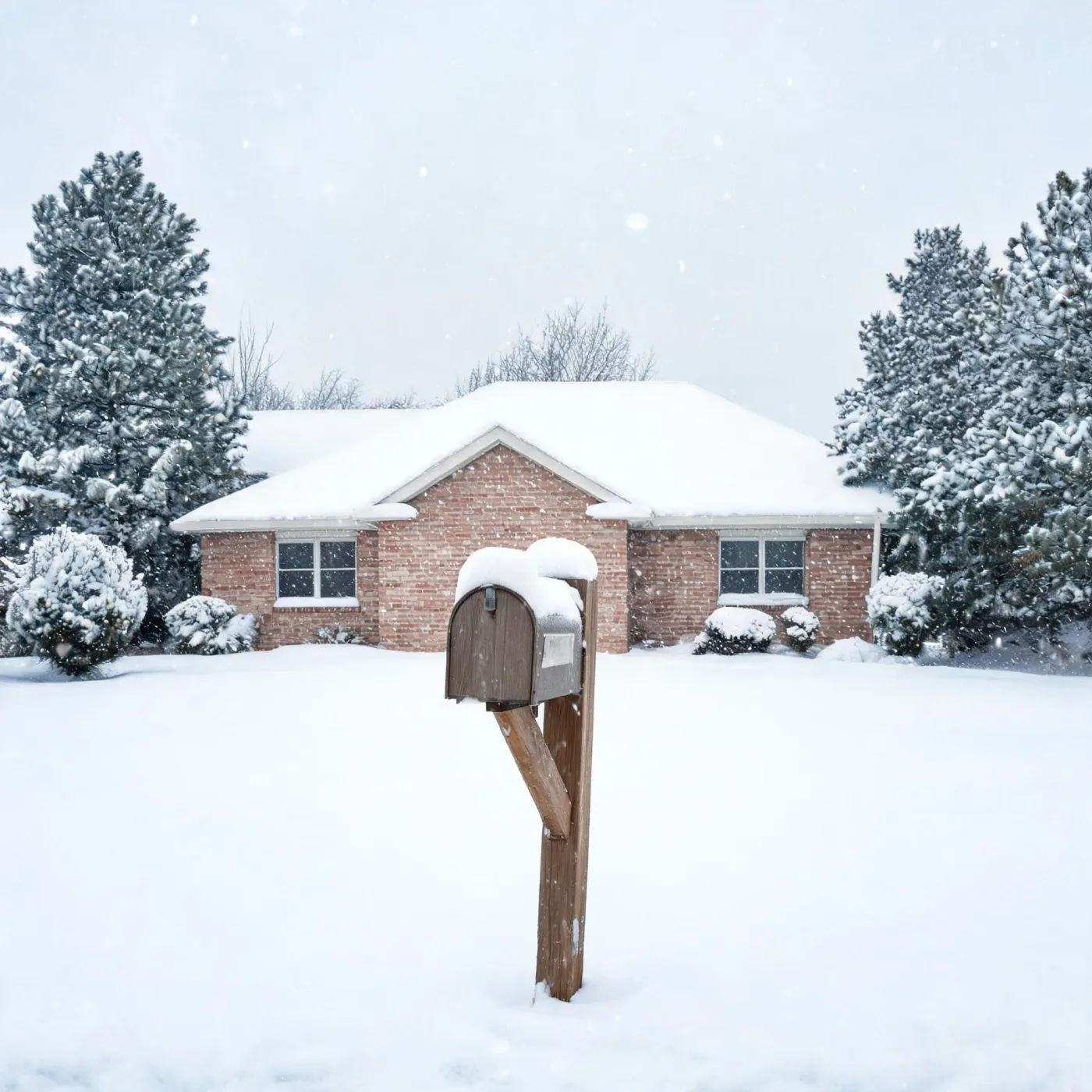
A snow-covered wooden mailbox post stands in a deep snowy front yard before a single-story brick house with a snow-laden roof, flanked by snow-covered evergreen trees during falling snow.

A heat pump works harder every degree the air drops. With overnight lows averaging 25°F through December, January and February here, the unit is pulling heat out of air that's already cold most nights of the winter. That's a long stretch for the coil to pick up frost faster than a normal defrost cycle clears it. On a night like that, you might notice the outdoor fan running slower than usual, or the unit staying iced over well past sunrise instead of shedding it the way it would on a milder night.

NOAA nClimDiv 1991-2020

A closed silver laptop and a white cup of coffee on a saucer sit on a wooden table in front of a wooden chair, a plain beige wall, a potted leafy plant and a window with greenery outside.

Ice that doesn't melt on its own needs a repair, not another day of watching it

A heat pump frosting over on a cold Greene County night is normal. One that stays coated in ice, hour after hour, is not. That's a defrost cycle that isn't finishing, and the house keeps losing heat until someone fixes what's stuck.

Finding that someone is usually the slow part: searching around, calling a few companies, explaining the same problem each time, then sorting through quotes that don't tell you much. Request a repair here and that work is done. You're matched with one licensed contractor local to the Springfield area, someone who works on these units all winter and knows what tends to fail when the ice won't quit. No flood of calls to field, no repeat explanations. Just the one call, from someone who already knows what you're dealing with.

Interior corner with sheer white curtains at a window, a brown upholstered sofa in the foreground, and a wooden multi-drawer cabinet holding a round ceramic vase with leafy branches.
An outdoor air conditioning or heat pump condenser unit sits on a concrete pad surrounded by gravel beside a dark horizontal-sided house, with grass and shrubs nearby.

Skip the calls to every shop

A licensed pro who works in Greene County gets your request.

RepairHeat PumpGreene County, MO
Step 1 of 2

What ZIP code is the job in?