






A tall trimmed hedge runs along a mown lawn in front of a row of dark-sided townhouses with brown shingled roofs, framed by leafy tree branches under an overcast sky.

Heat Pump Repair in Washington, MO

Tell us about the job

Takes about a minute. No obligation.

RepairHeat PumpFranklin County, MO
Step 1 of 2

What ZIP code is the job in?

October is when a heat pump in Washington earns its keep after sitting idle most of the summer, and that first cold snap is when a weak part finally gets tested. A capacitor or contactor that was already marginal in September often won't make it through the switch to heat mode. If your system is blowing cool air or short cycling right when the weather turns, that timing is not a coincidence. The same goes for April, when the unit swaps back to cooling after seven months of heating duty. Either changeover is a reasonable time to have it looked at, even if it seems to be working fine.

7 months
October through April, your system heats
5 months
May through September, it cools
24°F
the average winter night it heats against
87°F
the average summer afternoon it cools against
Isometric grayscale illustration of a cutaway single-story house showing interior rooms, ductwork and an air handler, an exterior condenser unit connected by lines, and dark solar panels on the roof.
Your system heats October through April and cools May through September.

NOAA nClimDiv, 1991–2020 normals

Warm air from the vents in the middle of winter usually means the reversing valve is stuck.

A stuck reversing valve needs a contractor's attention before the heat comes back on its own.

Franklin County weather doesn't wear out a heat pump any faster than normal

129 severe weather events from 2015 to 2024
19% of homes statewide lost power a day or more in 2024
72 damaging wind events from 2015 to 2024
Franklin County weather doesn't wear out a heat pump any faster than normalWinters here average 24°F overnight, ordinary for a heat pump, and the repair is usually the same part whether it fails in Washington or anywhere else.

Half the homes in Franklin County were built in 1984 or later, so a lot of the heat pumps in Washington are running in houses that aren't old themselves. If yours came with the house, there's a good chance it still has real life left in it. A compressor or reversing valve that's a few years into a longer service life is usually worth repairing rather than replacing. The math only changes if the unit is old enough to be near the end on its own terms, separate from how old the house is.

A newer system is worth fixing first

If your heat pump came with the house, repair is worth a call before replacement. Get the actual cause diagnosed and go from there.

Find a contractor
A man in a cap, dark long-sleeve shirt, tan work pants and boots walks up wooden porch steps toward a teal front door, carrying a canvas tool bag with hand tools.
A gray heat pump outdoor unit mounted on a concrete pad next to the stone-accented exterior wall of a house.

The compressor decides more than the age does

A heat pump runs in both directions, all year, so wear shows up on both the heating and cooling side at once. The compressor is the part that matters most. If a contractor tells you the compressor is still good, most other repairs are worth doing, because everything else around it (the reversing valve, the fan motor, the capacitor) can be swapped out on its own without touching the sealed system. A compressor that's failing or already gone is a different question, since replacing one is close enough in cost to a new unit that most homeowners go with the new unit instead. The other thing worth asking is how the system has been running, not just whether it's running now. A heat pump that's been short cycling or iced over for a while has been stressing the compressor the whole time, even before it quit outright. One that broke suddenly after running clean is a better repair candidate than one that's been struggling for months and finally gave out.

What you can check before anyone comes out

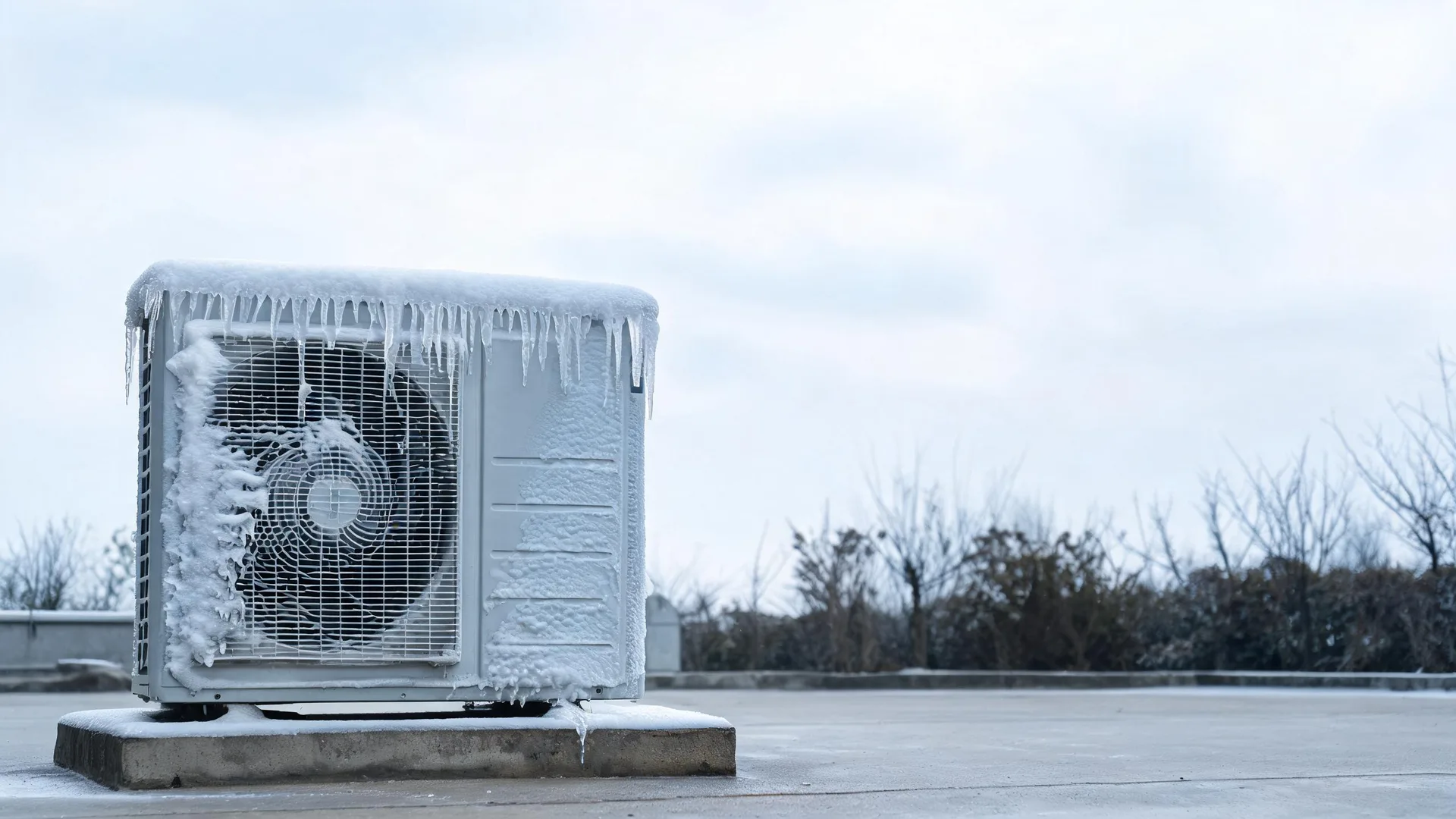
Look at the outdoor unit first. If the coil is caked in ice or buried in leaves and debris, that alone can cause weak heat or a system that won't run right. Check that nothing is blocking airflow around it, no bushes grown in close, no snow piled against the side. Inside, swap the air filter if it's dirty and make sure every supply vent is open and unblocked. Check the thermostat is set to heat, not auto or cool, and that the batteries aren't dying if it uses them. Look at the breaker panel for a tripped breaker before assuming the unit itself has failed.
What to leave alone

Do not open the outdoor cabinet or touch anything inside it. The refrigerant lines, the compressor, and the electrical connections in there need a gauge set and training to work on safely, and opening the sealed system yourself can turn a simple repair into a much bigger one. If you smell something burning, hear grinding or screeching from the unit, or see ice covering the whole outdoor coil, shut the system off at the thermostat and the breaker and leave it off until someone looks at it. Running a unit in that condition usually makes the repair bigger, not smaller.

A heat pump that's struggling will keep trying anyway, and that's the problem. If ice is building on the outdoor coil, the system keeps pulling air across it with less and less surface able to transfer heat, so it runs longer to do less. A compressor working against low refrigerant charge runs hotter than it should every minute it's on, and that heat shortens its life a little more each cycle. Short cycling does similar damage. Every time the unit kicks off and restarts before finishing a normal run, the compressor takes another hit of startup strain, the hardest moment in its whole cycle. None of this fixes itself by waiting. A system making a bad sound or icing over gets worse the longer it stays on, not better, and shutting it off is what keeps a repair a repair instead of turning it into a compressor replacement.

A diagnostic visit starts outside at the unit itself, before anyone touches a gauge. A contractor will check the reversing valve, the capacitor, and the refrigerant charge, since those account for most of the complaints homeowners call in about. They'll run the system in the mode it's failing in rather than going straight to a manual, because a heat pump can sit idle and check out fine, then fail the moment it's asked to switch directions. Electrical readings come next. Voltage at the compressor, amp draw, continuity on the motors, since a part can look fine and still be pulling wrong. If the coil was iced over, that has to clear before any reading means anything, so there's often a wait built into the visit. The point is to find which part is actually failing, not to guess from the symptom, since warm air or weak heat can trace back to more than one cause.