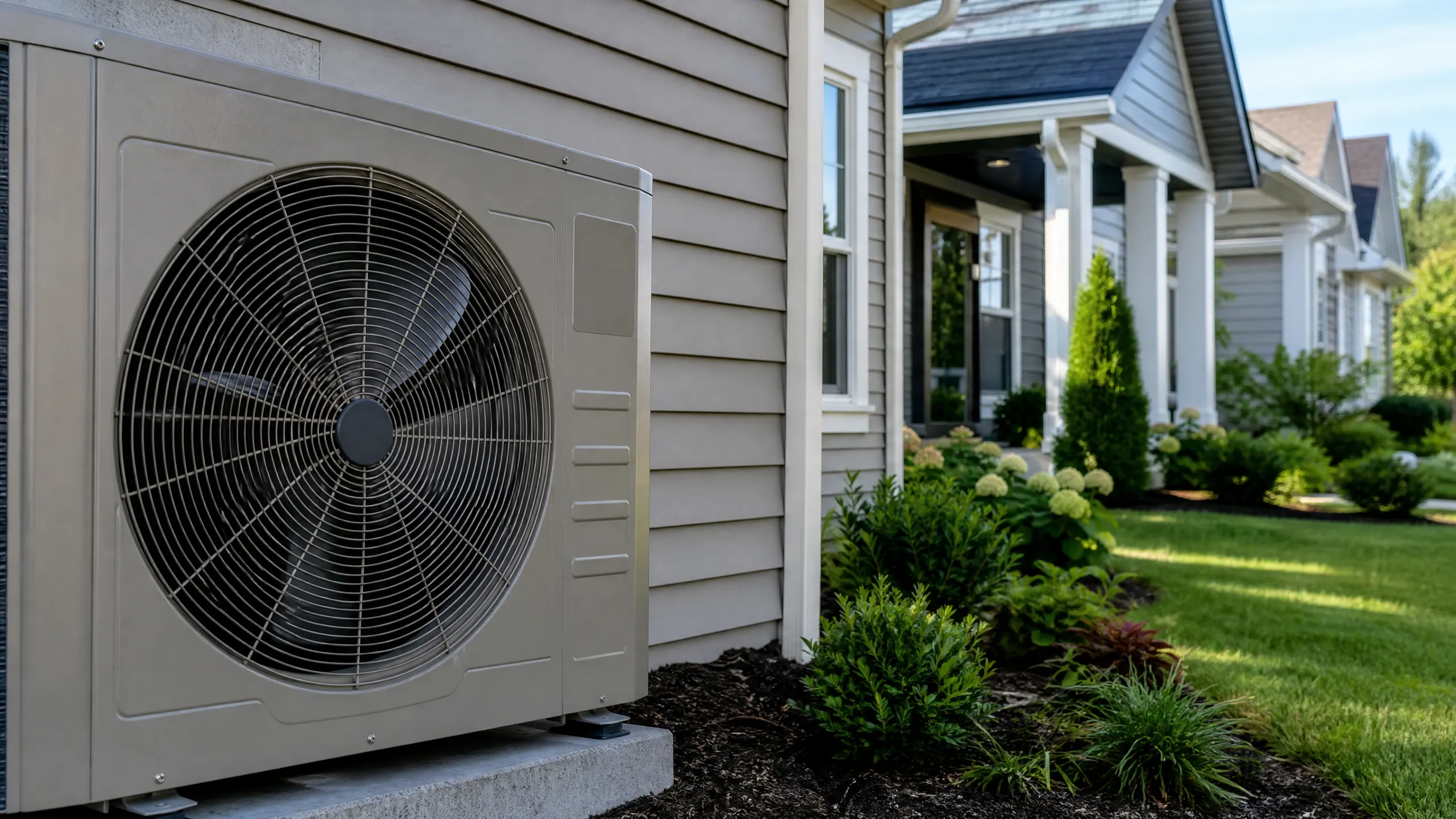






A large outdoor air-conditioning unit mounted beside a vinyl-sided house, surrounded by mulched garden beds and green shrubs.

Heat Pump Repair in Warrenton, MO

Tell us about the job

Takes about a minute. No obligation.

RepairHeat PumpWarren County, MO
Step 1 of 2

What ZIP code is the job in?

A heat pump here switches jobs twice a year, and both switches tend to show up fast. Heat comes on in October, and a part that was already marginal often fails in the first cold snap rather than waiting. The same goes for May, when cooling starts up after months of sitting idle on that side of the system. If yours is acting up right at one of those changeovers, that timing is a clue, not a coincidence. Overnight lows around here average 24°F in the dead of winter, so a heat pump struggling to keep up on a night like that is doing real work, not failing for some unusual reason. Most of the time the cause is an ordinary part wearing out under an ordinary load.

7 months
October through April, your system heats
5 months
May through September, it cools
24°F
the average winter night it heats against
86°F
the average summer afternoon it cools against
Isometric grayscale illustration of a cutaway house showing interior rooms, ceiling ductwork connected to an indoor air handler, and an outdoor condenser unit beside the exterior wall.
Your system heats October through April and cools May through September.

NOAA nClimDiv, 1991–2020 normals

Summer air in Warren County sits heavy, with a dew point around 65°F through June, July and August.

A heat pump working against air that heavy is doing normal summer work here, not fighting something unusual, so a breakdown points to a worn part, not a bad location.

Half the homes here were built in 1998 or later

Half the homes here were built by 1998
Winter nights average 24°F
Power here costs 12.87 cents per kilowatt-hour
Warren County Runs Heat Pumps on Electricity, and That's FineHomes here paid 12.87 cents per kilowatt-hour in 2025, ordinary power for an ordinary repair.

A newer house usually means the heat pump is newer too, especially if it's the one the house came with. That matters when you're deciding whether to fix it or replace it. A system that's a handful of years old breaking down is almost always one part failing, not the whole unit wearing out. Worth asking whoever comes out to look at it straight: is this the original system, and is the rest of it in good shape. If so, repair is the right call, and there's no reason to expect the same problem again once that one part is replaced.

Get it looked at early

Problems tend to show up in the first weeks of the season, when the load hits a part that was already weak.

Find a contractor
A gray air-source heat pump mounted on a concrete pad next to a house with gray vinyl siding, surrounded by gravel and flanked by green shrubs and white hydrangea flowers.

Running Year-Round Wears Different Parts Than a Seasonal System Does

A heat pump runs the whole year, so it wears differently than a furnace that rests all summer or an AC that sits idle all winter. The reversing valve is the part that's unique to this machine, and it takes a hit every time the system switches between heat and cool. Over years of changeovers, the valve can start sticking, and the system gets stuck in one mode or stops switching cleanly. The capacitor that starts the compressor and fan motors wears on its own schedule, weakening slowly until the day it can't push the motor into a start. Outdoors, the coil collects dirt, grass clippings and ice over the years, and once airflow through it drops, the whole system works harder to move the same heat. The defrost board and sensor earn their keep every winter, cycling the unit into defrost and back, and when that control fails, ice builds up on the coil and never clears. None of this is bad luck. It's what happens to a machine that never gets a season off.

What you can check yourself

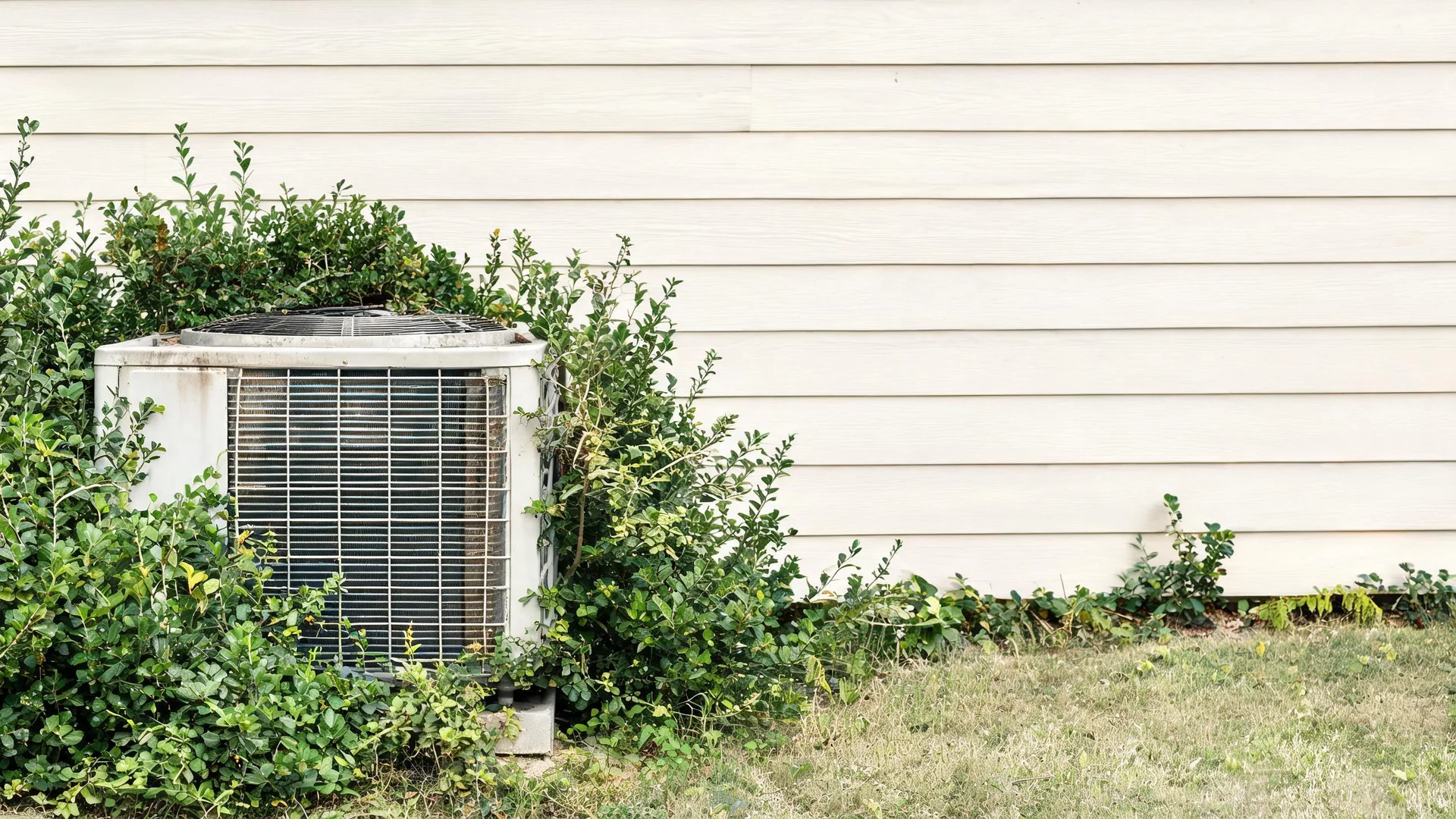
Look at the thermostat first. Make sure it's set to the mode you want and the batteries aren't dead. Check your breaker panel for a tripped breaker on either the indoor or outdoor unit. Go outside and look at the outdoor coil. If it's caked in ice, leaves, or grass clippings, that blocked airflow could be the whole problem. Check your air filter too. A filter clogged with dust chokes the airflow the same way a dirty outdoor coil does, just from the other end of the system.
What to leave alone

Don't take panels off the outdoor unit or touch anything electrical inside it. Don't chip at ice on the coil or pour water on it to melt it faster. If the system is stuck blowing cold air in winter or warm air in summer, that points to the reversing valve, and that's not something to chase down yourself. Write down what you're seeing, whether it's ice, a smell, a sound, or the wrong temperature of air, and when it started. That's the information a technician needs to find the actual failure fast instead of starting from scratch.

Most calls start with one of a few things. The system blows air that's the wrong temperature, warm in summer or cool in winter, instead of shutting off and switching like it should. It short cycles, kicking on and off every few minutes instead of running a full cycle. It runs constantly and never quite catches up to the thermostat setting. Or it makes a noise it didn't used to make: a hum before it starts, a clicking that repeats, a buzz from the outdoor unit. Ice on the outdoor coil that doesn't clear on its own during the day is also worth paying attention to, since that unit is supposed to defrost itself on a schedule. Any of these is the machine telling you a specific part is struggling, not a reason to wait and see if it sorts itself out.

A diagnostic visit starts with the complaint, not the unit. A technician asks what the system is doing, when it started, and what you've already noticed, then goes to check it against the equipment itself. Outside, that means pulling the panel on the outdoor unit and checking the compressor, the capacitor, and the refrigerant charge. Inside, it means looking at the air handler, the filter, and the thermostat call, to see whether the system is getting the signal it should and responding to it. A gauge set on the refrigerant lines tells a technician whether the system has the charge it needs or is losing it somewhere. An amp meter on the compressor and fan motors shows whether they're drawing power the way they should or straining to start. None of this is guesswork. Each reading either points at a failing part or rules one out, and by the time the gauges and meters come off, there's usually one clear answer rather than a list of maybes.