

Heat pump vs furnace in Warren County, Missouri

Get a Replacement Quote

Pros who work in Warren County

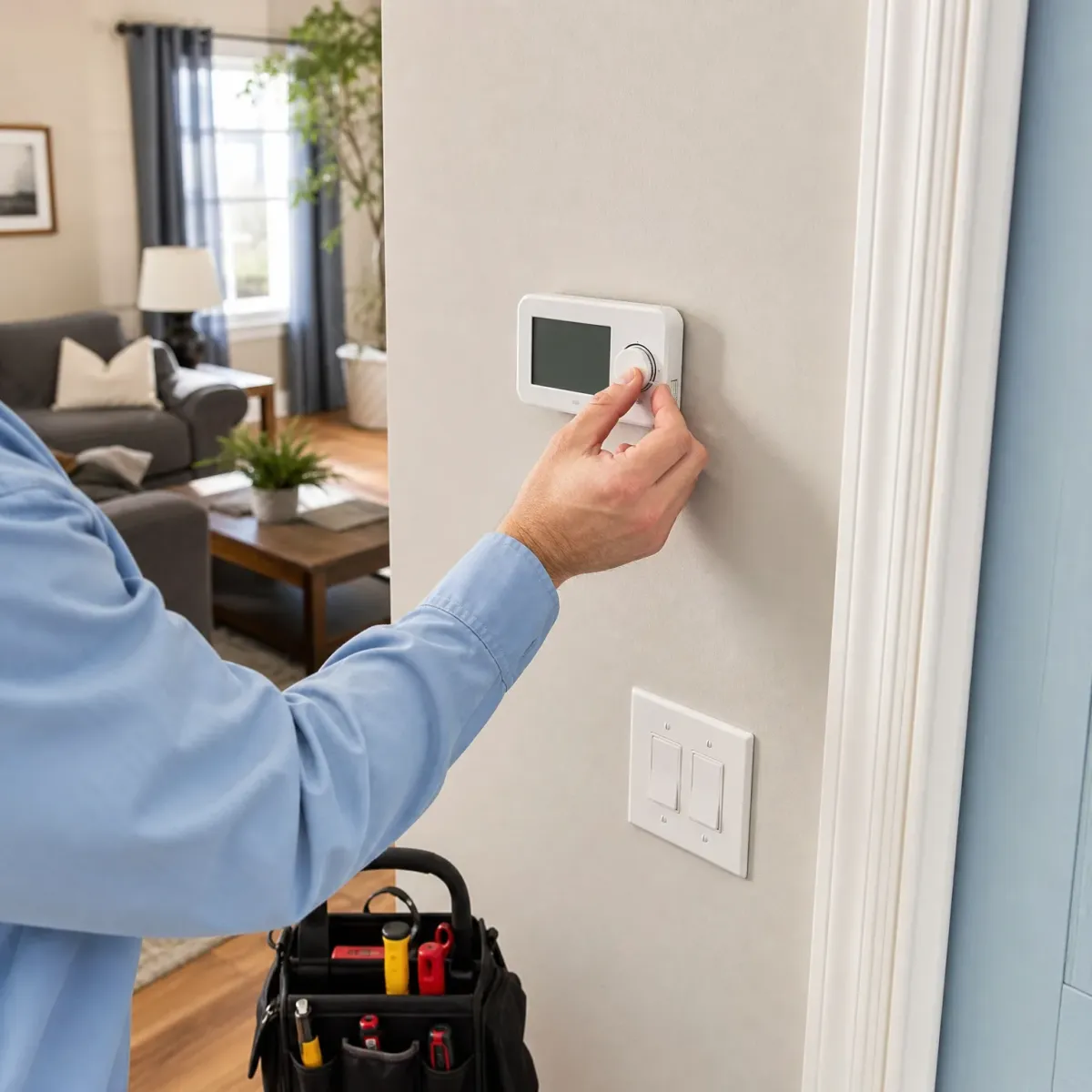
A person in a light blue shirt reaches up to adjust a white wall-mounted thermostat with a dial, with a light switch plate below and a living room with sofa and window in the background, and an open tool bag at lower left.

Tell us about the job

Takes about a minute. No obligation.

New system or replacementWarren County, MO
Step 1 of 3

What kind of equipment?

Which costs less to run in Warren County?

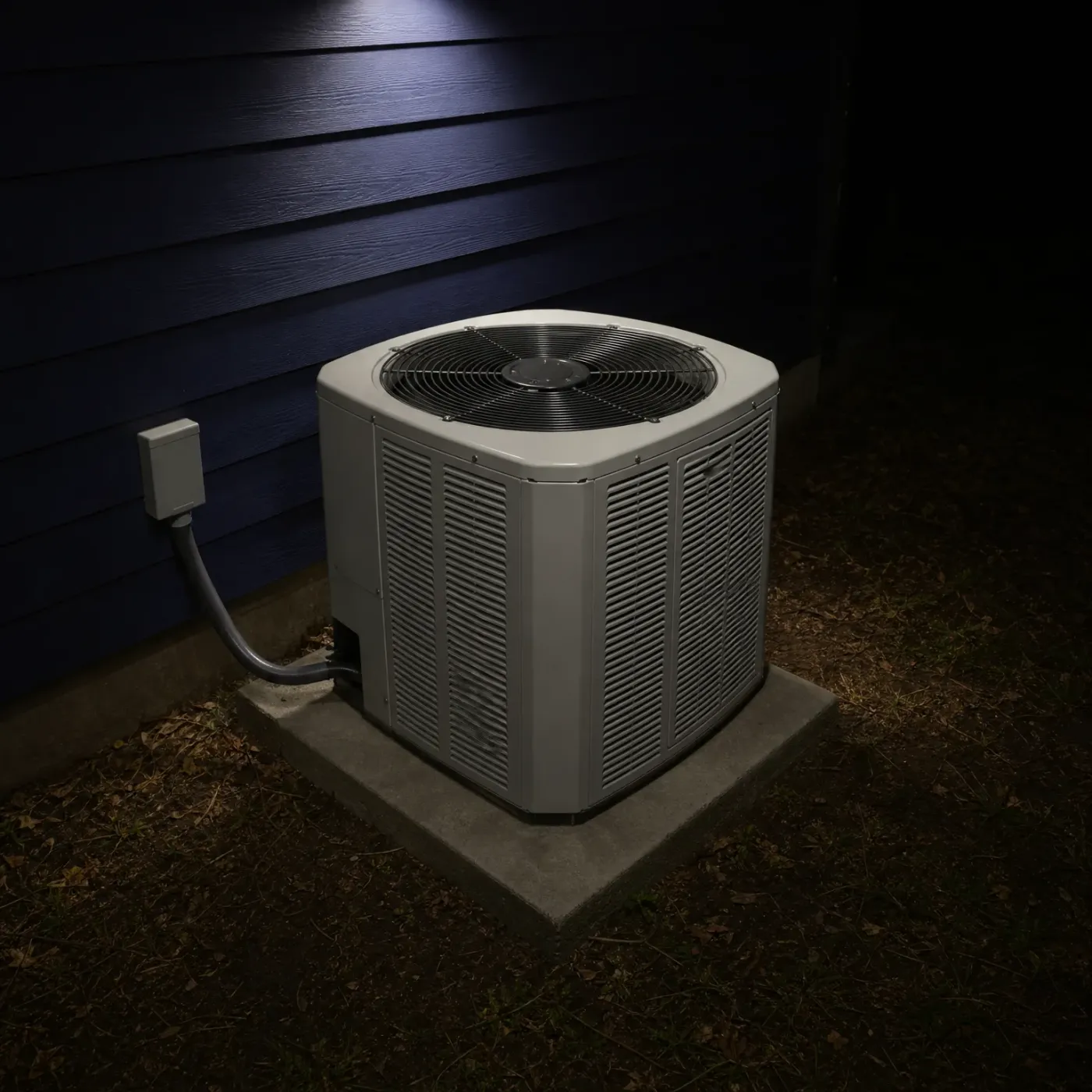
A gray outdoor condenser unit with a top fan grille sits on a concrete pad beside a dark blue horizontal lap-siding wall at night, with conduit running to a small wall-mounted disconnect box.

Heat pump

To heat your home here$1.72per 100,000 Btu

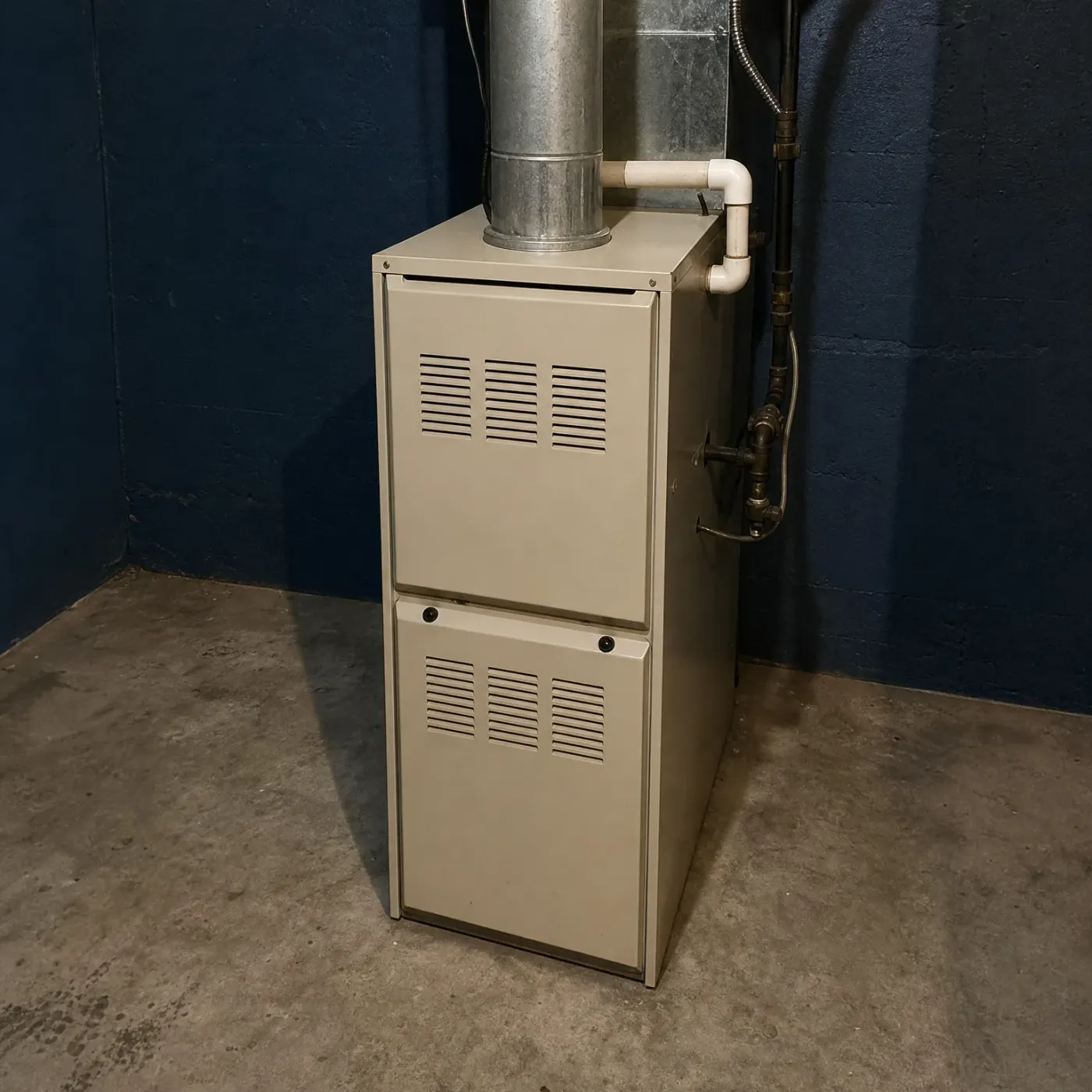
A beige residential furnace with two louvered access panels stands on a concrete floor against a dark blue painted block wall, with a metal flue duct, gas piping, and white PVC pipe above and beside it.

Furnace

To heat your home here$2.06per 100,000 Btu

At Missouri's gas and electricity prices, a heat pump makes the same heat as a gas furnace for about 16% less.

Btu stands for British thermal unit, the standard measure of heat energy.

Where does a heat pump shine?

  • Covers a long cooling season

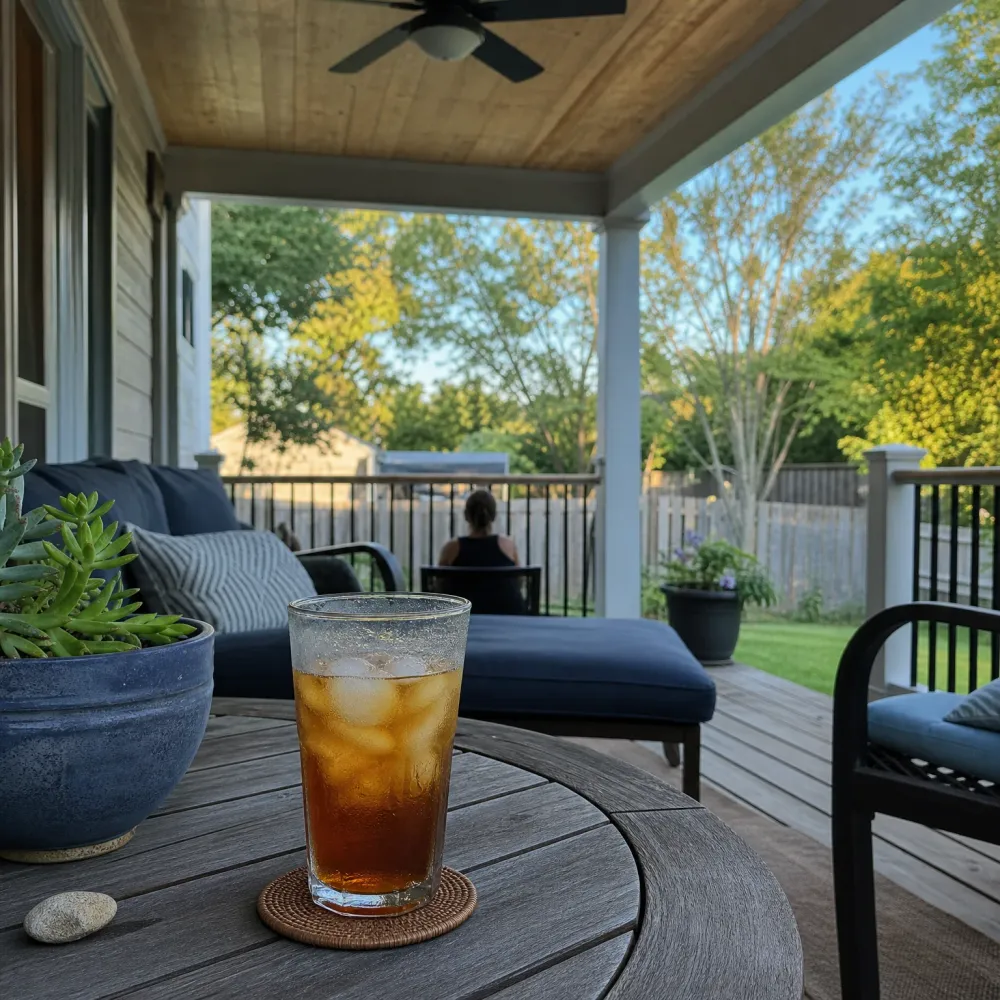
    Cooling runs May through September here, five months of the year. A heat pump is earning its keep that whole stretch, not just sitting idle waiting for winter.

    A tall glass of iced tea on a woven coaster atop a weathered round wooden table on a covered porch, with a potted succulent nearby, navy cushioned outdoor furniture, a ceiling fan overhead, and a person seated by a railing in the sunlit backyard beyond.
  • No gas line, nothing burning in the house

    It moves heat instead of making it from fire. That means no combustion, no flue and no gas bill for heat.

    A kitchen with navy blue cabinets, a white marble-look island with a black induction cooktop and stainless steel kettle, a stainless refrigerator, a farmhouse sink under a window with a blue roman shade, and potted greenery with a blue mug on a wooden board.
  • Heats and cools in one system

    Winter and summer are covered by the same outdoor unit. That's one machine to service instead of two.

    Living room with a cream sofa holding navy and patterned cushions and a blue throw, a wooden coffee table with a bowl and white flowers, a dark blue bookcase, and a large window with pale blue curtains overlooking a green garden.

Where does a furnace shine?

  • Fast, strong heat on demand

    Turn the heat up and the furnace answers right away. There's no long wait for the house to catch up.

    An entryway with a dark blue door and snowy trees visible through its window, a pair of fur-lined winter boots on a jute rug, a wooden bench with a cushion, blue fringed throw and steaming mug, a wicker basket beneath, coats and a bag on wall hooks, a sheer curtain at right and a floor vent in the slate tile.
  • Pairs with any central AC

    A furnace's blower and ducts carry cooled air too. Adding central AC uses the same system.

    A dark metal floor vent set in hardwood flooring near a window with a billowing sheer white curtain, beside a blue wall, wooden cabinet with a potted plant, woven basket, and a patterned rug.
  • Proven, simple, easy to get serviced

    Parts are easy to find and most repairs are routine. Getting one fixed rarely means waiting on a specialist.

    A gloved hand holds a pleated air filter in front of a furnace and ductwork, next to blue shelving with baskets, a bin, and a small potted plant.

What your winter actually asks of a heat pump

Winter is the long season here. Heat runs seven months, October through April, against five months of cooling. Whatever you buy will spend most of its life heating this house, not cooling it.

A standard heat pump has two weak points, and this county sits past both of them most nights. Below 40°F it puts out less heat than its rating says. Below about 35°F it usually needs backup heat to keep up. The average overnight low here in December, January and February is 24°F. That is not an occasional dip past those marks. It is where a typical winter night sits, every month of the season.

Look at how often it happens. About 110 nights a year here fall to freezing or below, out of roughly 210 nights across the whole heating season. That is about half of every winter spent below the point where a standard heat pump starts losing ground. A furnace does not have this problem. It burns gas and makes its full rated heat whether it is 40°F outside or 10°F.

The extreme cold that worries people most is actually rare here. Only about 3 nights a year drop to 0°F or below. So the real question for a heat pump is not whether it can survive the coldest night of the year. It is what backs it up on the roughly 110 nights that sit at or below freezing.
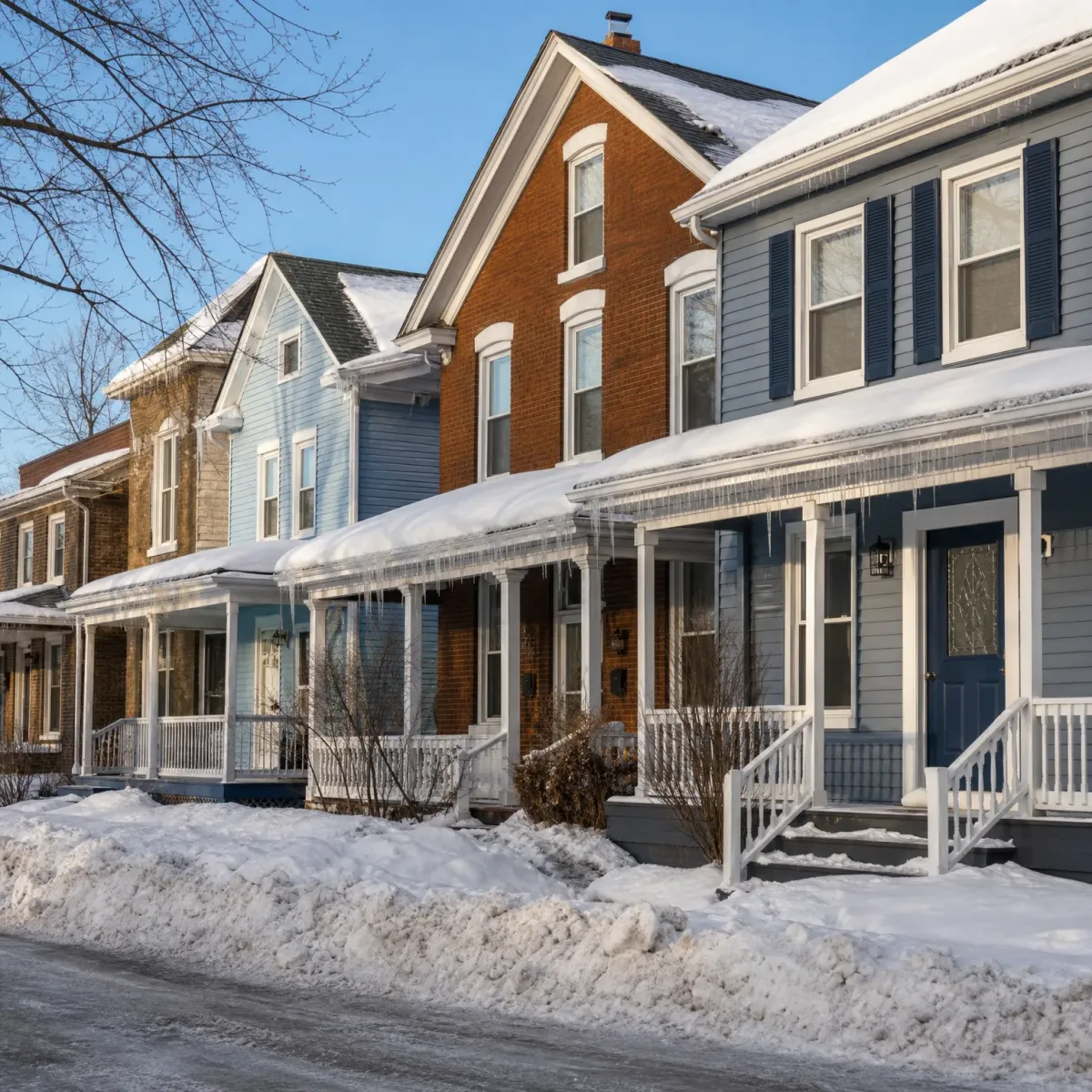
A row of two-story houses with covered front porches, one red brick and others with pale blue and gray siding, under snow-covered roofs with icicles, behind a plowed snowbank beside a bare road.

What backup heat and cost mean for your choice

If you go with a heat pump, the backup heat source matters more than the heat pump itself, because it is doing real work on half the nights of winter. A cold-climate heat pump is built for this. To earn that label, a unit has to keep making at least 1.75 units of heat per unit of electricity at 5°F, and hold onto 70 percent of its warm-weather capacity at that same temperature, tested by an outside lab, not claimed by the manufacturer. That is a different machine than the federal-minimum heat pump used to price the running cost above.

A two-winter study of these cold-climate units in occupied homes backs this up. Between 0°F and 35°F, backup heat covered only a small share of the total. Running on backup alone was rare even above 0°F. So the gap a standard heat pump has here does not mean a heat pump is wrong for this house. It means the difference between a standard unit and a cold-climate one is bigger here than it would be somewhere milder.

On cost, the heat pump wins outright. At Missouri's prices, it makes the same heat as a furnace for about 16 percent less, $1.72 against $2.06 per 100,000 Btu, and that heat pump figure already assumes the federal minimum, with nothing added for backup heat. A furnace, meanwhile, only heats. For the five months a year this county runs cooling, it sits idle while a separate AC does the work. A heat pump runs both seasons on one system.

Three out of four homes here already heat with electricity, so the wiring and setup a heat pump needs is already the norm in this county, not the exception. Gas heat, by contrast, runs about one in ten homes here, well under its roughly one-in-two share statewide. Whichever way you lean, check what your house already has before you decide. If a gas line and furnace came with it, pairing a new furnace with a central AC is the proven route. If it is already set up for electric heat, a cold-climate heat pump gets you lower running costs and one system instead of two, provided the backup heat is sized for the nights here that fall below 35°F.

Sources: NOAA nClimDiv · NOAA 1991–2020 seasonal normals · EIA SEDS 2024 · 10 CFR 430.32 · PNNL Building America guide · PNNL-37127 field study · ENERGY STAR product criteria · Census ACS 2020–2024

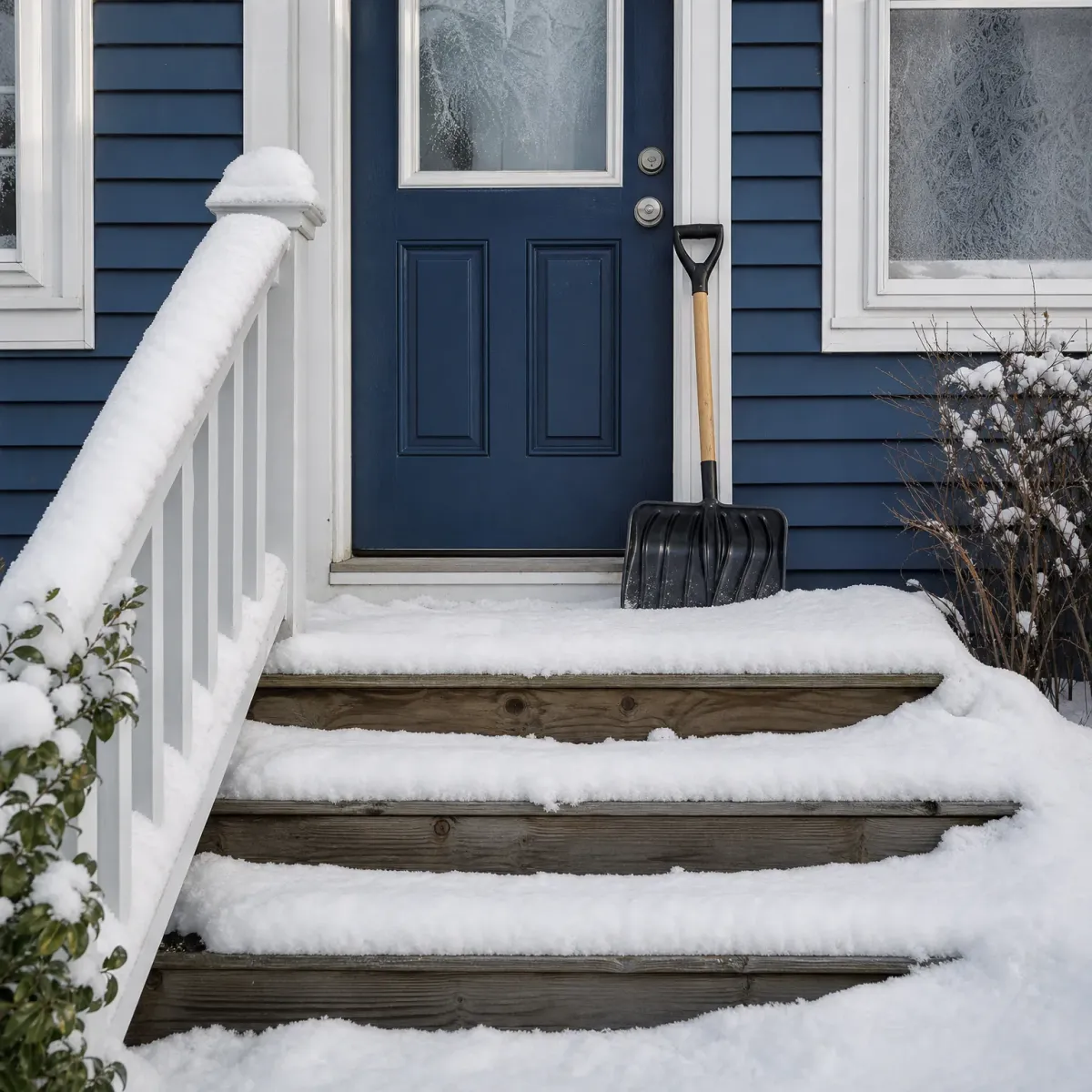
Snow-covered wooden steps and white railing leading to a dark blue front door of a blue clapboard house, with a black snow shovel leaning against the wall.

Common questions about heat pumps and furnaces

  • Can a heat pump heat a house through a Missouri winter?

    Yes, a heat pump heats through a winter here, but how much it leans on backup heat depends on the unit. A cold-climate heat pump keeps most of its heating power down to 5°F and in field testing covered almost all the heat down to 0°F on its own. A standard heat pump gives up more of its output as temperatures drop and will call on backup more often.

  • Do I need backup heat with a heat pump here?

    Most likely, yes. Your winter low here averages 24°F, and a standard heat pump's output starts falling short of its rating below 40°F and often needs backup below about 35°F. Almost every night that drops to freezing or lower here is below both marks, so backup heat will run some nights most winters.

  • What if my house doesn't have a gas line?

    A heat pump is worth a close look here, since nearly three in four homes in Warren County already heat with electricity and only about one in ten has utility gas. Without a gas line your real choice is a heat pump against propane or electric resistance heat, and a heat pump puts out more heat per dollar than either of those.

  • Is a heat pump cheaper to run than a furnace in Warren County?

    Yes. At Missouri's average fuel prices a heat pump makes the same heat for $1.72 per 100,000 Btu against $2.06 for a gas furnace, about 16% less. That heat pump figure is its rating alone with nothing added for backup heat, so a cold snap that calls on backup narrows the gap some nights.