A quiet residential street at dusk lined with illuminated two-story brick houses and mature trees.

Heat Pump Repair in Troy, MO

Tell us about the job

Takes about a minute. No obligation.

RepairHeat PumpLincoln County, MO
Step 1 of 2

What ZIP code is the job in?

Troy winters are normal work for a heat pump

Overnight lows here average 23°F through December, January and February. Your heat pump leans on its defrost cycle and backup heat on those cold nights. That is how the system is supposed to run. It is not a sign something is wrong.


A breakdown usually traces to the unit, not the weather

Lincoln County does not push a heat pump harder than it was built for. When one stops heating or cooling right, the cause is usually something ordinary. A failing capacitor. A low refrigerant charge. A stuck reversing valve. A dirty filter choking the airflow. A tech needs to find which one it is before anything gets replaced.

7 months
October through April, your system heats
5 months
May through September, it cools
23°F
the average winter night it heats against
86°F
the average summer afternoon it cools against
Isometric cutaway illustration of a house showing attic ductwork, an indoor air handler, furnished rooms, and an outdoor condenser unit connected by lines along the exterior wall.
Your system heats October through April and cools May through September.

NOAA nClimDiv, 1991–2020 normals

Heat pumps here switch over to heat in October and run through April.

The first cold snap in October is when a weak part finally gets tested, so that is when repair calls start.

23°F nights are normal work. Most heat pump trouble still comes down to one part.

Power costs 12.91 cents a kWh statewide
Winter nights average 23°F
Climate zone 4A

Half the homes in Lincoln County were built in 1997 or later. If yours is one of them, there's a decent chance the heat pump came with the house, or replaced one that did, which means it may not be as old as the trouble makes it feel. A system still inside its working life is worth repairing. The part that failed, whether it's the capacitor or the reversing valve or something else, doesn't usually take the rest of the unit down with it.

A newer system is worth getting fixed

Get the actual cause checked before anyone talks replacement. If the heat pump is still within its working life, repairing the failed part is the right move.

Find a contractor
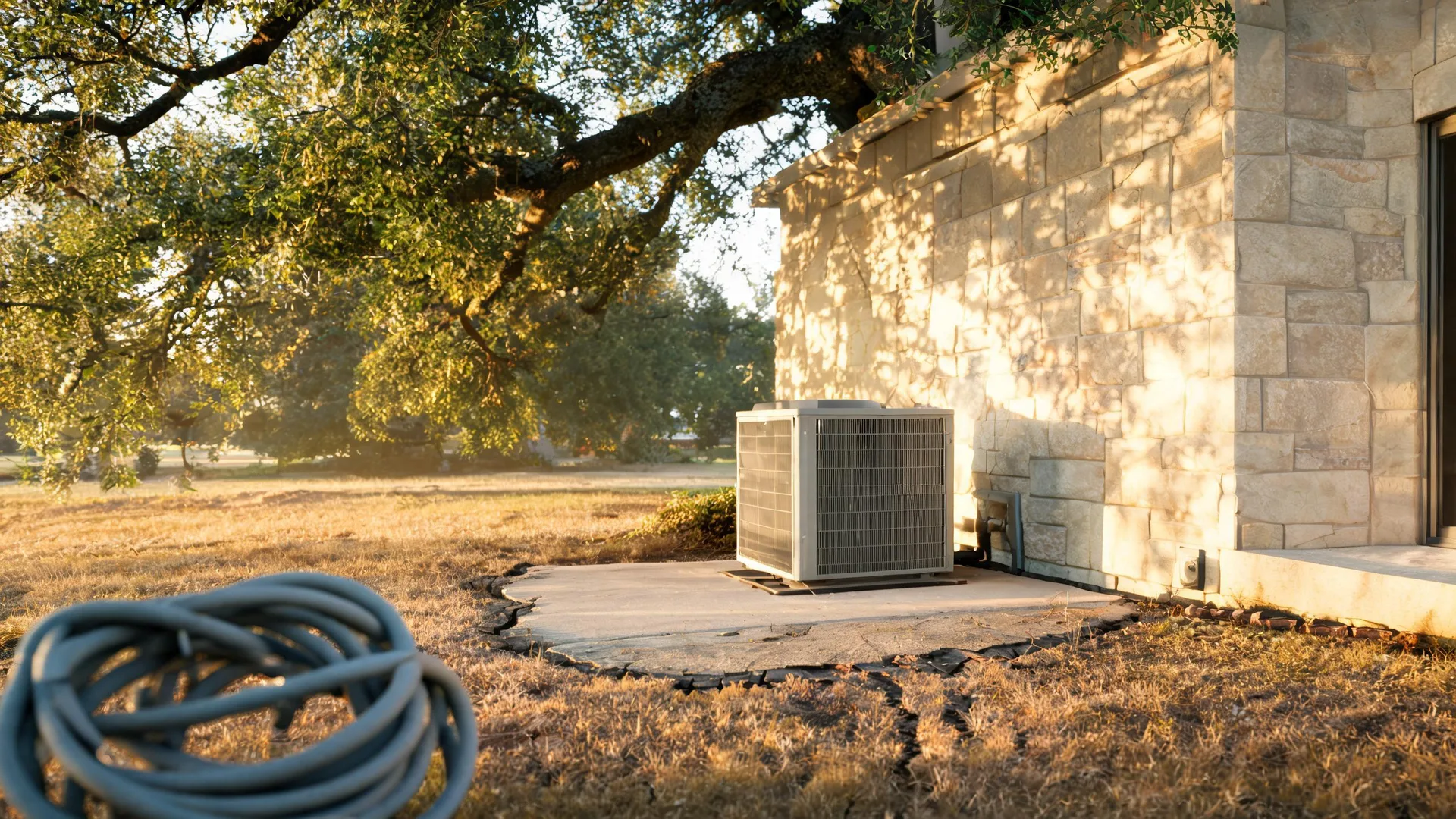
A gray air-source heat pump mounted on a concrete pad next to a house with gray vinyl siding, surrounded by gravel and flanked by green shrubs and white hydrangea flowers.

Running year round wears specific parts, not the whole system

A heat pump runs longer than a furnace ever did, because it is working both sides of the year. That long runtime shows up as wear on specific parts before it shows up as a dead system. The reversing valve sticks and the system heats when you want cooling, or cools when you want heat. The contactor pits and starts humming or buzzing before it fails to close. The defrost control board loses track of its cycle, and you find the outdoor unit coated in ice during the day, not just overnight. Capacitors weaken gradually, so the fan starts slower each week until one morning it doesn't start at all. None of that means the unit is worn out. It means one part reached the end of its life before the rest did, which is the normal way these systems fail.

The reversing valve is the part unique to a heat pump

Everything else in a heat pump is close cousin to a furnace or an AC, but the reversing valve is the part that makes it a heat pump at all. It slides back and forth to send refrigerant one way for heat and the other way for cooling. That sliding is what wears it out. A stuck valve shows up as a system blowing cold air when it should heat, or heating when it should cool, and it does not fix itself by waiting.

Outdoor coil problems get blamed on the compressor

The outdoor coil sits outside, through rain, mowing, dirt, and whatever grows up around it. A coil caked with debris or bent fins cuts off airflow, and the system has to work harder to move heat across it. That strain looks like a failing compressor from the thermostat, but a tech checking the coil first can catch it before the compressor takes the damage.

A diagnostic visit starts with what the system is doing, or not doing, right now. Heating, cooling, running nonstop, blowing the wrong temperature, icing over, short cycling. A tech checks the thermostat call against what the outdoor and indoor units are actually doing before touching anything. From there it's gauges on the refrigerant lines, a meter on the capacitor and contactor, and a look at the reversing valve and defrost board if the symptom points that way. Airflow gets checked too, since a dirty filter or blocked coil can mimic a failing compressor. The point of all this is to find the one part that failed, not to start swapping parts and see what helps.

A good rule. Repair when the failure is one part. Replace when the compressor itself is gone. The compressor is sealed, so when it fails, most of the time the whole outdoor unit goes with it. Everything else on a heat pump can be swapped on its own without touching the compressor at all. The capacitor, the contactor, the reversing valve, the defrost board. Age matters less than people think. A heat pump that's been kept up, filters changed, coils cleaned, refrigerant charge correct, can run a long time on its original compressor. One that's been neglected can lose a compressor early no matter how new it is. Ask what failed before asking what it's worth fixing.