






A grey outdoor HVAC unit mounted on a concrete pad beside the beige-sided exterior wall of a suburban house.

Heat Pump Repair in St. Robert, MO

Tell us about the job

Takes about a minute. No obligation.

RepairHeat PumpPulaski County, MO
Step 1 of 2

What ZIP code is the job in?

A heat pump in Pulaski County works about seven months a year, October through April, with a break for the five cooling months. September is when problems tend to surface. The unit switches over to heat after sitting idle, and whatever was already marginal, a weak capacitor, a low charge, a failing sensor, gets found out fast. If yours is struggling in the first cold snap, it was probably already struggling. Getting it looked at early means it gets fixed before you're relying on it every day.

7 months
October through April, your system heats
5 months
May through September, it cools
26°F
the average winter night it heats against
87°F
the average summer afternoon it cools against
Isometric cutaway illustration of a single-story house with a dark gabled roof, showing interior rooms with ductwork leading to an indoor air handler and an outdoor condenser unit connected by lines on the ground outside.
Your system heats October through April and cools May through September.

NOAA nClimDiv, 1991–2020 normals

A diagnostic visit starts with figuring out whether the heat pump itself is at fault or the thermostat telling it what to do.

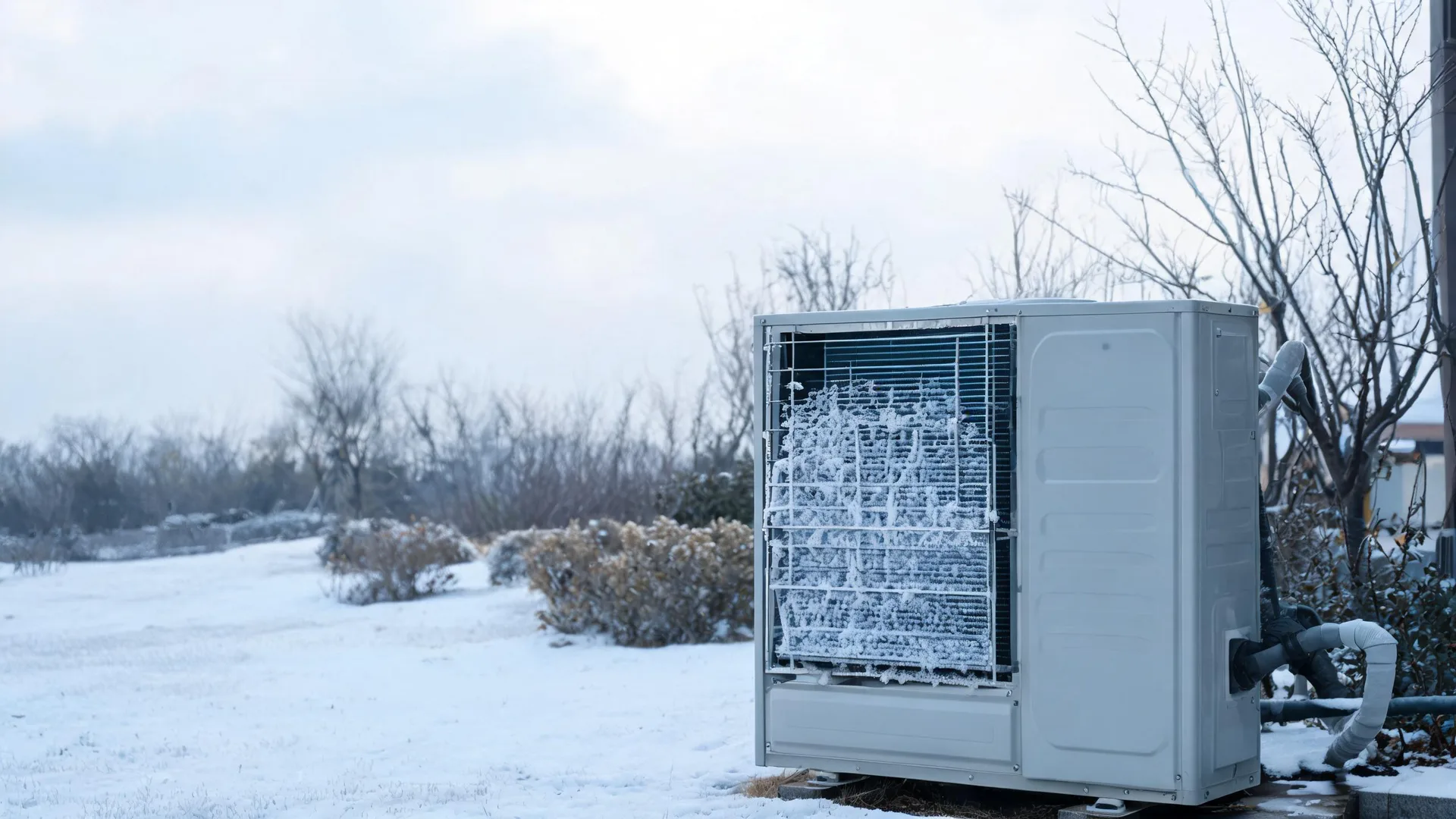
The reversing valve, the defrost cycle and the refrigerant charge all get checked before any part gets replaced.

Pulaski County weather is ordinary. Most heat pump trouble starts inside the unit, not outside it.

115 severe weather events from 2015 to 2024
19% of homes statewide lost power a day or more in 2024
63 damaging wind events from 2015 to 2024

Half the houses in Pulaski County were built in 1994 or later. If yours is one of them, the heat pump may not even be the original. A unit that came with a newer house has had less time to wear and less reason to fail outright. That changes what a breakdown probably means. Instead of a system at the end of its life, you're more likely looking at one part gone bad, a capacitor, a sensor, a low charge, in a machine that's otherwise got years left. Worth knowing before anyone talks about replacing it.

The usual problem, the usual fix

Nothing about Pulaski County makes a heat pump break down more than it would anywhere else. It's one part gone bad, found and replaced. Electricity here runs 12.91 cents per kilowatt-hour, so a heat pump that's repaired instead of run on a failing part is worth getting right.

Find a contractor
A man in a dark cap, dark shirt and tan work pants walks up wooden steps toward a blue front door, carrying a worn canvas tool bag in his right hand, with a potted shrub beside the entry.
A gray air-source heat pump mounted on a concrete pad next to a house with gray vinyl siding, surrounded by gravel and flanked by green shrubs and white hydrangea flowers.

Worn out and broken down aren't the same thing

A newer unit still breaks down the way any heat pump does, one worn part at a time. That's the case for calling in a repair instead of a replacement quote. Ask whoever comes out what's actually failed before agreeing to anything bigger than that part.

The capacitor goes first

A capacitor gives the compressor and fan motors the jolt they need to start, and it weakens with each cycle it runs. When it's too far gone, the outdoor unit hums but doesn't start, or the fan spins slow. It's a small part, but the compressor it's protecting isn't, so a dead capacitor left alone can take the compressor with it.
The reversing valve sticks

The reversing valve is what lets a heat pump switch between heating and cooling, and it spends most of the year sitting in one position. A valve that's sat still that long can stick when it's finally asked to move, leaving the system blowing cold air when it should be heating. It fails often for exactly that reason, not because it's weak, but because it's barely used.

Most people notice a heat pump problem through the thermostat, not the unit itself. The room feels wrong before anything sounds wrong. Air coming out of the vents feels cool when it should feel warm, that's often the reversing valve or a control board telling it the wrong thing to do. Ice building up on the outdoor unit and not clearing on its own is another one, a healthy system defrosts itself in cycles and keeps moving. Short cycling, where it kicks on and off every few minutes instead of running a full stretch, wears on the parts that are already weak and makes the next failure come sooner. A unit that runs constantly without ever getting the house to temperature is working against something, low refrigerant, a failing compressor, or airflow that isn't getting through. None of these mean the same thing, but all of them mean it's worth a look before the part that's struggling takes another one down with it.

A repair decision comes down to one question. Is this a part failing on its own, or is the system failing because it's old. A capacitor, a sensor, a stuck valve, those fail on their own in units of any age, and fixing them brings the system back to normal. Nothing about that repair means the compressor is next. What should give you pause is a compressor itself struggling to start, or a unit that's needed a repair every season for a few years running. That's wear showing up everywhere at once, not one part giving out. Ask whoever's diagnosing it which kind of problem they're looking at, a part or the whole system, before you decide which conversation you're having.