A lit residential street at dusk featuring large two-story brick houses with glowing windows, mature trees, and a street lamp.

Heat Pump Repair in Parkville, MO

Tell us about the job

Takes about a minute. No obligation.

RepairHeat PumpPlatte County, MO
Step 1 of 2

What ZIP code is the job in?

Humid summers push the system hard

A heat pump pulls moisture out of the air every time it cools your house, and around Parkville that air holds a lot of moisture. The dew point here averages 65°F through June, July and August, which is the sticky, heavy kind of air that makes a heat pump run long hours to keep up. That steady workload wears on parts faster than it would somewhere drier.

Hail adds its own wear

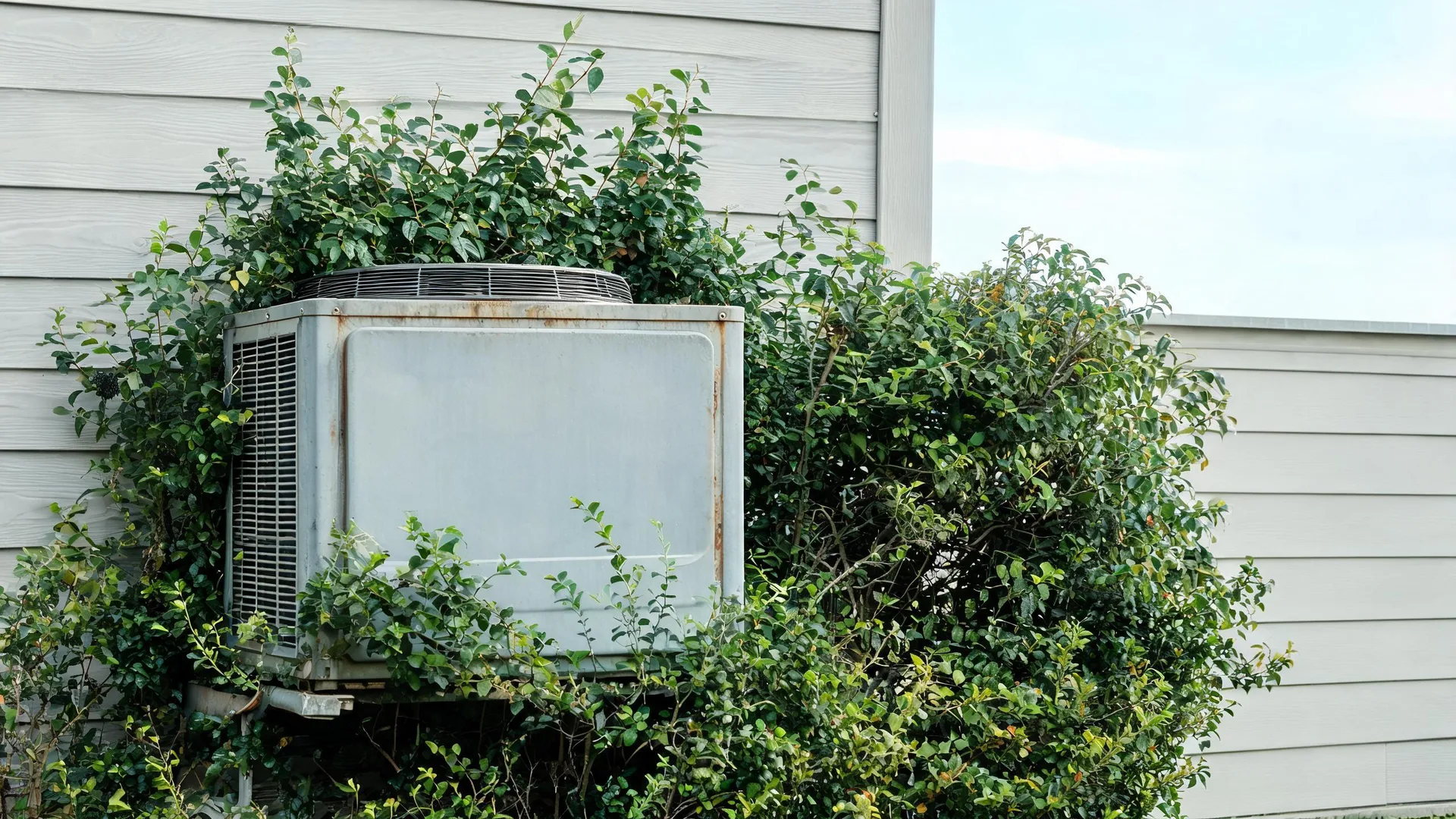
Platte County saw 90 hail events between 2015 and 2024. The outdoor unit sits outside year round, and its coil and fan are exposed every time a storm rolls through. A heat pump acting up here may be dealing with both the daily grind of summer humidity and the dings a storm left behind, so a real diagnosis matters before anyone calls it one simple fix.

7 months
October through April, your system heats
5 months
May through September, it cools
22°F
the average winter night it heats against
87°F
the average summer afternoon it cools against
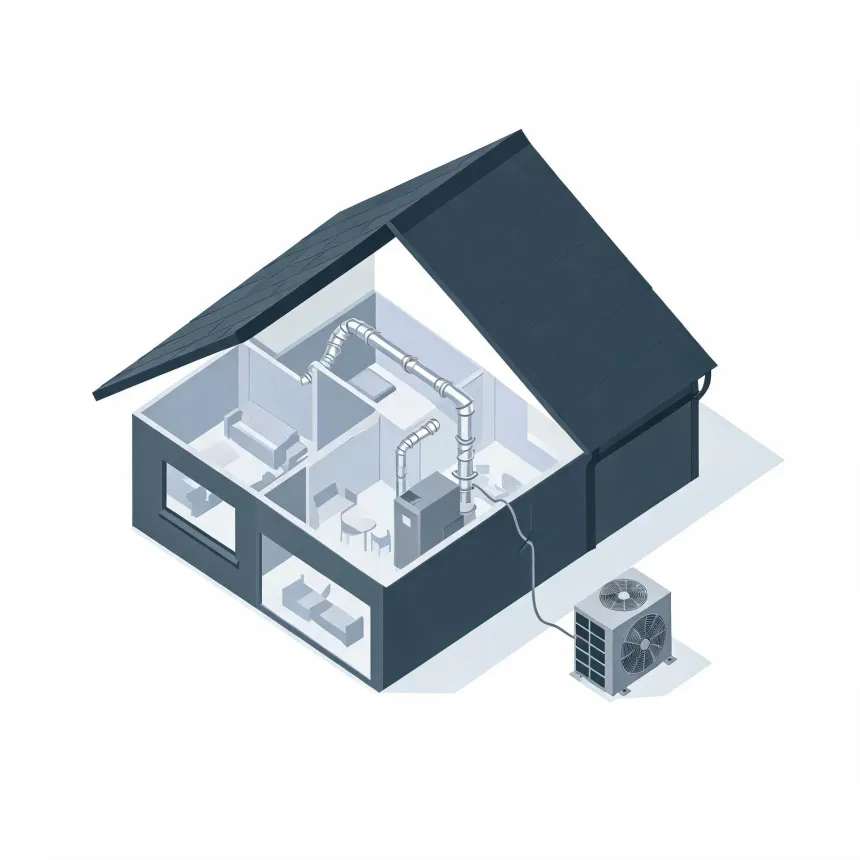
Isometric illustration of a cutaway house showing interior rooms with furniture, a furnace and ductwork, connected by a line to an outdoor condenser unit on the ground outside.
Your system heats October through April and cools May through September.

NOAA nClimDiv, 1991–2020 normals

Platte County logged 169 severe weather events between 2015 and 2024, including 90 hail events and 68 rounds of damaging wind.

The outdoor unit has no cover from any of that, so a system acting up may have taken a hit before it ever showed a symptom.

Half these homes were built in 1992 or later, so the heat pump itself is often not the problem

Half the homes here were built by 1992
Climate zone 4A
Power here costs 13.02 cents per kilowatt-hour
Two Seasons, Two Chances to FailHeat here runs October through April, cooling May through September, and the first cold snap or the first hot stretch is when a weak part gives out.

If your heat pump has been off its game since the last big storm, that is worth mentioning to whoever comes out. A tech can check the coil and fan blades for bent fins or cracked housing, the kind of damage that does not stop the unit from running but does make it work harder than it should. Worth doing even if nothing looks wrong from where you stand. Hail does not have to dent a panel to throw a fan blade out of balance or crimp a coil fin. If the system is short cycling, blowing warm air when it should not, or just sounds different than it used to, a look at the outdoor unit after any hail or wind is a reasonable place to start.

Get the real cause found before it fails for good

A heat pump working this hard, through summer humidity and whatever the last storm left behind, doesn't give you much warning before a part gives out. The fix only holds if the diagnosis covers both. Get it looked at.

Find a contractor
A gray outdoor HVAC unit mounted on a concrete pad beside a house with gray lap siding and a stone foundation.

A Newer House Points to Repair, Not Replacement

If your house is one of the newer ones here, the heat pump is probably still within its working life. That changes what a repair call is about. The question isn't whether the unit is old and on its way out, it's what actually failed. A worn capacitor, a low charge, a fan thrown off balance by hail, those get fixed on a system that has plenty of years left in it. Tell whoever comes out if the system is original to the house. That one detail saves time, because it means they're looking for what broke, not deciding whether the whole unit is worth saving.

What a failing heat pump sounds and feels like

A heat pump in trouble usually tells you before it quits outright. Warm air blowing when it should be cool, or cool air blowing when it should be warm, often means the reversing valve is stuck and not switching the system between modes. Short cycling, where the unit kicks on and off every few minutes instead of running a full cycle, points to a thermostat problem, a refrigerant issue, or a sensor that's lost its calibration. Ice building up on the outdoor coil when it shouldn't be there means the defrost cycle isn't doing its job. A grinding or squealing sound from the outdoor unit usually means a fan motor bearing is wearing out, and that part won't fix itself.

Why it's worth a call sooner than later

A heat pump that's struggling doesn't usually break cleanly. It limps along, drawing more power to do less work, until the part that's failing takes another part down with it. A fan motor running on a bad bearing eventually seizes. A refrigerant leak that started small gets worse and can damage the compressor, which is the most expensive part in the system. Catching the problem at the capacitor or the sensor stage is a straightforward fix. Waiting until the compressor is involved turns a repair into a much bigger job.

A heat pump that's struggling still has to meet the thermostat setting, so it leans on whatever parts still work to make up for the one that doesn't. A weak capacitor makes the compressor draw harder to start each cycle, and that extra draw is what finally kills it. A low refrigerant charge means the compressor runs hotter than it was built to, cycle after cycle, until it wears out early. A fan motor losing strength spins slower, so the coil doesn't get the airflow it needs, and heat that should move outside backs up into parts not built to handle it. None of this shows up as a single clean failure. It shows up as the next part down the line going too, and the repair that would have been simple a few weeks earlier turns into a bigger one.

Repair makes sense when the failure is one part, found and named. Replacement makes sense when the compressor itself is the problem, or when the system is old enough that one repair just buys time until the next one. A tech can pressure test the line, check the windings on the compressor, and tell you which situation you're in. Age matters here more than how the system sounds or how long it's been acting up, because a young unit with a bad capacitor and an old one with a dying compressor can show the exact same symptoms. The part that failed tells you what to fix. How many parts have already failed, and what's left to carry the load, tells you whether fixing it is still the right call.