Dark-painted single-story houses with gray shingle roofs behind a trimmed green hedge and mown lawn, surrounded by leafy trees under an overcast sky.

Heat Pump Repair in Fulton, MO

Tell us about the job

Takes about a minute. No obligation.

RepairHeat PumpCallaway County, MO
Step 1 of 2

What ZIP code is the job in?

How old the unit is matters less than what's failing

A heat pump can run a long time on its original compressor and still be worth repairing if the problem is a capacitor, a contactor or a fan motor. Those are normal wear parts and swapping one doesn't say anything bad about the rest of the system. The compressor is the part that changes the math. If that's what's failing, you're weighing a repair bill against a system that may have other original parts nearing the same point.

A reversing valve problem is worth a second look before you decide

When a heat pump blows cold air in heating mode or won't switch between heating and cooling, the reversing valve is often the cause. It can stick or fail outright. Replacing it is a real repair, not a quick fix, so it's one of the few times on a heat pump where it's worth asking the contractor directly whether the valve alone is worth fixing on this unit or whether it's the sign to stop patching and replace the system.

7 months
October through April, your system heats
5 months
May through September, it cools
24°F
the average winter night it heats against
86°F
the average summer afternoon it cools against
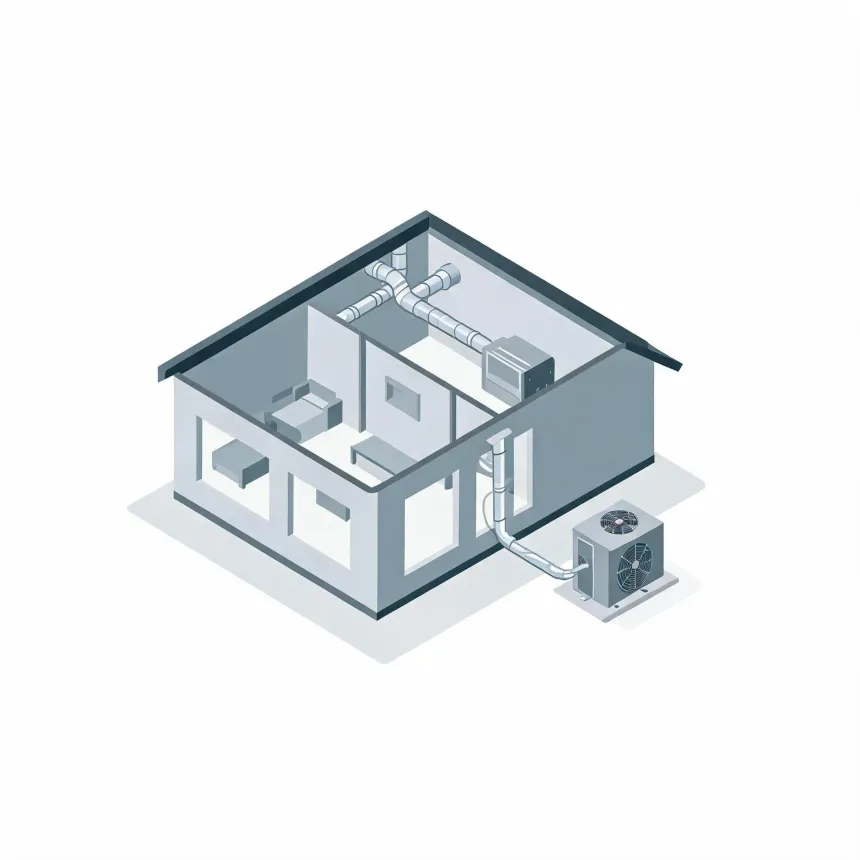
Isometric illustration of a cutaway house showing interior rooms, ceiling ductwork and an air handler, connected by lines to an outdoor condenser unit on a pad beside the building.
Your system heats October through April and cools May through September.

NOAA nClimDiv, 1991–2020 normals

A heat pump works year round, so its parts wear on both sides of the job.

A failing heat pump often shows up heating fine but not cooling, or the other way around.

Half the homes in Callaway County were built since 1987

Half the homes here were built by 1987
23 hail events from 2015 to 2024
Winter nights average 24°F

Fulton doesn't do anything unusual to a heat pump. Summers push it to cool, winters push it to heat, and the parts that fail are the same ones that fail anywhere. A capacitor, a contactor, a fan motor. Missouri runs on power priced around 12.91 cents a kilowatt-hour as of 2024. That's just what it costs to run the thing, not a reason for more breakdowns. So when a heat pump in Fulton quits, the smart move is the same as it would be anywhere. Find out which part failed and whether it's a normal wear item or something bigger like the compressor or reversing valve. The place isn't the problem. The part is.

If it's a wear part, repair is usually the right call

Half the homes in Callaway County were built in 1987 or later. If yours is one of them, the heat pump probably still has plenty of working life in it. A capacitor, a contactor or a fan motor failing doesn't mean the system is done, it means that part needs replacing. Get the contractor to name the part before you decide anything bigger.

Find a contractor
A dark gray heat pump unit mounted on a concrete pad next to a house with gray siding and a stone veneer wall.

The system tells you before it fails

A heat pump that's struggling makes noise about it before it quits outright. Short cycling is usually the first thing an owner notices, the system kicking on, running a few minutes, then shutting off again instead of finishing a normal cycle. That pattern wears on whatever part is already weak, so it tends to get worse quickly rather than staying mild. Ice on the outdoor unit in the dead of winter is normal for a few minutes during a defrost cycle. Ice that stays, or builds up heavier each day, usually means the defrost control or a sensor isn't doing its job. Warm air from the vents when the thermostat is set to cool, or cold air when it's set to heat, points at the reversing valve rather than anything minor. A steady drop in how well the house holds its temperature, even though the thermostat hasn't changed, is often the earliest sign of all, and it's easy to write off as the weather instead of the machine.

Check the thermostat settings first

Make sure it's set to heat or cool as intended, not set to fan only, and that the temperature is actually set past the room temperature. A dead or miscalibrated thermostat can look exactly like a failed system when the heat pump itself is fine.

Look at the outdoor unit and the breaker

Walk outside and check that the outdoor unit is running and isn't buried in debris, leaves or snow blocking the coil. Check the breaker panel for anything tripped. A tripped breaker or a coil packed with debris can stop a heat pump cold, and both are things you can see without opening anything up.

A heat pump that's struggling still gets asked to run, and that's what turns a small problem into a bigger one. Short cycling is the clearest example. Every time the system kicks off early and restarts, the compressor takes another hit of startup current, and it's the compressor you most want to protect. A weak capacitor left in place makes the motor it serves work harder to start each time, until that motor burns out too. A refrigerant leak behaves the same way. Low charge makes the compressor run hotter and longer to hit the setpoint, and heat is what compressors fail from. None of these start as compressor problems. They turn into compressor problems because the system kept running on a part that needed attention first.

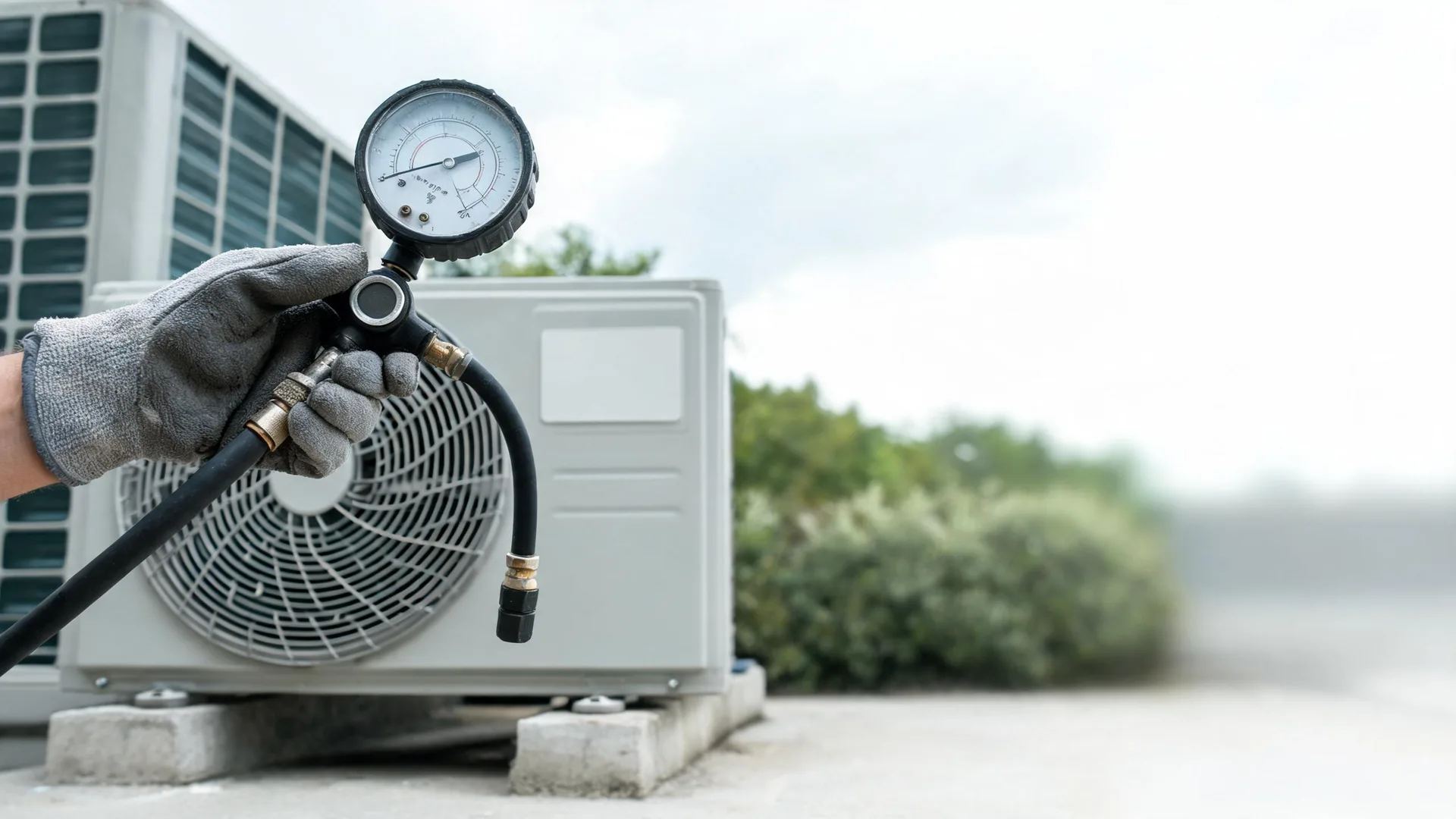
A diagnostic visit starts with the thermostat and the breaker, not the outdoor unit, because there's no point opening up a system that's fine if the problem is a setting or a tripped breaker. From there it's gauges and a meter. Refrigerant pressure tells you whether the charge is right or whether there's a leak. A clamp meter on the compressor and fan motors shows whether they're pulling the current they should, too little or too much both point at a specific failing part. The reversing valve gets tested directly, usually by listening and feeling for it to shift when commanded, since that's the part that decides heating from cooling. Defrost board and sensors get checked if ice was the complaint. None of this is guesswork. Each test rules something in or out, and by the end there's a part named, not just a guess at one.