


What winter here does to a heat pump
Heat runs seven months a year in Callaway County, October through April, longer than any other stretch on the page. The overnight low averages 24°F across December, January and February, and that number matters more than it looks like it should. A standard heat pump starts losing ground below 40°F, and below about 35°F it often needs backup heat to carry the house. An average winter night here sits below both marks.
About 110 nights a year drop to freezing or below, roughly half the nights in the heating season. That is not a cold snap. That is most of a normal winter running below the point where a standard heat pump works at full strength. Only about 3 nights a year reach 0°F, so the deep cold is rare, but the mild cold that still trips backup heat is not rare at all. It is the typical night here.
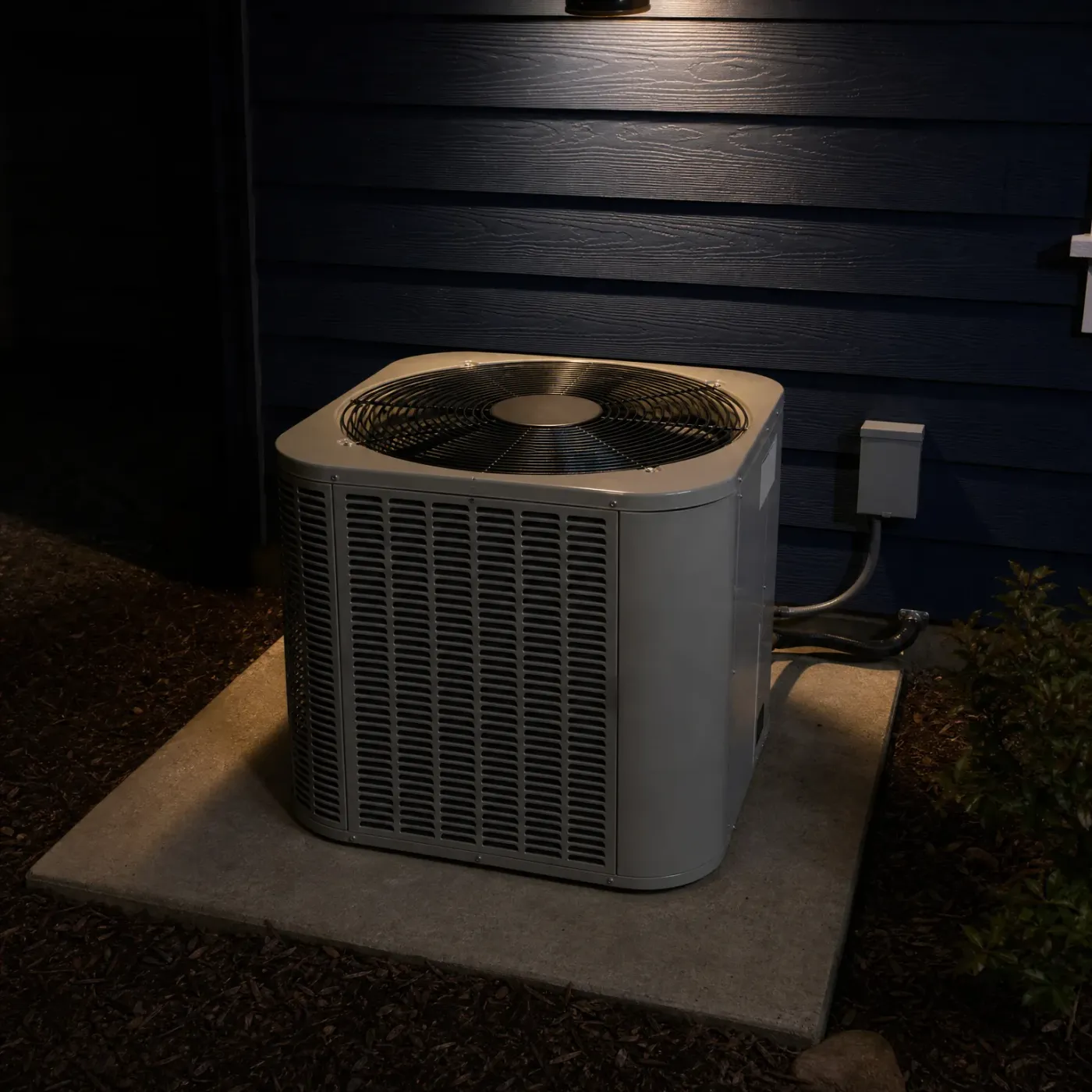
This does not rule out a heat pump. It means the heat pump has to be the right kind. A unit built to the ENERGY STAR Cold Climate spec is tested to hold at least 70 percent of its 47°F heating capacity at 5°F, and to still produce 1.75 units of heat for every unit of electricity it uses at that temperature. A standard heat pump is not built or tested to that mark. For a house here, that difference is most of the argument.