





Three illuminated two-story brick houses on a tree-lined residential street photographed at twilight, with warm window light and landscape uplighting visible against a deep blue evening sky.

Heat Pump Repair in Farmington, MO

Tell us about the job

Takes about a minute. No obligation.

RepairHeat PumpSt. Francois County, MO
Step 1 of 2

What ZIP code is the job in?

Half the homes in St. Francois County were built in 1983 or later. If yours is one of them, your heat pump hasn't necessarily been run into the ground. A system that came with a newer house has usually been maintained on a normal schedule, not patched together for decades. That matters when you're deciding whether a repair makes sense or whether you're just delaying the inevitable. For most homes here, it's the former. The house itself is on your side.

7 months
October through April, your system heats
4 months
June through September, it cools
25°F
the average winter night it heats against
86°F
the average summer afternoon it cools against
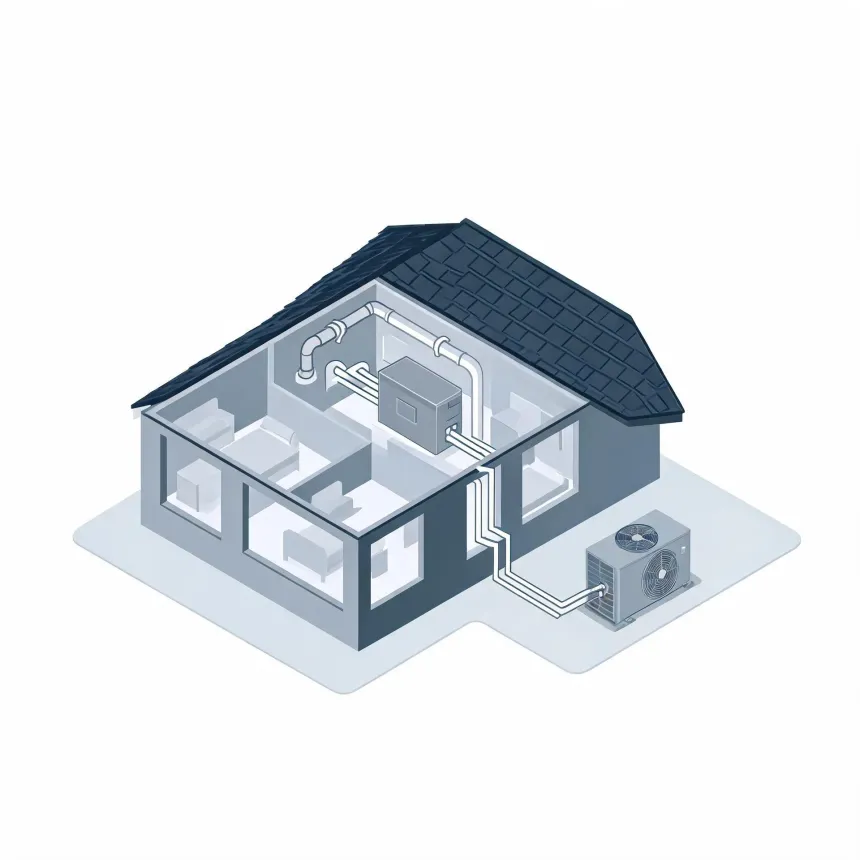
Isometric cutaway illustration of a gray house showing interior rooms, a central air handler with ducts in the attic, and refrigerant lines running to an outdoor condenser unit beside the building.
Your system heats October through April and cools June through September.

NOAA nClimDiv, 1991–2020 normals

A heat pump blowing air that doesn't feel warm isn't necessarily broken.

Check the thermostat setting before you assume the system has failed.

Summer storms test this system more than the heat does

54 damaging wind events from 2015 to 2024
19 hail events from 2015 to 2024
Winter nights average 25°F

October is when heat here switches over, and the first cold snap is when a weak heat pump shows it. A part that's been struggling all year, a contactor, a capacitor, a low charge, finally gets asked to carry the full load and doesn't. The same thing happens in reverse come June, when cooling starts back up after months of sitting idle. If your system just started acting up right as the weather turned, that's not a coincidence. It's usually the moment a problem that was already there finally had to work.

Storm damage is usually fixable, not fatal

If the trouble started after a storm rolled through, that fits. Wind and hail come through this county often enough that a knocked around outdoor unit is a normal thing to see, not a sign the system is done for. Get it looked at and most of the time there's a straightforward repair on the other side of it.

Find a contractor
A man in a cap, gray work shirt and tan pants climbs porch steps toward a blue front door, carrying a canvas tool bag, with a blue ceramic planter of white flowers beside him.
A gray heat pump condenser unit mounted on a concrete pad against the gray lap-siding exterior wall of a house.

Ask for the nameplate date before you decide anything

A technician can read the age straight off the nameplate inside the unit. That number matters more than how old the house looks or how the system sounds. If the nameplate date lines up with when the house was built, it's likely the original unit, running a normal schedule since day one. If it doesn't line up, someone already replaced it once, which is worth knowing before you spend money fixing the one that's there now. Either way, that's a five minute check, and it settles the question better than guessing.

What you can check yourself

Look at the outdoor unit first. If it's caked in ice, leaves, or grass clippings, airflow is blocked and the system can't move heat the way it should. A breaker that's tripped or a switch near the indoor unit that's been bumped off will also stop a heat pump cold, and both are safe to check and reset yourself. Swap the air filter if it's dirty. A clogged filter starves the system of airflow and can make a perfectly good heat pump act like it's failing.
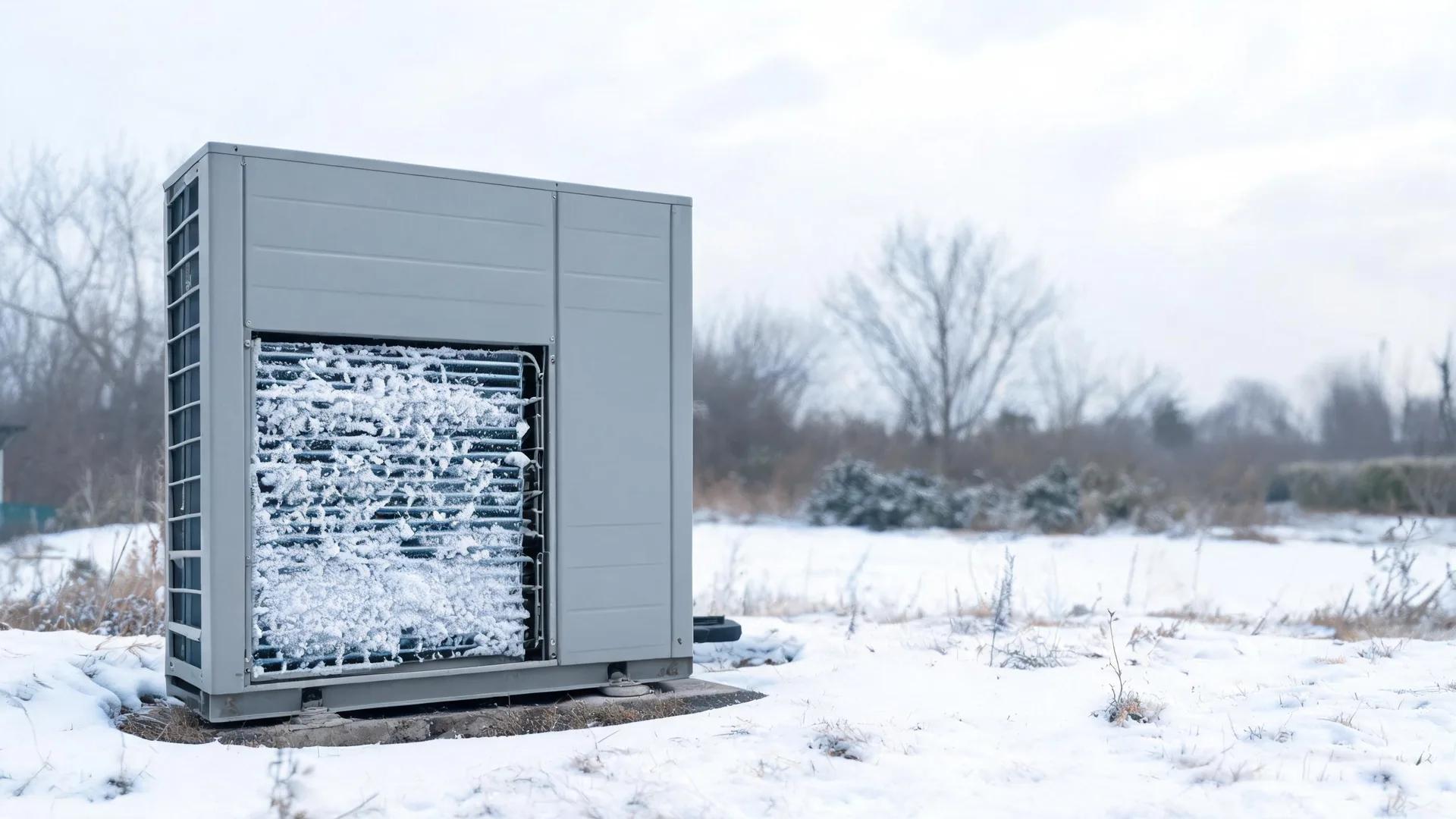
What to leave alone

Don't pull the outdoor cabinet apart or touch anything inside it. The refrigerant lines and electrical connections in there aren't a homeowner job, and opening the unit up can turn a simple repair into a bigger one. If the breaker trips again after you reset it, stop and leave it off. That's the system telling you there's a short or an overload, and running it anyway risks the compressor.

A heat pump that's struggling still moves heat, just not enough of it, and that's why people leave it running instead of calling someone. A compressor working against a low charge draws more current than it should and runs hotter than it should, every cycle it completes. A blower motor with a failing bearing keeps turning, but it's wearing a groove it can't recover from. None of that fixes itself by running longer. It gets worse by the same amount each cycle, until the part that was struggling quits instead of struggling. Shutting the system off and calling someone when you first notice weak airflow or a strange sound costs you one repair. Letting it run can turn that same repair into a compressor replacement.

A diagnostic visit starts outside, not in the basement or the attic. The technician checks the outdoor unit first, looking at the coil, the fan, and the refrigerant lines before touching anything electrical. From there it's gauges on the lines to check the charge, a meter on the capacitor and contactor to see if they're holding up, and a check of the reversing valve, since that's the part that lets a heat pump switch between heating and cooling and it's also a common point of failure. Static pressure and airflow get checked too, because a system can have good refrigerant and bad airflow and still perform badly. None of this is guesswork. Each reading either rules something out or points straight at the part that's failing, and that's what tells you whether you're looking at a quick repair or something bigger.