






Three lit brick homes on a tree-lined residential street photographed at dusk.

Heat Pump Repair in Cuba, MO

Tell us about the job

Takes about a minute. No obligation.

RepairHeat PumpCrawford County, MO
Step 1 of 2

What ZIP code is the job in?

Heat pumps here run heat from October through April, then switch over and run cooling from June through September. That is most of the year on one machine, with only May and September as a break between seasons. A heat pump that is already struggling tends to show it right when the load changes, in the first cold snap of October or the first hot stretch of June. If yours is acting up now, this is usually when a weak part finally gets found out, not a sign something new is wrong. Getting it looked at before the season fully sets in means it gets fixed before you need it every day.

7 months
October through April, your system heats
4 months
June through September, it cools
24°F
the average winter night it heats against
87°F
the average summer afternoon it cools against
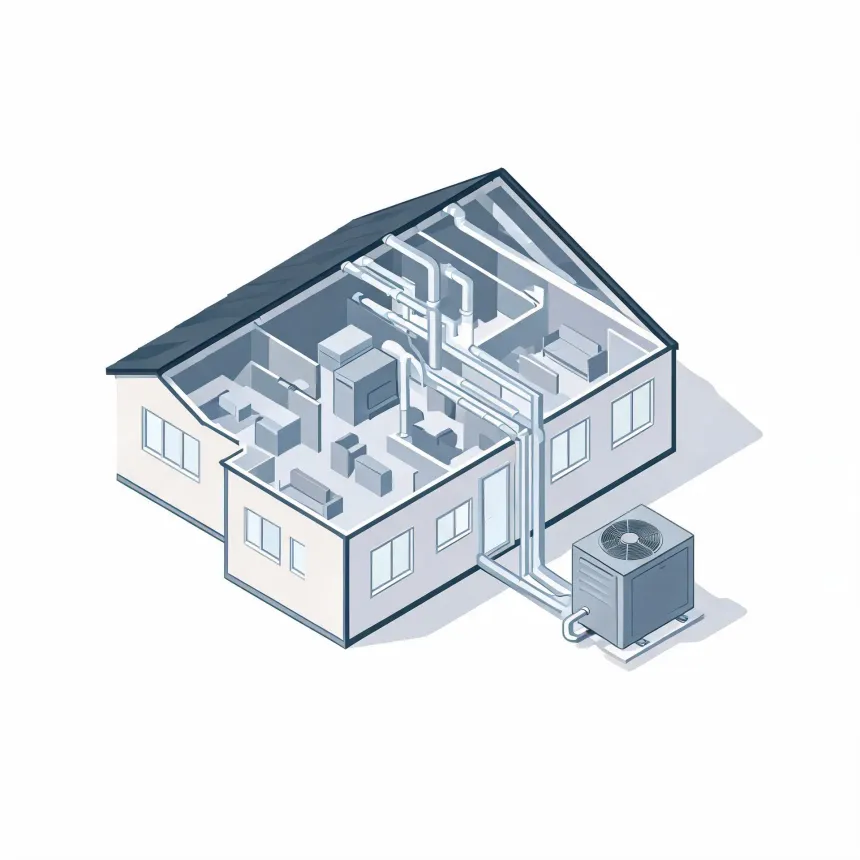
Isometric illustration of a cutaway single-story house showing interior ductwork and vents connected to an outdoor condenser unit beside the building, on a white background.
Your system heats October through April and cools June through September.

NOAA nClimDiv, 1991–2020 normals

Winter lows here average 24°F, not far below freezing, so your heat pump isn't fighting extreme cold to keep up.

A system that hasn't been pushed hard is usually a system worth repairing, not replacing.

Cuba doesn't push a heat pump harder than anywhere else

Power costs 12.91 cents a kWh statewide
22 hail events from 2015 to 2024
Winter nights average 24°F
Nothing about Cuba wears out a heat pump fasterHalf the homes in Crawford County were built in 1981 or earlier, and that alone doesn't change what's likely wrong with yours.

A refrigerant leak is the clearest case. Run the system low on charge and the compressor works harder to move what little refrigerant is left, building heat it isn't built to handle. Left alone long enough, that heat damages the compressor itself, which turns a line repair into a full unit replacement. A failing capacitor behaves the same way. It's weakening, not gone, so the motor it feeds starts pulling more current to do the same job, and that strain shortens the motor's life. Even something as simple as a dirty coil follows the pattern. Airflow drops, the system runs longer to reach the same temperature, and every part in that longer cycle wears faster than it should. None of these fail less by waiting. They fail more.

Get it looked at early

Problems tend to show up in the first weeks of the season, when the load hits a part that was already weak.

Find a contractor
A man in a navy long-sleeve shirt and tan work pants, seen from behind, carries a canvas tool bag up light-colored porch steps toward a blue front door.
A gray heat pump outdoor unit mounted on a concrete pad next to the stone-accented exterior wall of a house.

It never gets the off season other systems get

A heat pump never really gets a season off the way a furnace does. The outdoor unit sits outside through all of it, running in both directions, and that nonstop duty is what tends to wear it down. The reversing valve is usually the first part to show it. It is what switches the system between heat and cooling, and after enough cycles it can start sticking, leaving the system stuck in one mode or blowing air that is not the temperature you asked for. The outdoor coil takes a beating too. Dirt and debris collect on it in every season, not just summer, and as airflow drops the compressor has to work harder to move heat no matter which direction it is moving it. The parts that cycle most, the contactor, the fan motor, the compressor itself, are the ones that show their age first, simply because they never get a long stretch of rest.

Check the thermostat and the power first

Make sure the thermostat is set to the mode you want and the temperature is actually past the current reading. Check the breaker for both the indoor air handler and the outdoor unit. A heat pump that seems dead is sometimes just a tripped breaker or a thermostat set to the wrong mode after a season of not being touched.
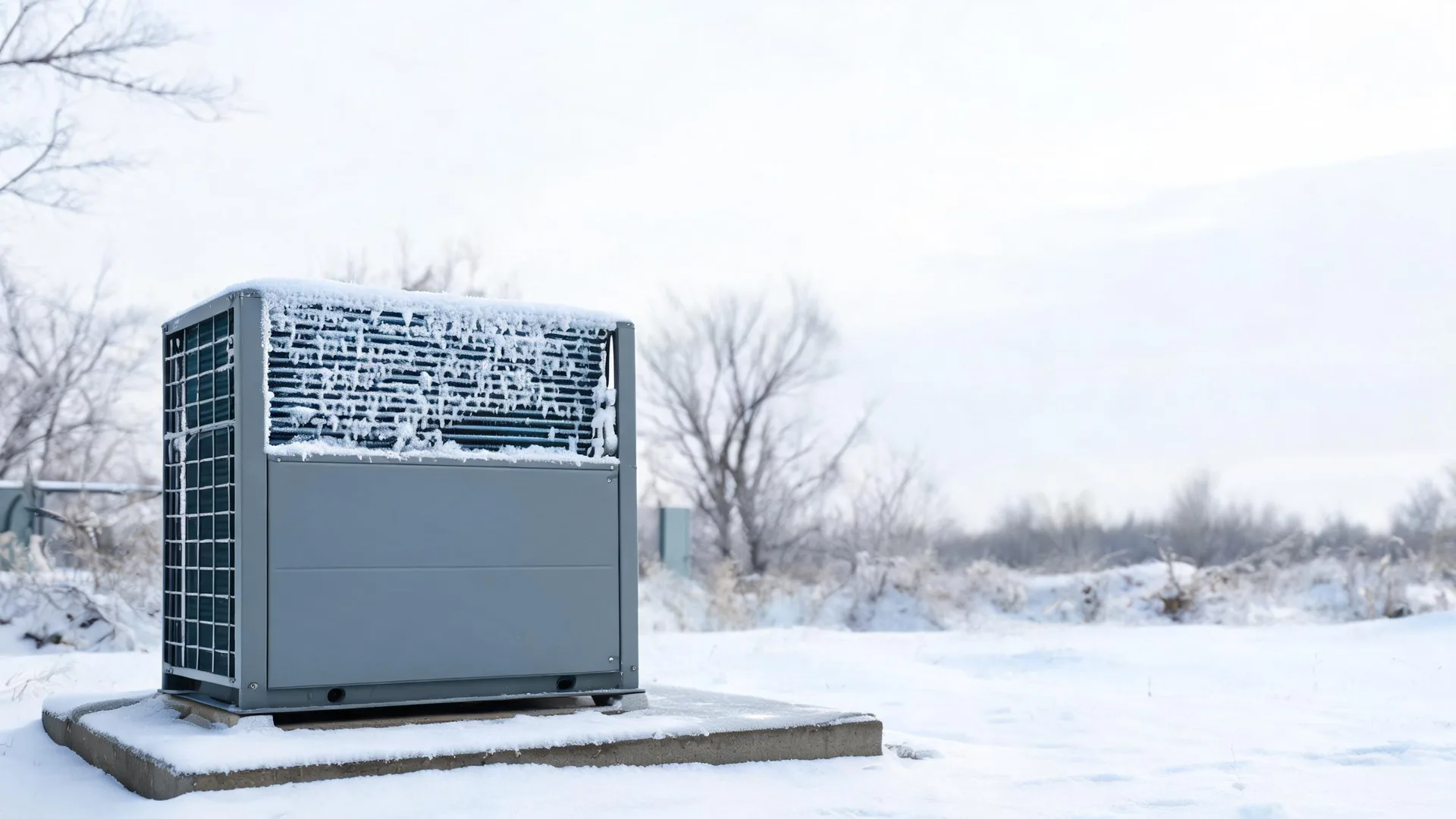
Look at the outdoor unit and the filter

Walk outside and see if the unit is iced over, or if leaves and debris are packed against the coil. Clear anything blocking airflow around it. Then check the filter inside. A clogged filter or a blocked coil can make the system struggle or run constantly, and both are things you can see without opening anything up.

Most people notice a heat pump problem through comfort, not sound. The air coming out feels lukewarm instead of warm, or the system runs on and on without ever quite reaching the set temperature. Short cycling is another one, where it kicks on, shuts off almost right away, then starts again. That usually points to a sensor or a control board telling it to stop before the job is done. Ice on the outdoor unit during defrost is normal. Ice that stays, or builds up thick, is not. A hissing sound near the lines or oil spots on the ground by the outdoor unit both point to a refrigerant leak, and that one tends to get worse, not better, if it waits.

Age by itself doesn't tell you whether to fix a heat pump or replace it. What matters is which part failed and what else it was connected to. A bad capacitor or a failed contactor is a straightforward swap, and it doesn't say anything bad about the rest of the system. A compressor failure is different. The compressor is the most expensive part in the unit, and on an older system a shop will often tell you straight that paying for a compressor swap doesn't make sense next to replacing the whole thing. The other thing worth asking is whether this is the first repair or the third one in a couple of years. One repair is just a part wearing out. A pattern of repairs on the same unit is usually the system telling you it's done, one part at a time.