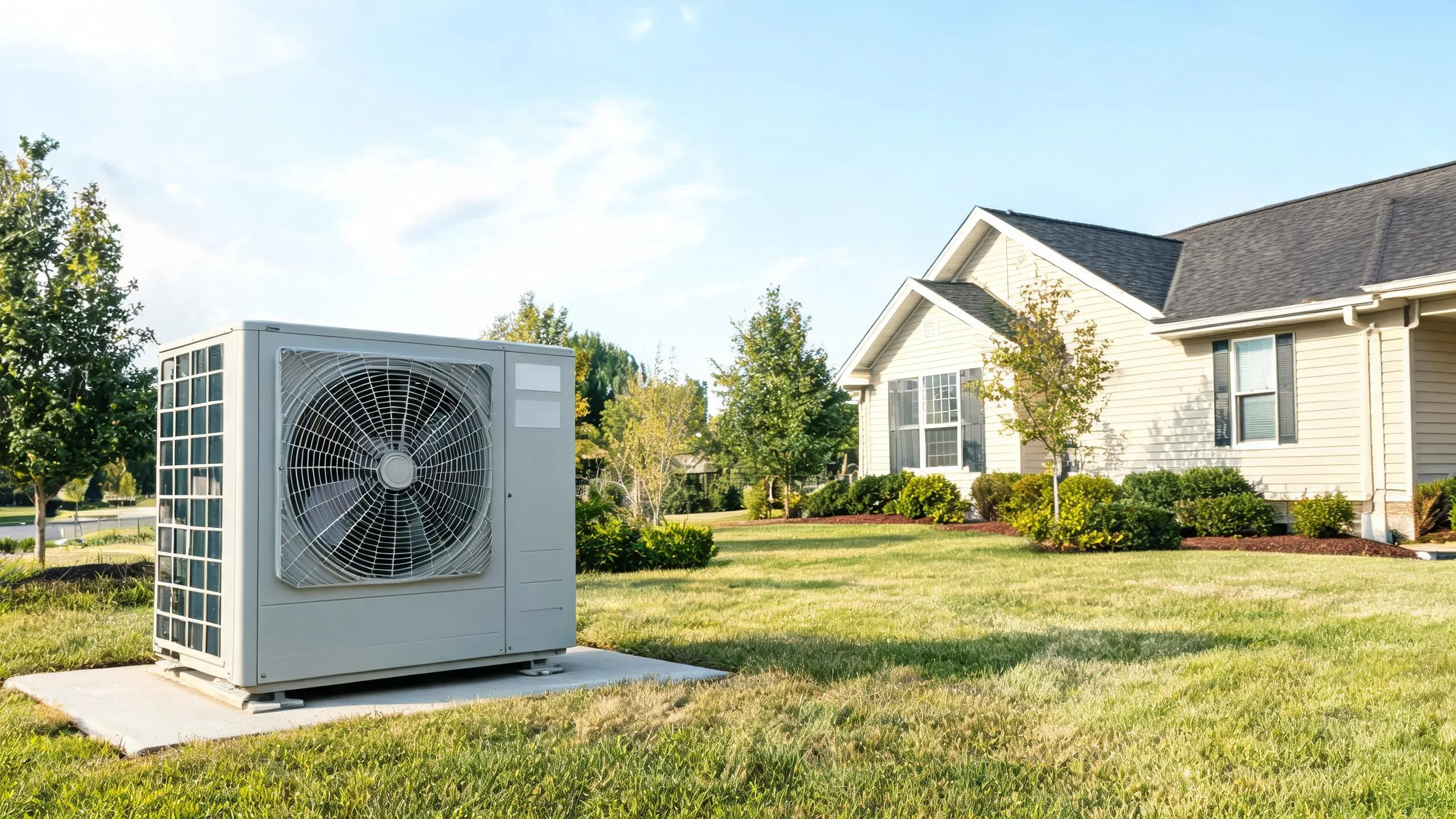
A grey heat pump outdoor unit mounted on a concrete pad in a suburban backyard, with a single-storey house visible behind it.

Heat Pump Repair in Branson, MO

Tell us about the job

Takes about a minute. No obligation.

RepairHeat PumpTaney County, MO
Step 1 of 2

What ZIP code is the job in?

Taney County sees a lot of storms

Taney County logged 253 severe weather events between 2015 and 2024, with 136 of those damaging wind and 94 hail. Eleven tornadoes touched down in that same stretch. A heat pump's outdoor unit sits outside through all of it, with no wall between it and the weather.

Hail and wind can hurt a unit that still runs

Hail dents the fins on the outdoor coil and bent fins block airflow the system needs to work right. Wind-blown branches and debris can do the same, or worse, to the fan and coil. A heat pump can keep running after a storm and still be hurting inside.

7 months
October through April, your system heats
4 months
June through September, it cools
27°F
the average winter night it heats against
88°F
the average summer afternoon it cools against
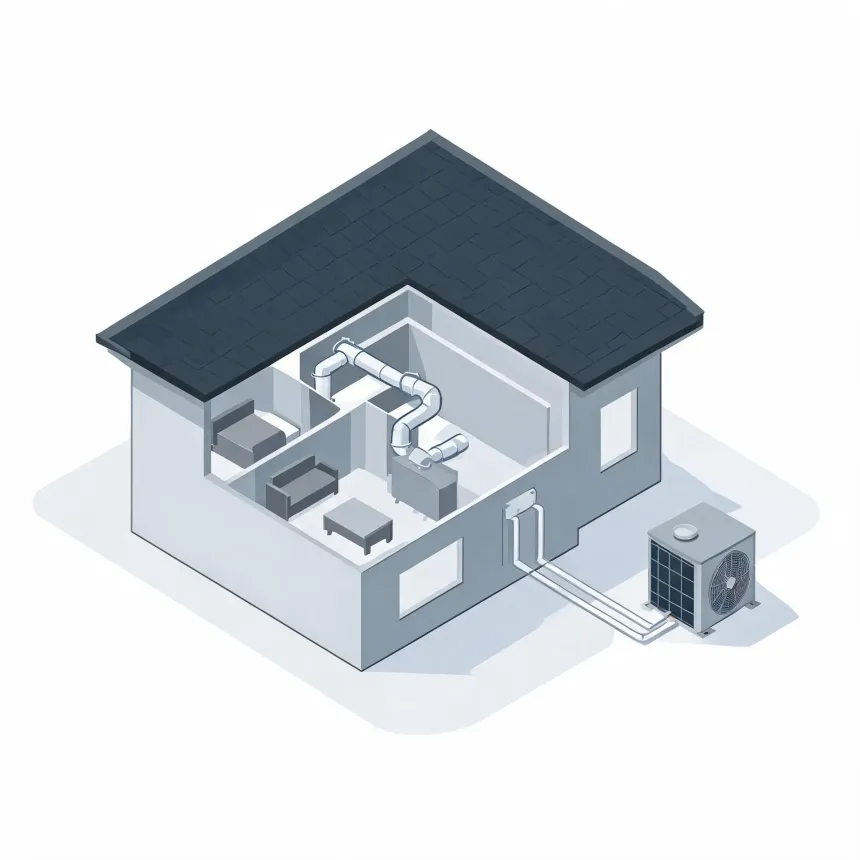
Isometric illustration of a cutaway single-story house showing interior ductwork, an indoor air handler and simple furniture, connected by lines to an outdoor condenser unit beside the building.
Your system heats October through April and cools June through September.

NOAA nClimDiv, 1991–2020 normals

Branson summers sit heavy, with the dew point averaging 66°F through June, July and August.

A heat pump pulling that moisture out all summer runs long hours, and long hours wear parts down early.

Half the homes here were built in 1995 or later, and a newer system is usually worth fixing

Half the homes here were built by 1995
Climate zone 4A
Power here costs 14.87 cents per kilowatt-hour
Built for Both SeasonsHeat here runs October through April, with overnight lows averaging 27°F in the dead of winter.

If your heat pump has been hit by hail or wind at some point, that damage doesn't always show up right away. A bent fin or a nicked fan blade can keep running for months before it turns into a real problem. Get a technician to check the outdoor unit over, not just the part that's acting up now. A repair that only treats today's symptom tends to come back, especially on a system that's already been through a storm or two.

If this storm season has already hit your unit, get it looked at now

If your outdoor unit has taken hail or wind since the last time someone checked it, don't wait for it to fail outright. A bent fin or a cracked blade can sit there for months before the system quits on a cold night or a hot one.

Find a contractor
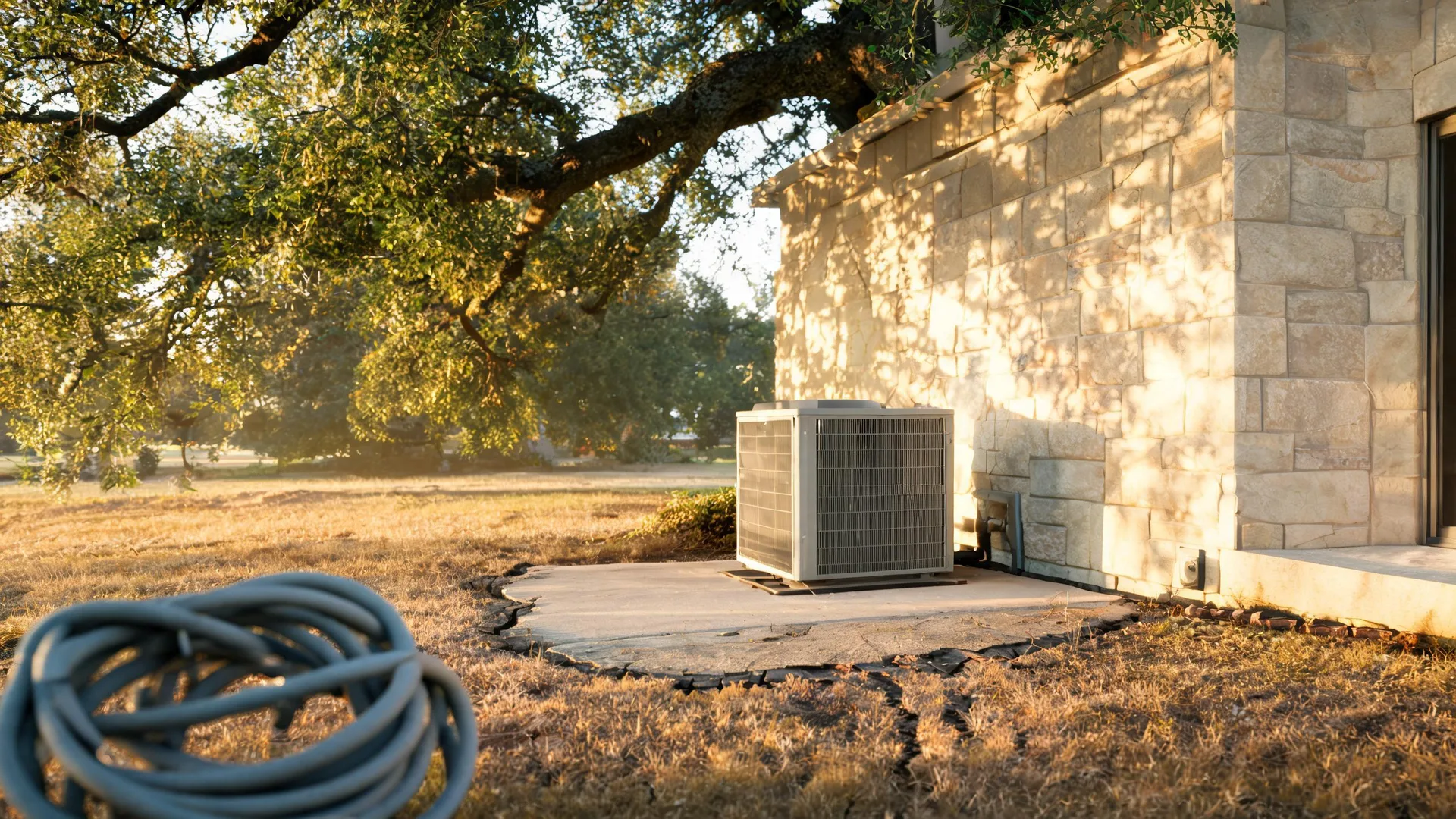
A gray heat pump outdoor unit mounted on a concrete pad next to the stone-accented exterior wall of a house.

How Much of Its Life Is Behind It

The time-lapse above shows one day. Most heat pumps are built to run for ten or more years of days like it. If yours came with the house and the house is on the newer side, there's a good chance it hasn't used up much of that run yet. That's worth finding out before anything else. A technician can check the age and condition of the unit itself rather than guessing from the house. If it's still within its working life, a repair is the straightforward call, even for damage like a bent fan blade or a dented coil fin.

A small problem rarely stays small

A heat pump low on refrigerant will keep running, but the compressor works harder to move heat with less of it. That extra strain shows up as heat, and heat breaks down the oil that keeps the compressor's moving parts alive. Run it a season like that and a repair can turn into a compressor replacement, which costs a lot more than fixing the leak would have.

The system won't tell you to stop

A heat pump has no way to know it's hurting itself. It will push air through a dirty coil or labor against a failing motor until something gives out, because the controls only watch for a few specific faults. Catching the signs yourself, weak airflow, strange noise, ice where there shouldn't be any, is what stops a cheap fix from becoming an expensive one.

A heat pump in trouble gives itself away before it quits. Warm air coming out of the vents when it should feel hot, or the system running nonstop without catching up to the thermostat, usually means it's losing the fight somewhere. Ice building up on the outdoor unit outside of defrost cycles is another one, and so is the outdoor fan not spinning when the system calls for heat or cool. Listen for it too. A grinding or screeching sound points to a failing motor bearing, a loud clicking that doesn't lead to startup points to a bad relay or capacitor, and a hissing or bubbling sound can mean refrigerant escaping where it shouldn't. Short cycling, where the system kicks on and off every few minutes instead of running a full cycle, puts wear on the compressor every time it happens. None of these fix themselves, and all of them get more expensive the longer they run.

Deciding whether to fix a heat pump or replace it comes down to what's actually failing and what else is likely to fail soon after. A blown capacitor or a bad contactor is a cheap part doing a small job, and swapping it brings the system right back to normal. A compressor going bad is a different animal, since the compressor is the heart of the unit and replacing just that part can cost close to what a new system runs. Age matters alongside the failure itself. A unit near the end of its expected life that needs a major part is usually not worth sinking money into, because something else tends to go within the next year or two. A tech who's honest with you will tell you which kind of repair you're looking at, not just what it costs to fix today's problem.