




A row of dark-sided single-story houses behind a tall trimmed hedge and a large tree, with a mown lawn and a paved path under an overcast sky.

Heat Pump Repair in Arnold, MO

Tell us about the job

Takes about a minute. No obligation.

RepairHeat PumpJefferson County, MO
Step 1 of 2

What ZIP code is the job in?

Arnold sits in zone 4A, which asks real work of both heating and cooling. That means your heat pump runs across most of the year, not just a few summer months. This is normal for the area, not a sign something's off with your system. Jefferson County has also logged 49 hail events between 2015 and 2024, and a direct hit can dent the fins on the outdoor unit or bend the fan cage, which cuts airflow over the coil. If your unit sat through a bad storm and started acting up soon after, that's worth checking first. Otherwise the problem is most likely what goes wrong with heat pumps anywhere, like a failing capacitor, a low charge, or a stuck reversing valve. A contractor can usually narrow it down in one visit.

7 months
October through April, your system heats
5 months
May through September, it cools
25°F
the average winter night it heats against
87°F
the average summer afternoon it cools against
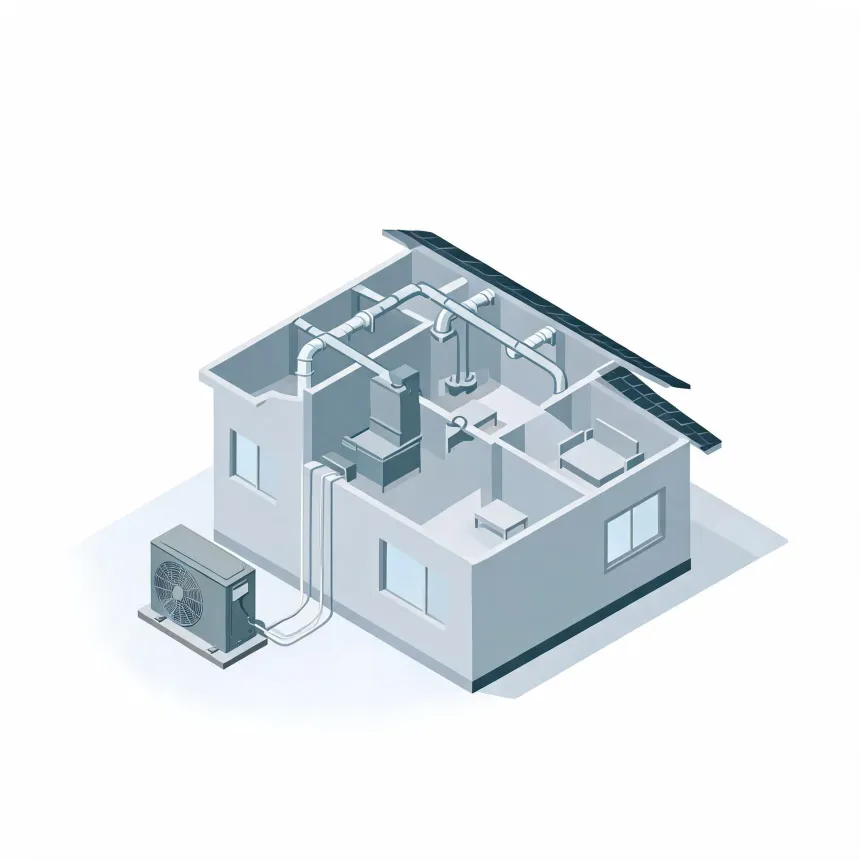
Isometric cutaway illustration of a single-story house showing interior ductwork, an air handler and rooms, with an outdoor condenser unit connected by refrigerant lines on a plain white background.
Your system heats October through April and cools May through September.

NOAA nClimDiv, 1991–2020 normals

Your heat pump switches over to heat in October.

If a part was already worn down, that first cold month is when it gives out.

Jefferson County sees its share of storms, but that's not why your heat pump quit

122 severe weather events from 2015 to 2024
19% of homes statewide lost power a day or more in 2024
53 damaging wind events from 2015 to 2024
Jefferson County homes are younger than mostHalf the homes in Jefferson County were built in 1987 or later, so a lot of heat pumps here still have years left in them.

A heat pump running on electricity costs more to operate when the rates are higher, and Missouri homes paid 12.91 cents per kilowatthour in 2024. That number matters more once a part starts failing. A low charge or a weak capacitor makes the system run longer to do the same job, so a problem that might cost little to fix gets expensive to ignore. Getting the real cause found early keeps that from adding up over a full season of use.

A newer system is usually worth fixing

If your heat pump came with the house, there's a good chance it's not old enough to be the problem. Get the actual cause checked before you plan on replacing anything.

Find a contractor
A gray heat pump outdoor unit mounted on a concrete pad next to the stone-accented exterior wall of a house.

Running through it rarely fixes it

A heat pump that's struggling doesn't fail all at once. A reversing valve that's sticking will still move heat, just not reliably, so the system keeps cycling trying to satisfy the thermostat. A low charge makes the compressor work against pressures it wasn't built for. Run either one long enough and the compressor is what gives out. That's the part you don't want to replace. A weak capacitor causes the same kind of harm. The motor it's supposed to kick-start keeps trying and draws more than it should, and that extra heat goes into the motor windings. None of this fixes itself by waiting. If something seems off, running longer hours only gives a small fault more time to turn into a bigger one.

What you can check yourself

Look at the outdoor unit and clear away anything stacked against it, like leaves or a fallen branch, so air can move through the fins. Check the air filter and swap it if it's gray with dust. Look at the thermostat and make sure it's set to heat, not cool, and that the batteries aren't dead if it has any. Go to the breaker panel and check that nothing's tripped. These take a few minutes and rule out the causes that aren't actually a broken part.
What to leave alone

Don't take the cover off the outdoor unit or touch anything inside it. Don't try to add refrigerant or guess at the charge, that's sealed equipment and handling it without gauges can damage the compressor. If you hear grinding or smell something burning, shut the system off at the thermostat and the breaker and leave it off until someone looks at it. Running it while a part is failing usually turns a small repair into a bigger one.

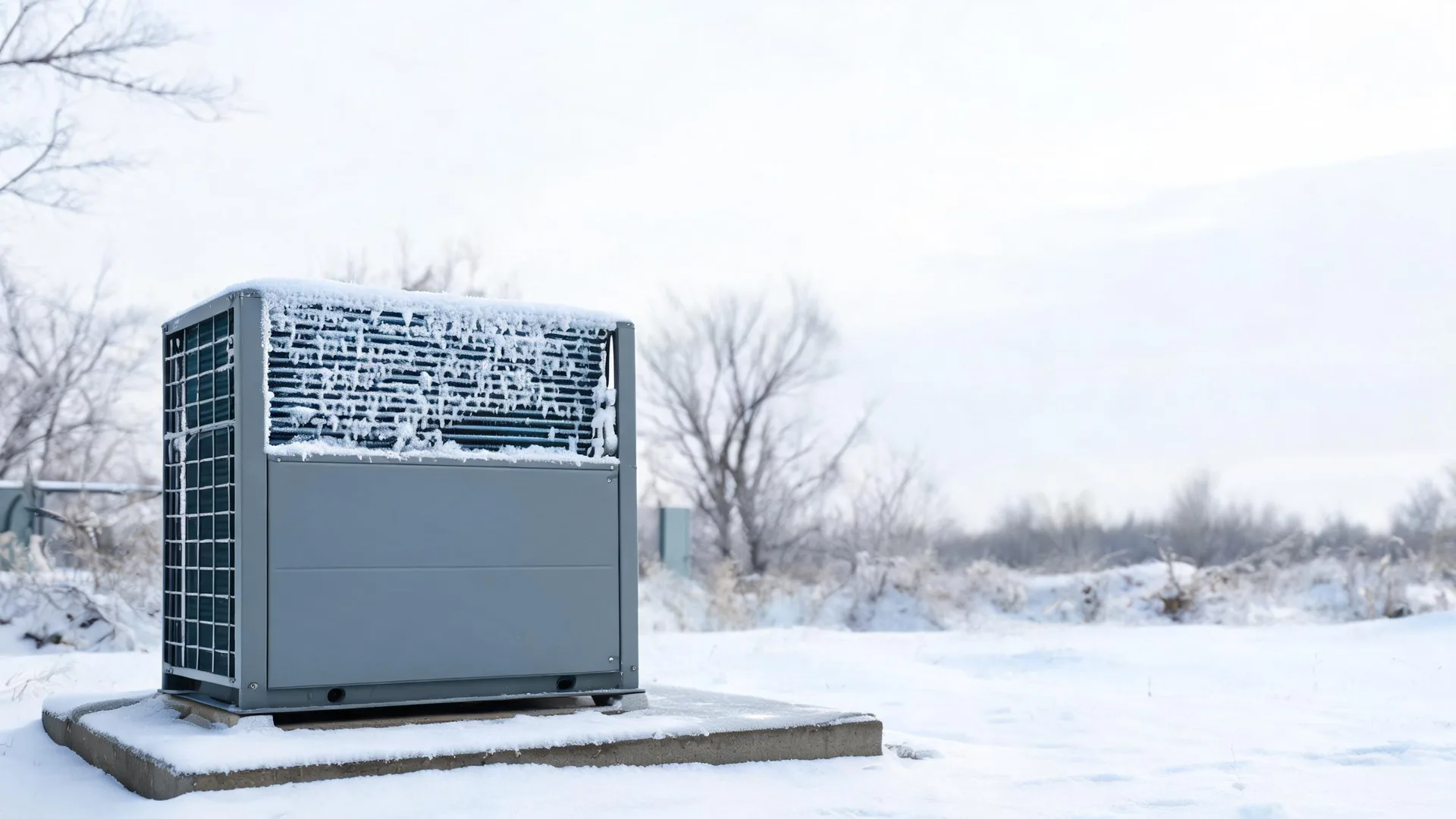
Most calls start with something simple the homeowner already noticed. Warm air coming out of the vents when the system's set to heat, or the outdoor unit running nonstop without ever shutting off. Sometimes it's noise, a rattle or a hum that wasn't there before, or ice building up on the outdoor coil and not melting off between cycles. A heat pump that short cycles, turning on and off every few minutes instead of running a full cycle, is usually struggling to satisfy the thermostat because something's not moving heat the way it should. None of these tell you exactly what's wrong on their own, but they tell you it's not just in your head, and they're worth mentioning when someone comes to look at it.

A tech starts outside at the unit itself, looking at the coil and fan before touching any gauges. Refrigerant pressures get checked first. That reading points toward a low charge or a failing compressor before anything gets taken apart. The capacitor gets tested under load, not just looked at, since a weak one can look fine sitting still. The reversing valve gets checked by feel. Both lines should change temperature when it switches, and if one doesn't, that's the valve. Airflow across the indoor coil gets checked too, since a coil starved for air will ice up for reasons that have nothing to do with refrigerant. None of this is guesswork. The readings either match a healthy system or they point straight at the part that's failing.