






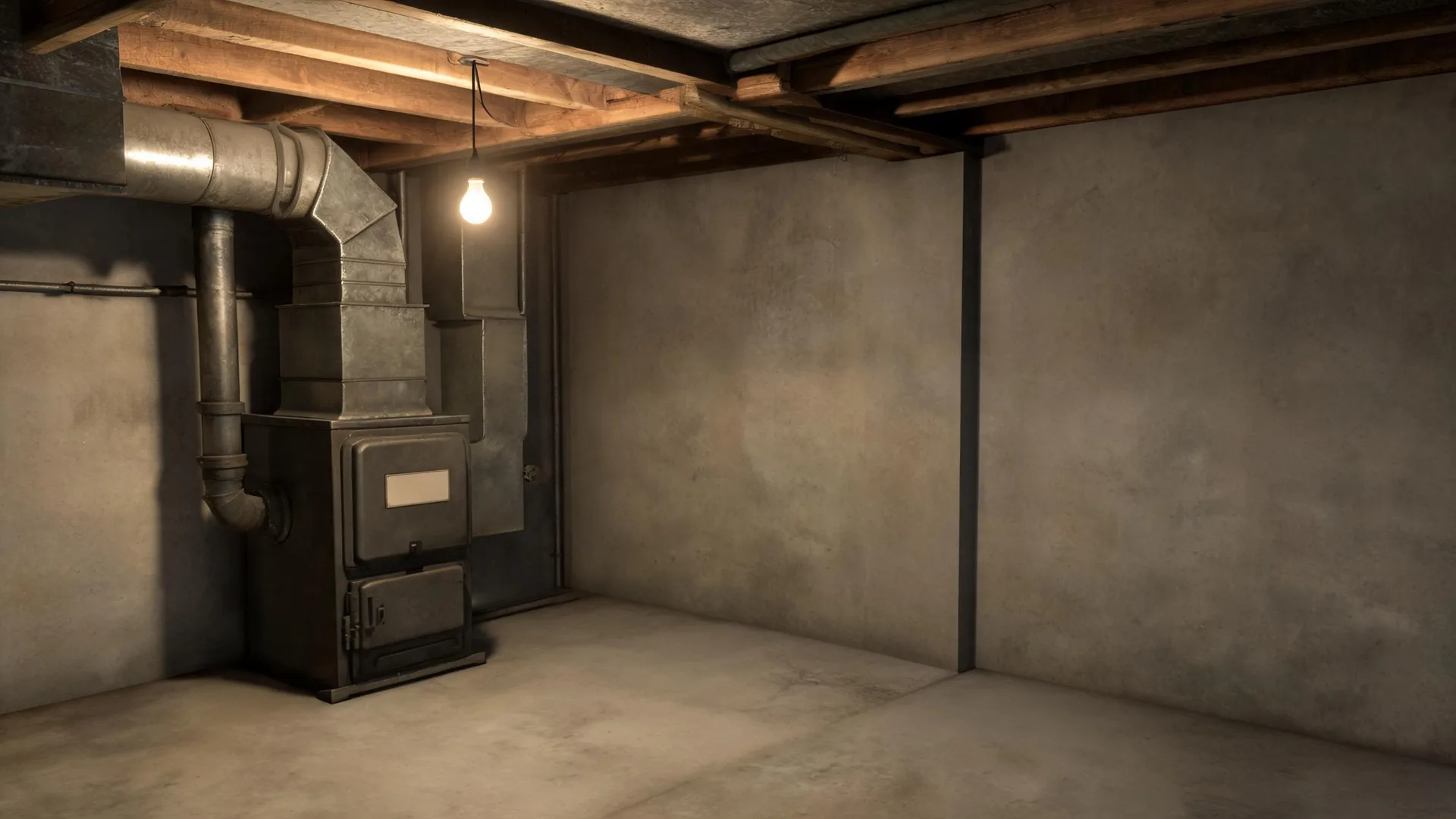
An empty unfinished basement containing a forced-air furnace with overhead ductwork, exposed ceiling joists, and a single hanging light bulb.

Furnace Installation in Warrenton, MO

Tell us about the job

Takes about a minute. No obligation.

New system or replacementFurnace or heatingWarren County, MO
Step 1 of 2

What ZIP code is the job in?

Most homes in Warren County heat with electricity, and Missouri homes paid $37.84 per million Btu for it in 2024. That rate applies to every month the furnace runs, so a furnace that wastes heat burns through more of it at that same price. An efficient furnace turns more of what it draws into heat in the house instead of losing it. Over a winter here, that difference shows up on the bill whether you notice the furnace running or not.

7 months
October through April, your furnace is on duty
24°F
the average winter night it heats against
80% AFUE
the federal minimum any new unit must meet
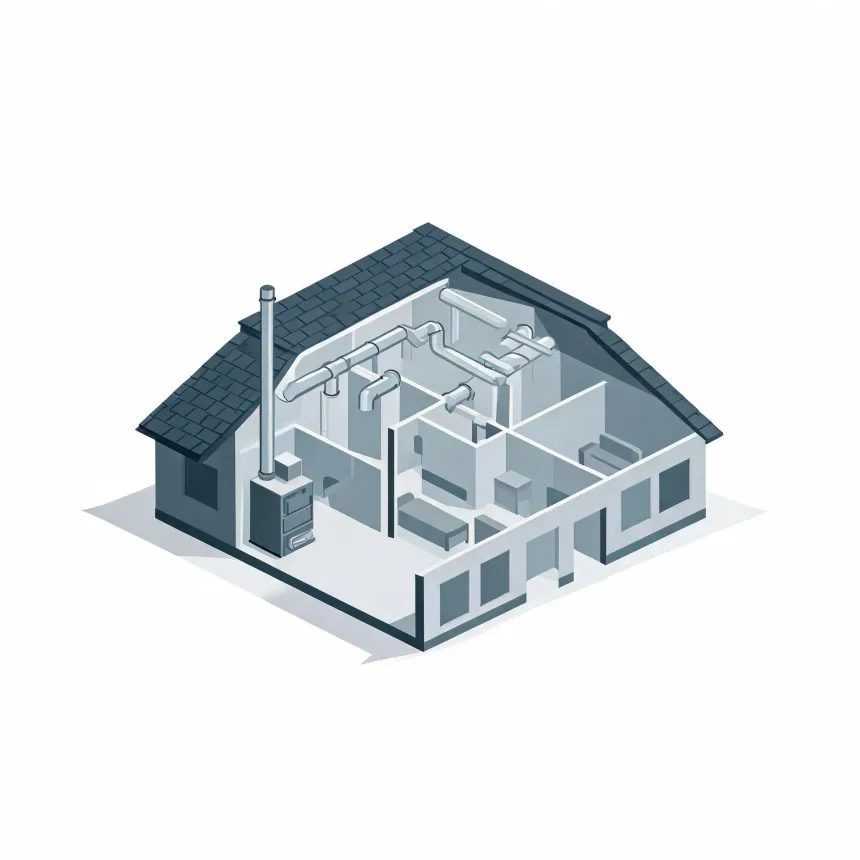
Isometric grayscale illustration of a cutaway house showing interior rooms, ceiling ductwork, a flue pipe, and a furnace unit on the left side.
Your furnace works hardest from November through March.

NOAA nClimDiv, 1991–2020 normals

A furnace sized by square footage alone can still be wrong for the house.

The right size comes from a load calculation, room by room, not a guess off the floor plan.

Most homes around Warrenton heat with electricity, so an electric furnace is the easy match

71.1% of homes heat with electricity
Heat runs October through April
Winter nights average 24°F
Get it in before OctoberHeat runs here from October through April, about seven months straight.

Warren County falls under zone 4A, a mixed climate that asks real work of both the furnace and the AC. That classification sets a floor under what can be installed here. Any gas furnace built on or after November 19, 2015 has to turn at least 80 percent of the gas it burns into heat over the winter, and nothing less meets code. A furnace built on or after December 18, 2028 has to hit 95 percent instead. That's not a rating to look for on a sticker, it's the minimum the unit has to clear before it can go in your house.

What you install now is what you pay for all winter

Picking the furnace that goes in now decides what every winter bill looks like after. At $37.84 per million Btu, the gap between a furnace that wastes heat and one that doesn't gets paid out every month it runs, which here is most of them.

Find a contractor
A man in a dark shirt and tan work pants, seen from behind, carries a canvas tool bag up wooden steps toward a blue front door of a gray clapboard house, with a shrub in a blue planter beside the door.
A gray residential gas furnace installed in an unfinished basement, surrounded by ductwork, a metal flue pipe, and a gas supply line.

The old furnace runs until the moment it doesn't

The old furnace does not get a rest before it comes out. It runs right up until the new one takes its place, so the crew sizes and sets up the replacement around a system that is still live. Once it is disconnected, whatever it can still tell you about the house goes with it. If it was oversized, undersized, short-cycling, or running longer than it should to hit the thermostat setting, nobody will know that by looking at the box sitting at the curb. The gas line, the vent, and the electrical connection it used usually carry over to the new unit, but a tech still checks each one rather than assuming the old hookup is right for the new furnace. An old heat exchanger can crack without ever tripping a carbon monoxide alarm, and plenty of furnaces get pulled out still looking fine on the outside while the inside tells a different story. None of that matters once it is disconnected. What matters is whether the duct system, the vent, and the gas line it leaves behind are actually sized for what is going in next, not just whatever used to be hooked up to them.

Ask what the AFUE number actually covers

Two furnaces can carry the same efficiency rating and still perform differently once installed. The rating is tested under set conditions, not in your ductwork. Ask what happens to that number if the ducts are undersized or the furnace is oversized for the load. A furnace that short-cycles because it's too big for the house won't deliver the efficiency printed on it, no matter what the sticker says.
Ask who is sizing it and how

A contractor who quotes a furnace size before looking at the house is guessing. Ask whether the quote is based on a room by room load calculation or just the size of the one coming out. Ask what happens to the vent and gas line, whether they get checked against the new unit's requirements or just reused because they're already there. The answers tell you more about the install than the brand on the box.

Installed cost comes from more than the furnace sitting in the box. The ductwork has to move the amount of air the new furnace is built to push, and if it can't, a tech has to account for that before the unit goes in, not after. Venting matters too. A furnace that burns gas needs an exhaust path sized and routed to match it, and that sometimes means new vent pipe instead of reusing what's there. The gas line itself has to deliver enough fuel for the furnace's rating, which isn't always what the old furnace needed. Labor covers the time it takes to do a load calculation, set the furnace level, seal the connections, and test it under real operation, not just bolt it where the old one sat. A furnace that goes in fast because none of that got checked tends to cost someone later, just not on the install invoice.

Install day starts before anyone touches the old furnace. A tech runs the load calculation and checks the ductwork, the vent, and the gas line against what the new unit needs, not against what used to be hooked up. The old furnace comes out, and whatever is being reused gets tested, not assumed. Setting the new furnace means leveling it, connecting the gas line, sealing the duct connections, and wiring the thermostat and any controls it uses. Once it's in place, a tech fires it up and checks the flame, the airflow, and the vent draft under real operation, not just a quick power-on. The furnace doesn't get called finished until it's been watched running a full cycle, not just switched on and left.