






Three illuminated two-story brick houses on a tree-lined residential street photographed at twilight, with warm window light and landscape uplighting visible against a deep blue evening sky.

Heat Pump Installation in Warrenton, MO

Tell us about the job

Takes about a minute. No obligation.

New system or replacementHeat PumpWarren County, MO
Step 1 of 2

What ZIP code is the job in?

Most homes in Warren County heat with electricity, 71.1% of them. A heat pump fits right into that picture, since it runs on electricity too and takes over the full job of heating and cooling from one unit. Gas heat is less common out here, just 13.9% on utility gas and another 10.3% on propane. If your house is one of the electric ones already, swapping in a heat pump at replacement time means no new fuel line, no new venting, none of that. The electrical work is already there to build on.

7 months
October through April, your system heats
5 months
May through September, it cools
24°F
the average winter night it heats against
86°F
the average summer afternoon it cools against
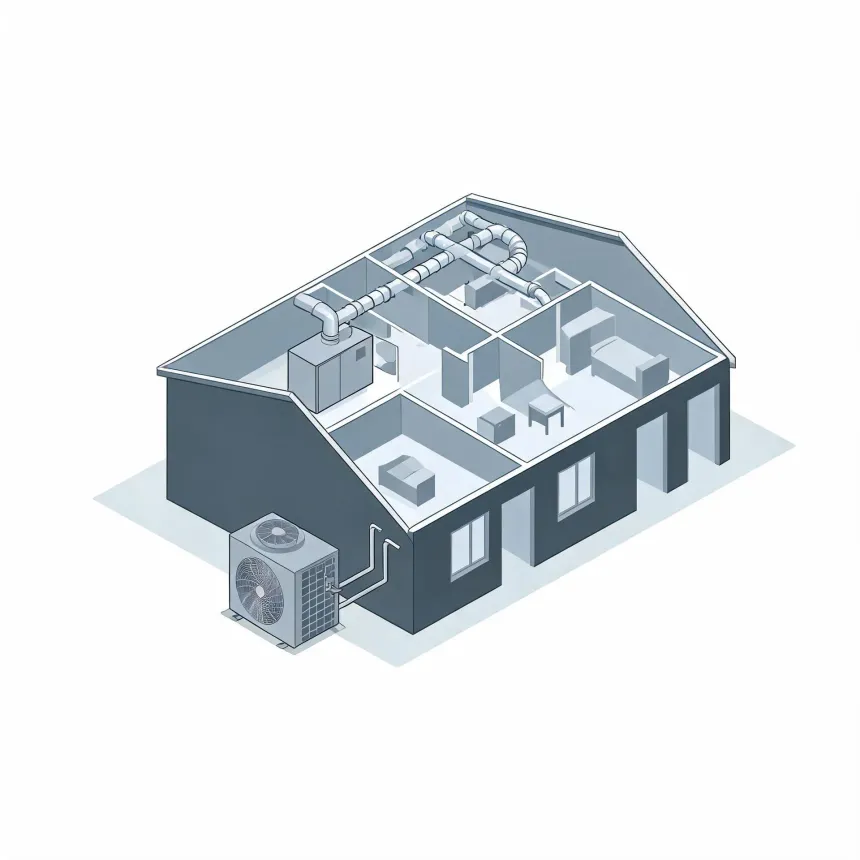
Isometric cutaway illustration of a single-story house showing interior rooms, attic ductwork and an air handler, with an outdoor condenser unit connected by lines along the exterior wall.
Your system heats October through April and cools May through September.

NOAA nClimDiv, 1991–2020 normals

Warrenton sees a 24°F average overnight low in December, January and February, not deep cold.

A heat pump sized for that doesn't need to be the top-tier model to keep up.

September is the month to replace it, before heat season starts in October

Cooling runs May through September
Heat runs October through April
19 hail events from 2015 to 2024
A heat pump that fits WarrentonMissouri electricity runs 12.91 cents per kilowatthour, and a standard-size, standard-efficiency unit is enough here

Warren County is in climate zone 4A, a mixed zone that asks real work of a system in both directions, heating and cooling. Any split-system heat pump installed here has to clear the federal minimums that took effect in 2023. That's 14.3 SEER2 for cooling and 7.5 HSPF2 for heating. Those numbers are a floor, not a target, so a contractor quoting a system for this county is already working above it. A federal tax credit is available for qualifying heat pump installations, worth checking against whatever system you're comparing.

Size it for a 24°F low, not for the top of the lineup

A standard-efficiency heat pump sized to a 24°F average winter low is a fair match for this county. Get a quote and see what a right-sized system runs here.

Find a contractor
A man in a cap and brown jacket, seen from behind, climbs porch steps toward a blue front door while carrying a canvas tool bag, with a potted shrub in a blue planter beside him.
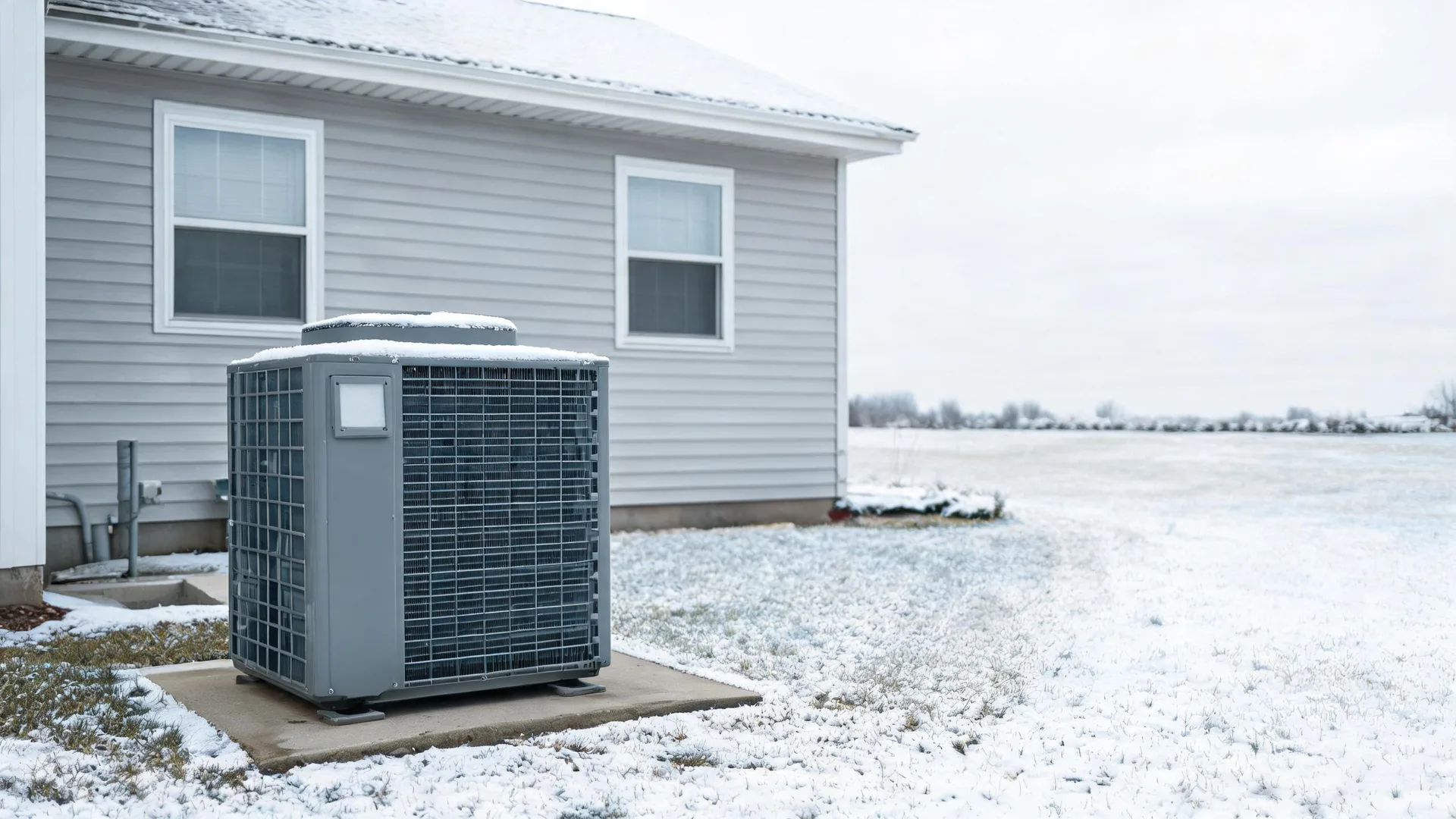
A residential heat pump outdoor unit mounted on a concrete pad next to a house with gray vinyl siding.

The size comes from a room by room calculation, not a guess

Sizing a heat pump comes down to a room by room heat loss and heat gain calculation, a Manual J, that weighs your square footage, your window area, your insulation and your ceiling height against each other. It isn't a guess based on the old unit or the size of the house next door. A system sized too big will short cycle, kicking on, satisfying the thermostat fast, then shutting off again before it's run long enough to pull moisture out of the air. Rooms end up feeling clammy even when the temperature on the wall reads right. A system sized too small can't keep up on the coldest or hottest days, and it leans hard on backup heat strips to make up the difference, running longer and harder than it should to get there. The unit runs daylight into dark, every day it's heating or cooling, so getting the size right at install is what keeps it from working against itself for as long as it's in the ground.

The old unit gets hauled away, refrigerant and all

A contractor has to recover the refrigerant from the old system before it can be disconnected, it's the law, not a courtesy. Once that's done the outdoor unit, the indoor coil and the old line set come out. None of it gets reused. The copper and the sheet metal get scrapped, the refrigerant gets handled separately.
The pad and the lines usually stay

If the old outdoor unit sat on a concrete pad, that pad often stays right where it is for the new one. Same with the line set path through the wall, in most cases a contractor will swap the actual lines but run them the same way. What changes is the equipment hanging on either end of it, not the path between.

When you're comparing quotes side by side, ask what the SEER2 and HSPF2 numbers actually are on each one, not just the brand or the price. Ask how they arrived at the size, and ask to see the Manual J rather than taking a number off the old nameplate. Ask what happens below freezing, specifically whether the backup heat is strip heat and how the system decides when to call for it, since that's what drives the electric bill on the coldest days. Ask what's included for the line set and the pad, whether those get reused or replaced, because that changes what's actually being installed versus what's being left alone. Ask about the warranty on the compressor separate from the warranty on labor, since those often run different lengths and a contractor who installs it may not be the one who has to honor it later. Quotes that look alike on paper can turn out to be different systems once you know what to ask.

Installation day itself usually runs start to finish in one visit. The crew shuts down power to the old system first, then recovers the refrigerant before anything gets disconnected. The old outdoor unit, the indoor coil and the line set come out, and the new equipment goes in against whatever stayed, the pad outside, the line set path through the wall, the ductwork already running through the house. The indoor coil and air handler get set, the new line set gets run and brazed, then pulled down to a vacuum to clear out air and moisture before refrigerant goes in. Electrical gets tied in last, breaker and disconnect matched to what the new unit calls for. Once it's powered up, the system gets run through both modes, heating and cooling, and checked against its charge and airflow specs before anyone calls it done.