An unfinished basement interior featuring a large metal furnace unit, exposed ceiling joists, concrete walls, and scattered boxes and cables on the floor.

Furnace Maintenance in Warrenton, MO

Tell us about the job

Takes about a minute. No obligation.

Tune-up, service, or cleaningFurnace or heatingWarren County, MO
Step 1 of 2

What ZIP code is the job in?

Electricity here runs $37.84 per million Btu

That's what Missouri homes paid in 2024, and most furnaces in Warrenton run on electricity. A furnace working harder than it needs to burns through more of it, and that shows up on the bill before anything actually breaks.


A dirty or strained furnace pulls more power for the same heat

A furnace fighting a clogged filter or a dirty coil draws more electricity to push out the same warmth. Over a winter of steady running, that difference adds up on a meter that's already charging state rates.

Electricity heats 71.1% of homes in Warren County, with propane and gas making up most of the rest.

Most furnace tune-ups in Warrenton are on electric systems, where the work centers on the blower, the coil and the filter, not a burner.

Heat starts here in October, full strength. Have it checked in September.

Heat runs October through April
Winter nights average 24°F
Climate zone 4A

Half the homes in Warren County were built in 1998 or later, so a lot of the furnaces in Warrenton still have real years left on them. A yearly check is what keeps them getting there. The blower motor and the coil wear slower when they're not working against a dirty filter or a buildup of dust. Skip the check for a few years and that wear doesn't show up as a breakdown right away, it shows up as a furnace that runs longer to do the same job. On a system that's only a few years old, that's effort it didn't need to spend.

A tune-up pays for itself on a meter already charging state rates

A furnace pulling more power than it needs to runs up a bill on electricity priced the way it is here. A yearly check on the blower, the coil and the filter is what keeps that power going toward heat instead of waste.

Find a contractor
A gray residential gas furnace installed in an unfinished basement, surrounded by ductwork, a metal flue pipe, and a gas supply line.

A Young Furnace Still Needs the Yearly Look

A furnace put in around 1998 or later still has years of work left in it, and a yearly check is what makes sure it gets to use them. Set the tune-up for the same month every year, before the cold sets in, and have the contractor look at the blower and the coil while the furnace is still young enough that wear hasn't caught up with it. A system that gets looked at every year tends to just keep running for as long as it was built to.

A Real Tune-Up Means Hands on the Furnace

A thorough check has the panels off. The tech pulls the blower wheel and looks for dust caked on the blades, checks the flame sensor and igniter, tests the capacitor, and checks the temperature rise across the heat exchanger. Electrical connections get tightened, since a loose one heats up and wears out faster. A quick visit skips most of this. The furnace gets a glance, the filter gets swapped, and the tech is out the door without ever testing whether the thing is actually running the way it should.

Ask What the Number Was, Not Just the Rating

A proper tune-up ends with the tech telling you a temperature rise or an amp draw, some reading they took and compared to what the furnace is supposed to produce. That number is how they know the blower and coil are working the way they're built to, not just spinning and blowing air. If a tech can't tell you a single measurement from the visit, they didn't take one. A furnace can look clean and still be pulling more power than it should to push out the same heat.

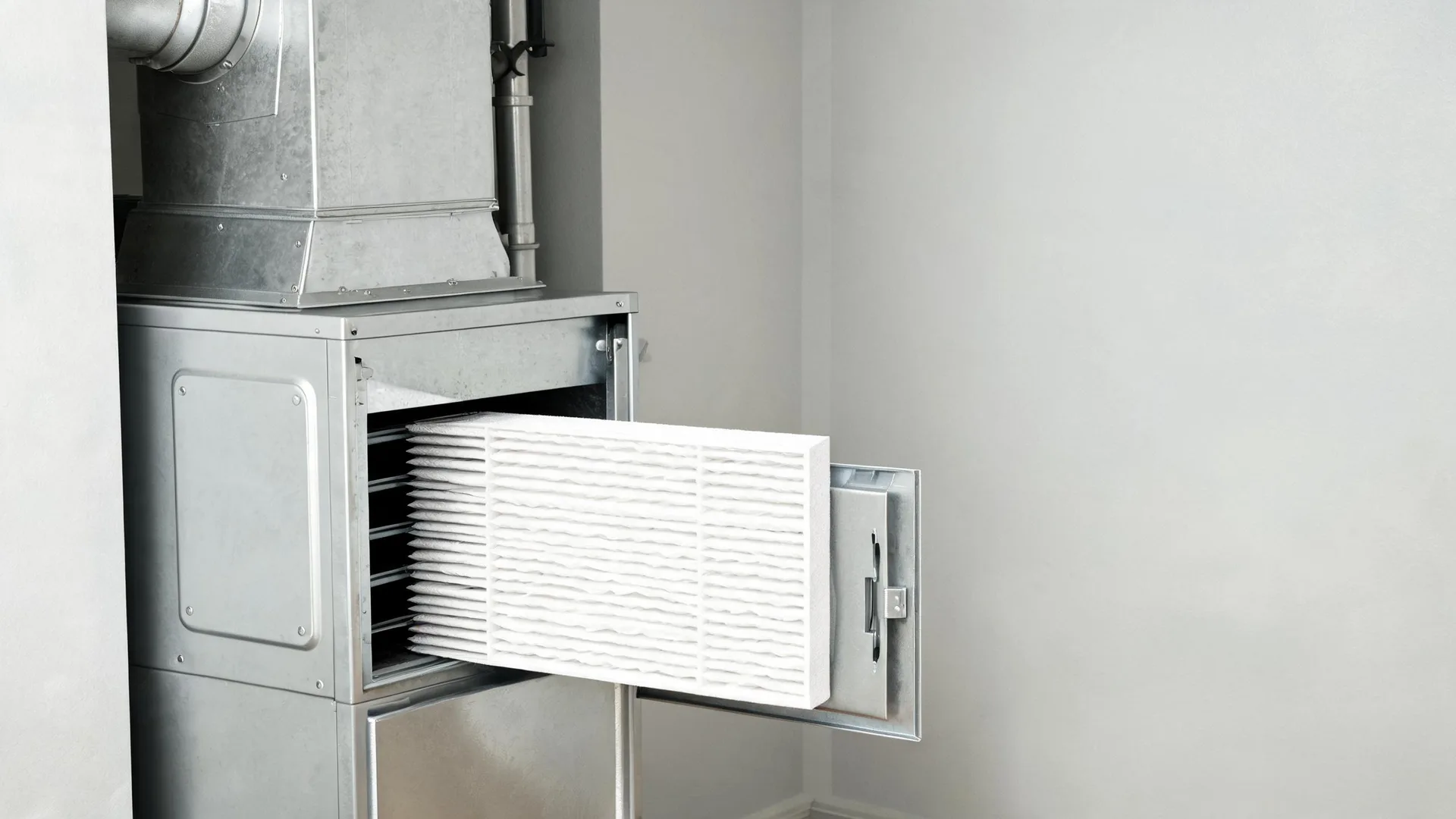
Between visits, the filter is the one thing worth checking yourself. A dirty filter chokes airflow, and the blower just pushes harder to force air through it. Look at it every month or so, especially when the furnace is running every day, and hold it up to the light. If you can't see through it, swap it. Keep the area around the furnace clear too, nothing stacked against the sides or blocking the return air grille, since the unit needs open air on both ends to work the way it's built to. Past that, leave the panels alone. Anything involving the burner, the flame sensor or the blower motor itself is for the tech to open up and test, not something to poke at between visits.

A full tune-up follows the air all the way through the furnace, not just at the filter. The tech checks the flame sensor and igniter, since a weak signal there is what causes a furnace to shut off mid-cycle or struggle to light at all. The heat exchanger gets inspected too, because a crack in it is a safety problem, not just a performance one. Belts have mostly disappeared from modern furnaces, but the blower motor and its bearings still wear, and a tech can hear or feel that wear before it turns into a failed motor. Gas lines and connections get checked for leaks on a gas furnace, and on any system, the wiring gets a look since a loose connection is where heat and wear start. None of this takes long when the furnace is in good shape. It takes longer, and matters more, on one that hasn't been opened up in a while.