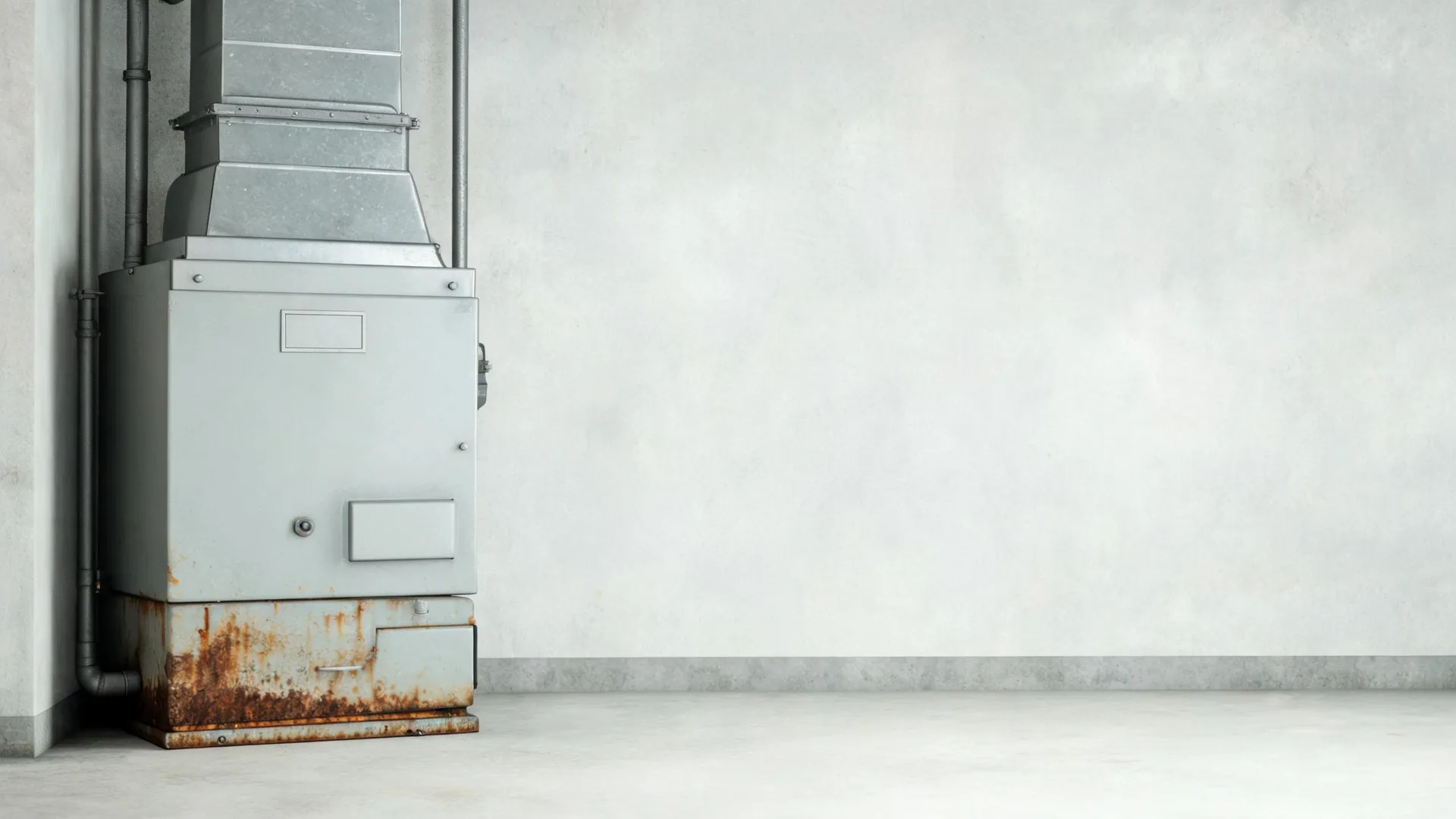
September is the month to catch it
Furnaces in Fulton sit unused most of the year and start back up in October. September is when a weak igniter or a bad limit switch can still get looked at before the cold makes it urgent.
Takes about a minute. No obligation.
Furnaces in Fulton sit unused most of the year and start back up in October. September is when a weak igniter or a bad limit switch can still get looked at before the cold makes it urgent.
Once heat is running every day in October, whatever was already marginal is what gives out, an igniter that was slow to catch, a flame sensor coated with residue. A repair now is the same repair, just before you're without heat to get it.

NOAA nClimDiv, 1991–2020 normals
Furnaces in Fulton run about seven months a year, October through April.
A furnace that age fails the way any furnace does, a worn part giving out, not something this county does to it.



Electricity in Missouri runs $37.84 per million Btu. A furnace that's short-cycling or running longer than it should burns through that every day it sits unfixed. Usually the cause is small. A dirty flame sensor, a blower motor working harder than it needs to, a clogged filter making the whole system push. None of that gets cheaper to ignore. The part that's failing now is the same part either way. The bill just keeps running until someone replaces it.
If your house went up in 1987 or later, the furnace likely has years left in it. That points to repair. Have someone find the part that's failing and fix that part.
Find a contractor
A furnace either lights, heats and shuts off clean, or it doesn't. The ways it doesn't are what you notice first. It takes a few tries to catch, or it catches late with a soft thump. It runs, but the air coming out isn't as warm as it should be. It short-cycles, kicking on and off every few minutes instead of running a full stretch. It makes a noise it didn't used to. A rattle from the blower. A screech on startup. A clicking that keeps going after it should have caught. The flame behind the window looks wrong, flickering or yellow instead of steady blue. Sometimes it just runs longer than it used to for the same result, working harder to hold the house at the same temperature. Any of these means a part is wearing out, not the whole furnace. Left alone, the part that's struggling now is usually the part that quits later, often on the night it's asked to work hardest.
The igniter has to get hot enough to light the gas every single cycle it runs. Heating and cooling that many times wears it down until it cracks or weakens to where it can't catch anymore. The flame sensor has an easier job, it just has to tell the control board a flame is there, but a thin coat of residue on it is enough to make it report nothing. The furnace reads that as no flame and shuts itself down, even with gas lighting fine. Both parts fail from ordinary use, not from anything going wrong.
A blower motor pushes air every time the furnace runs, and a dirty filter or blocked vent makes it work against resistance it wasn't built for. That strain wears the motor down faster than normal use would. The limit switch is there to shut the furnace off if it's overheating, so when a motor is struggling or airflow is restricted, the switch starts tripping on its own, sometimes read as the furnace shutting off for no reason. Either part can be the one that finally quits, but the real cause is usually whatever was making it work harder in the first place.
A furnace that's struggling still finishes the call most of the time, so it's easy to let it ride. That's what lets the problem grow. A flame sensor coated just enough to misfire once an hour reports no flame more often as the coating thickens, and each shutdown is a hard stop and a hard restart, which is exactly the cycle that cracks an igniter. A blower working against a clogged filter doesn't just run hot that one day, it runs hot every day, and heat is what wears down a motor's windings over time. A limit switch tripping once a week turns into tripping every cycle, because whatever was making it trip hasn't gone away. None of these problems fix themselves by running longer. They use the extra runtime to wear down whatever's next in line.
A diagnostic visit starts with the questions a furnace can't answer for itself. What's it doing, when, and how often. Then it's a sequence, not a guess. Power and thermostat call first, then ignition, then flame, then airflow. A tech will pull the igniter and look at it under light, because a hairline crack doesn't always show until it's glowing. The flame sensor comes out and gets cleaned or tested regardless, since a weak signal looks the same as no signal to the control board. Amp draw on the blower motor says whether it's straining against something or running the way it should. The limit switch gets checked against what's actually happening with airflow, not just treated as the problem itself. Each step either clears a part or points to the next one, and the part that finally explains the symptom is the part that gets replaced.