Dark-painted single-story houses with gray shingle roofs behind a trimmed green hedge and mown lawn, surrounded by leafy trees under an overcast sky.

Heat Pump Repair in St. Joseph, MO

Tell us about the job

Takes about a minute. No obligation.

RepairHeat PumpBuchanan County, MO
Step 1 of 2

What ZIP code is the job in?

Wind isn't why your heat pump is down

Buchanan County sees damaging wind 72 times between 2015 and 2024, but that's a roof and tree problem, not a heat pump problem. A unit built to sit outside through Missouri weather doesn't fail because of a storm somewhere in that stretch.


So look at the unit itself

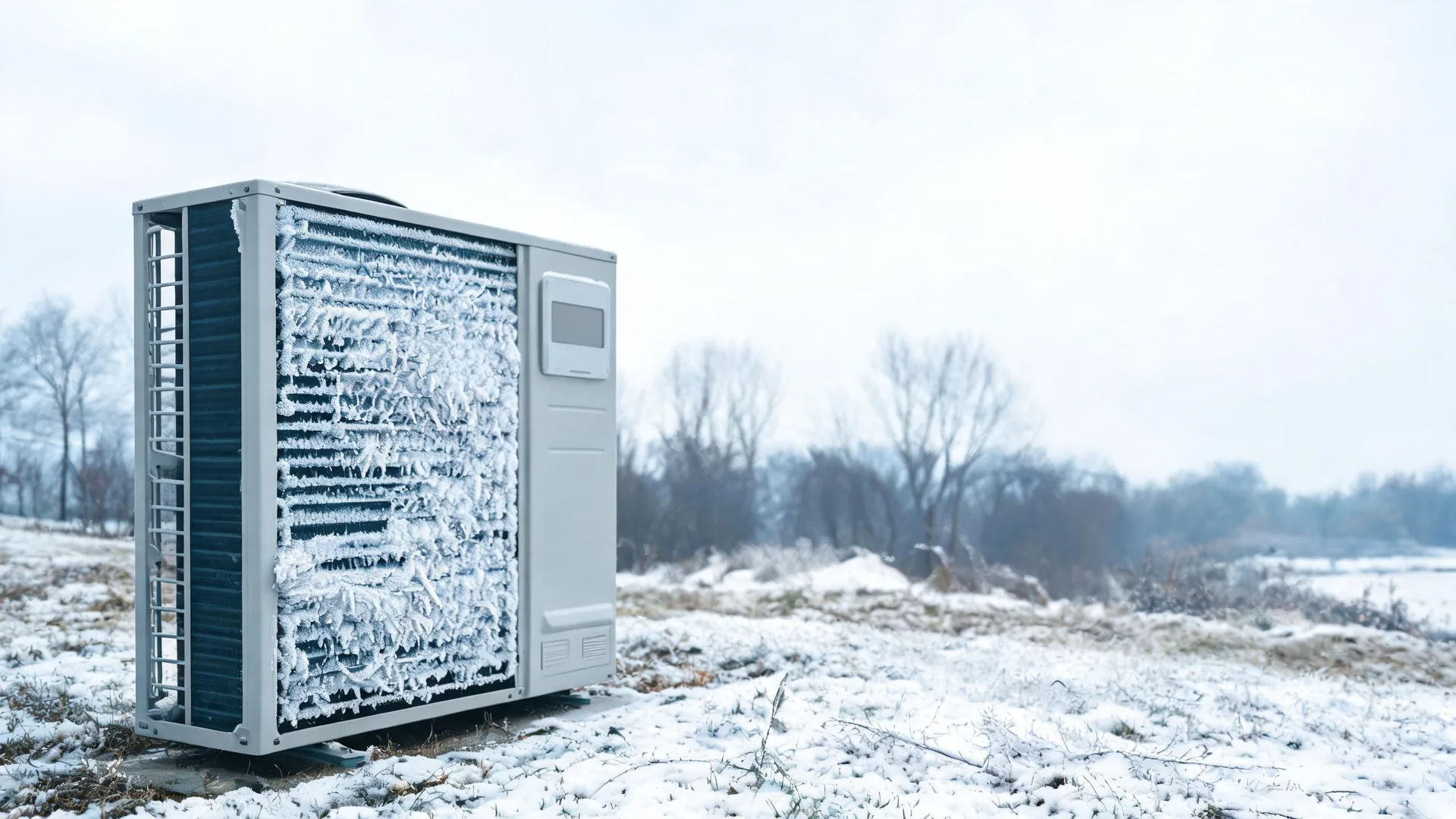
When a heat pump quits or stops keeping up, the cause is almost always something inside it wearing out or failing on its own. A weak capacitor, a bad contactor, a low charge, a frozen coil. A tech can narrow that down fast once they're looking at the system.

7 months
October through April, your system heats
4 months
June through September, it cools
21°F
the average winter night it heats against
86°F
the average summer afternoon it cools against
Isometric cutaway illustration of a house showing attic ductwork, an indoor air handler, furnished rooms, and an outdoor condenser unit connected by lines along the exterior wall.
Your system heats October through April and cools June through September.

NOAA nClimDiv, 1991–2020 normals

September is the month to get your heat pump looked at, not October.

Once the cold hits and the system runs nonstop, a weak part gives out fast.

Half the homes in St. Joseph are old enough to be on their original heat pump

Half the homes here were built by 1964
72 damaging wind events from 2015 to 2024
Power costs 12.91 cents a kWh statewide
St. Joseph weather isn't the problem8 winter storms hit Buchanan County between 2015 and 2024, the smallest count of any weather type here

Nothing about St. Joseph runs up your electric bill faster than a heat pump working harder than it should. Missouri homes paid 12.91 cents per kilowatt-hour in 2024, and a heat pump losing its charge or running on a weak capacitor pulls more power to do less heating. That cost shows up before the system fails outright. A tech checking the charge and the electrical parts now catches the kind of wear that's already costing you money, not just the kind that ends in a breakdown.

Find out how much life your heat pump has left

If your heat pump came with the house, a repair is only part of the question. A tech can check the capacitor, the contactor and the charge, and tell you whether that's an old system wearing out or one that's still got years left.

Find a contractor
A man in a dark long-sleeved shirt and tan work pants, seen from behind, carries a canvas tool bag up porch steps toward a blue paneled front door of a house with light lap siding and a potted flowering plant.
A dark gray heat pump unit mounted on a concrete pad next to a house with gray siding and a stone veneer wall.

What to check before you call

Before calling, check the thermostat first. Make sure it is set to heat and the temperature set point is actually above room temperature. A dead battery or a setting bumped by accident sends out service calls that did not need to happen. Next look at the outdoor unit. If it is packed with ice, buried in leaves, or blocked by snow, airflow is cut off and the system cannot do its job. Clear debris away from the cabinet, but leave ice alone. Chipping at it can damage the coil underneath. Check the air filter too. A filter clogged with dust starves the system of airflow, and a heat pump that cannot pull in air will struggle to heat no matter what else is working right. Walk through the house and make sure supply vents are open and not blocked by furniture or rugs. Last, check the breaker panel. A tripped breaker cuts power with no sound or smell to warn you first. If it trips again after you reset it, stop and call a tech. That is an electrical fault, not something to keep resetting.

What a tech checks first

A tech starts outside, at the unit itself. Refrigerant pressure, the contactor, the capacitor, the reversing valve. These are the parts that fail most and they're the fastest to rule in or out. Inside, they'll check the air handler and the thermostat signal to see if the system is calling for heat correctly and responding the way it should.

Why the reversing valve gets special attention

A heat pump has one part a furnace doesn't have. The reversing valve switches the system between heating and cooling. If a heat pump blows cold air when it should blow warm, or gets stuck in one mode, this valve is usually why. It's a part worth testing early, since it points straight to the cause instead of leaving a tech guessing.

A heat pump that's struggling doesn't fail cleaner by staying on. A weak capacitor still starts the compressor, just with a harder jolt each time, and that wear adds up fast once the system is cycling all day. A low charge makes the compressor run longer to move the same heat, and a compressor that overheats from running low can seize for good. A coil that's starting to ice over blocks more airflow the longer it stays on, and once it's fully iced the system stops moving heat at all. None of these get better on their own. Shutting the system off and getting a tech to look at it before the next cycle beats running it until something breaks outright.

A heat pump nearing the end doesn't always announce it with one big failure. It's a compressor that short cycles, a system that runs long and still can't catch up, parts getting replaced more often than they used to be. A single worn part on an otherwise sound system is worth fixing every time. The question changes once the compressor itself is failing or the coil is leaking, because those jobs cost close to what the rest of the system is worth. A tech who's opened the cabinet can tell you which kind of problem this is. Guessing from the thermostat can't.