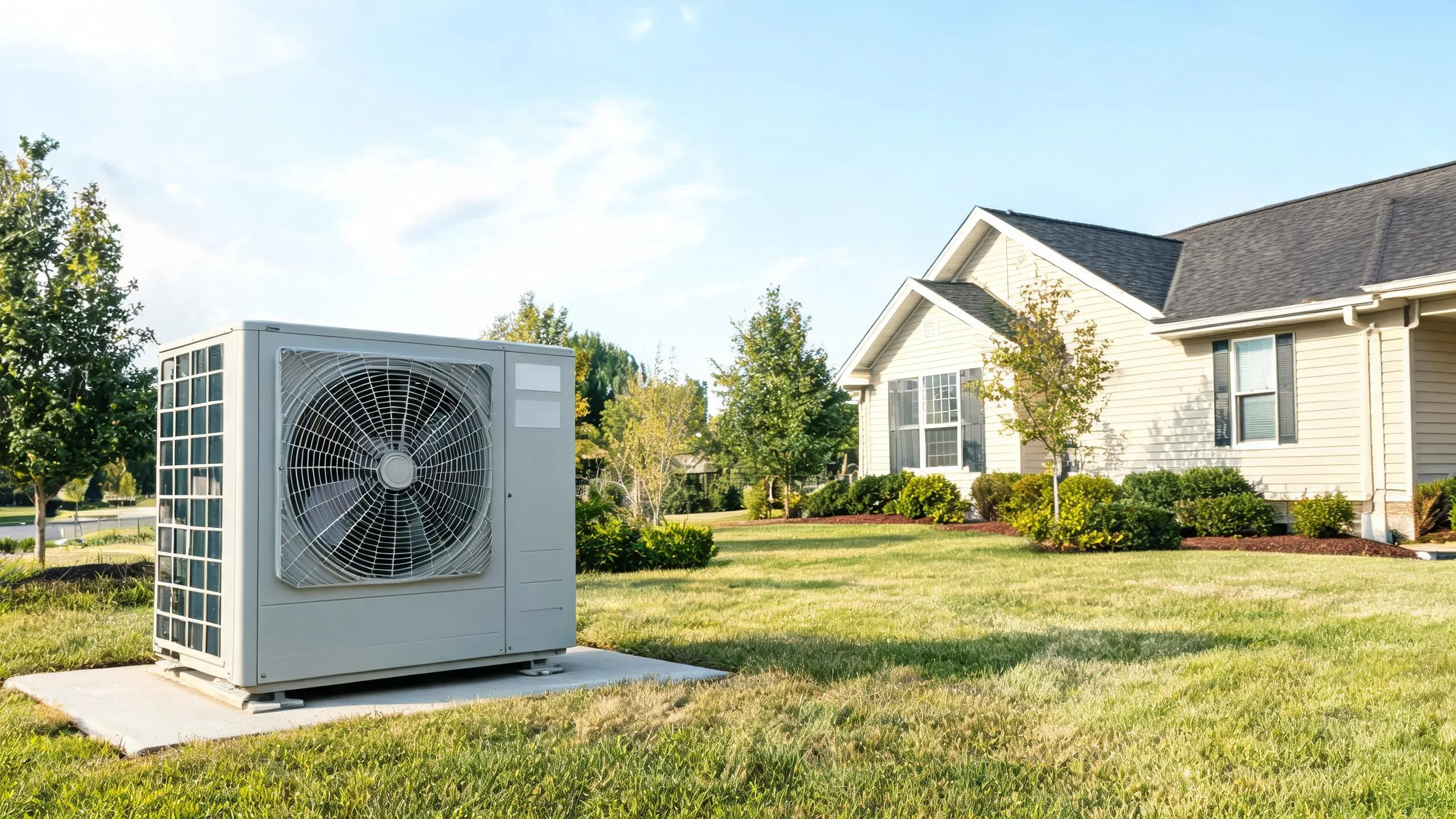






A grey heat pump outdoor unit mounted on a concrete pad in a suburban backyard, with a single-storey house visible behind it.

Heat Pump Repair in Springfield, MO

Tell us about the job

Takes about a minute. No obligation.

RepairHeat PumpGreene County, MO
Step 1 of 2

What ZIP code is the job in?

Greene County saw 474 severe weather events between 2015 and 2024. Most of that was wind and hail: 302 damaging wind events and 140 hail events, plus 14 tornadoes. Your outdoor unit sits outside through all of it, with nothing but a thin coil and a fan exposed to whatever comes through. Hail can bend the fins or crack the fan blade, and wind-blown debris gets into the coil even when the unit doesn't look hurt from the porch. A heat pump that took a hit like that can keep running for a while and still be losing efficiency or heading toward a bigger failure.

7 months
October through April, your system heats
4 months
June through September, it cools
25°F
the average winter night it heats against
87°F
the average summer afternoon it cools against
Isometric cutaway illustration of a single-story house showing interior ductwork, an indoor air handler and furnace unit, and an outdoor condenser connected by a line, on a white background.
Your system heats October through April and cools June through September.

NOAA nClimDiv, 1991–2020 normals

Half the homes in Greene County were built in 1982 or later.

A heat pump installed with a newer house usually still has working life in it, so repair is the right first call.

October asks something of your heat pump that September never did

Cooling runs June through September
Heat runs October through April
Climate zone 4A

Severe weather here does more than put a heat pump at risk in the moment. Greene County has gone through 302 damaging wind events and 140 hail events between 2015 and 2024, plus 14 winter storms on top of that. A unit that has weathered that kind of stretch earns a real diagnosis, not a guess based on the one symptom you can see. Ask the contractor to check the coil, the fan blade, and the refrigerant charge, not just whatever part is making noise. That is what finds the actual cause instead of papering over it, and it is what keeps the repair from being the first of three.

After the storm passes, the damage to your heat pump can still be sitting there

If your heat pump took a hit from hail or wind, it may still run while it loses efficiency underneath. Have it looked at now, before a bent coil or a cracked fan blade turns into a bigger repair.

Find a contractor
A man in a dark T-shirt, backwards cap and brown work pants, seen from behind, climbs porch steps toward a blue paneled front door while carrying a canvas tool bag, with a potted shrub in a blue planter to the right.
A gray air-source heat pump mounted on a concrete pad next to a house with gray vinyl siding, surrounded by gravel and flanked by green shrubs and white hydrangea flowers.

Still within its working life, most likely

If your heat pump came with the house and the house is from the newer half of the county, repair is worth doing right. A unit with years of working life left is worth keeping running through the next ice storm or the next power cut, not replacing over one bad part. Ask the contractor what's actually failed before you decide it's time for something new.

A small fault can take out a bigger part

A refrigerant leak starves the compressor of the gas it needs to stay cool while it runs. Keep the system going on a low charge and the compressor runs hotter than it should, and that heat breaks down the oil that lubricates it. What started as a leak you could have caught early can end with a compressor that has to be replaced instead of a coil that has to be patched.
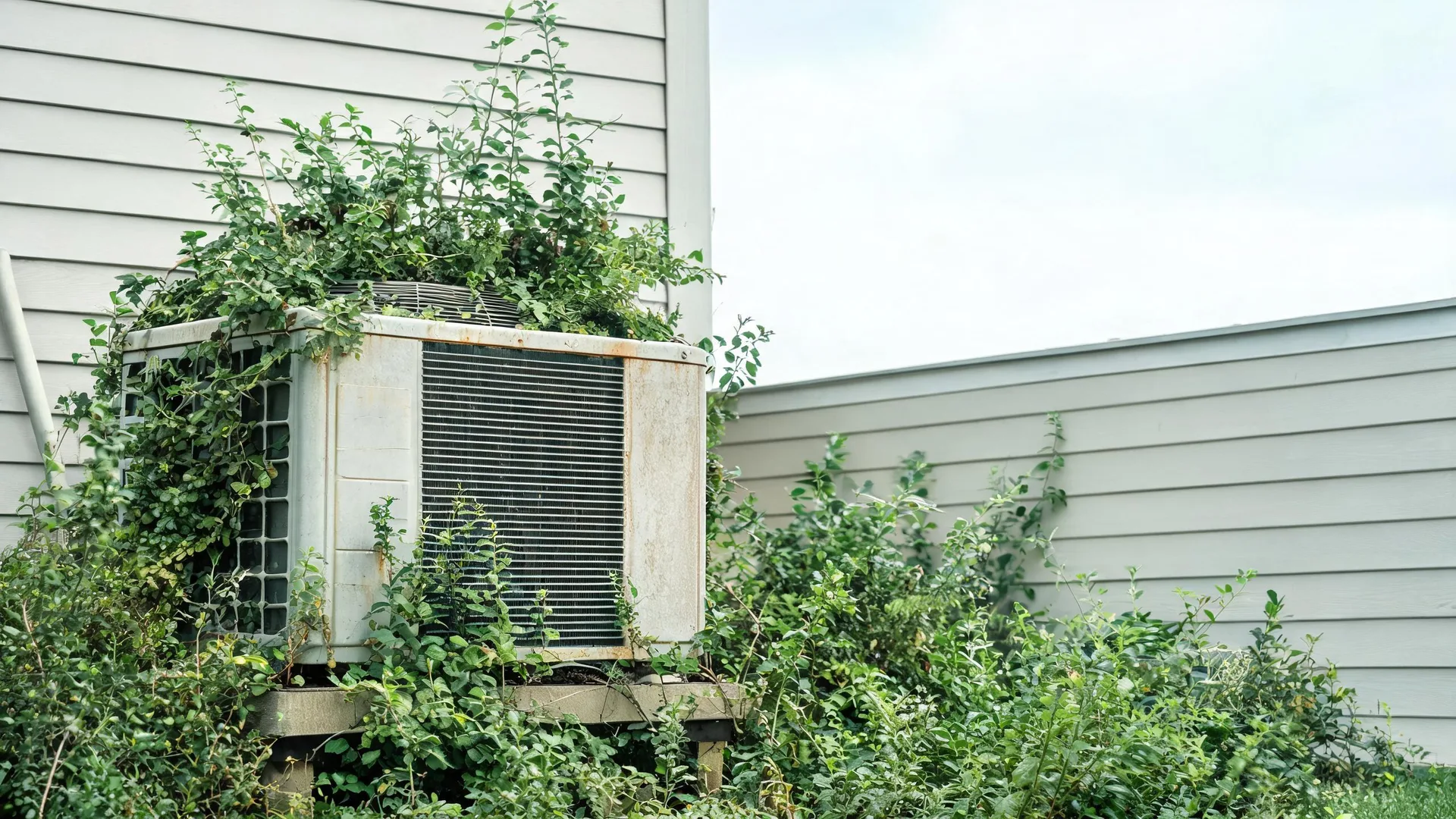
Running it doesn't tell you it's safe

A heat pump can keep moving air with a bent fan blade, a failing capacitor, or ice building up on the outdoor coil. None of that stops the system from turning on. It just means the system is working against itself, drawing more power and wearing its parts down faster, until the part that was already struggling finally gives out.

Most heat pump failures start small. A capacitor weakens and the compressor or fan motor has to strain to start, until one day it doesn't start at all. A contactor pits from years of opening and closing, and the connection gets worse each cycle until it stops making contact. The reversing valve is another common point of failure, since it has to switch the refrigerant flow every time the system changes between heating and cooling, and that constant switching wears on the valve more than steady running would. Low refrigerant from a slow leak is its own category of trouble, because the system keeps running while it loses capacity, and the compressor pays the price for it. Outdoor coils get caked with debris or grow a crust of ice when the defrost cycle isn't keeping up, and either one chokes off the airflow the whole system depends on.

The weather here is part of what wears a heat pump down. Greene County had 302 damaging wind events and 140 hail events between 2015 and 2024, plus 14 winter storms with heavy snow and ice. Every one of those is a chance for the outdoor unit to take a hit or get buried, and the wear it leaves behind doesn't always show up right away. That's a reason to have a contractor trace the actual cause instead of swapping the part that looks obvious. A fix that addresses what's really failing is the one that holds up through the next storm.