A row of dark-sided single-story houses with gabled shingle roofs behind a long trimmed hedge, with mown lawn in the foreground and large leafy trees overhead under an overcast sky.

Heat Pump Repair in Rolla, MO

Tell us about the job

Takes about a minute. No obligation.

RepairHeat PumpPhelps County, MO
Step 1 of 2

What ZIP code is the job in?

Winter here asks a lot of the system

Rolla sits in zone 4A, and the overnight low averages 25°F across December, January and February. A heat pump runs long hours in that range to keep a home warm. That's normal for here, not a sign the unit is struggling.


So the breakdown is probably ordinary

When a heat pump in Rolla stops heating well or starts short cycling, the cause is usually something that shows up in any home running this machine. Maybe a failing defrost control. Maybe a low refrigerant charge. Maybe a worn contactor. Find the part actually at fault and the fix is straightforward.

7 months
October through April, your system heats
5 months
May through September, it cools
25°F
the average winter night it heats against
87°F
the average summer afternoon it cools against
Isometric line illustration of a cutaway house showing interior rooms with furniture, ceiling ductwork under a dark shingled roof, and an outdoor condenser unit connected by lines on the right.
Your system heats October through April and cools May through September.

NOAA nClimDiv, 1991–2020 normals

September is the last easy month before heat runs seven straight months here.

A heat pump due for a repair tends to show it once October's long hours start, not before.

Phelps County gets its share of rough weather, but that's not why your heat pump is down

130 severe weather events from 2015 to 2024
19% of homes statewide lost power a day or more in 2024
56 damaging wind events from 2015 to 2024

A heat pump costs more to run on a bad part than a good one. Missouri electricity ran 12.91 cents per kilowatt-hour in 2024, and a system working against a failing capacitor or a low charge pulls more of it to put out the same heat. That shows up on the bill before it shows up as a breakdown. It's worth having someone check the part rather than just turning up the thermostat to compensate. The fix is usually one part, found and replaced, not a sign the whole unit is wearing out.

Half the homes here were built in 1984 or later

Half the homes in Phelps County were built in 1984 or later. If yours is one of them, the heat pump likely came with the house or isn't far behind it, and a broken part is the more likely problem, not a system near the end of its life. Worth having someone diagnose it before you think about replacing anything.

Find a contractor
A man in a cap, dark jacket and tan pants walks up porch steps toward a navy blue front door, carrying a canvas tool bag filled with hand tools, with a potted plant in a blue planter to the right.
A dark gray heat pump unit mounted on a concrete pad next to a house with gray siding and a stone veneer wall.

The unit has time left on it either way

Years run on a heat pump don't tell you much by themselves. What matters is whether anyone's replaced the capacitor, the contactor, the defrost board, the parts that actually fail. If yours hasn't had that kind of work done, a repair now is likely to hold for a good while yet.

It's blowing air that isn't warm

A heat pump in heating mode should feel warm at the vent, not just moving air. Air that feels barely lukewarm or flat out cold usually points to a reversing valve stuck in the wrong position, a low refrigerant charge, or a compressor that isn't pulling its weight. This is the complaint that sends most homeowners looking for help, and it's rarely subtle once you notice it.

It's running nonstop or short cycling

A heat pump that never shuts off, or one that kicks on and off every few minutes, is working around a problem rather than through it. Nonstop running points to a thermostat sensing things wrong, a dirty coil, or a system that's lost charge. Short cycling often traces back to a failing capacitor or a control board misreading the cycle. Either way the system is struggling to hold a cycle it should be able to hold easily.

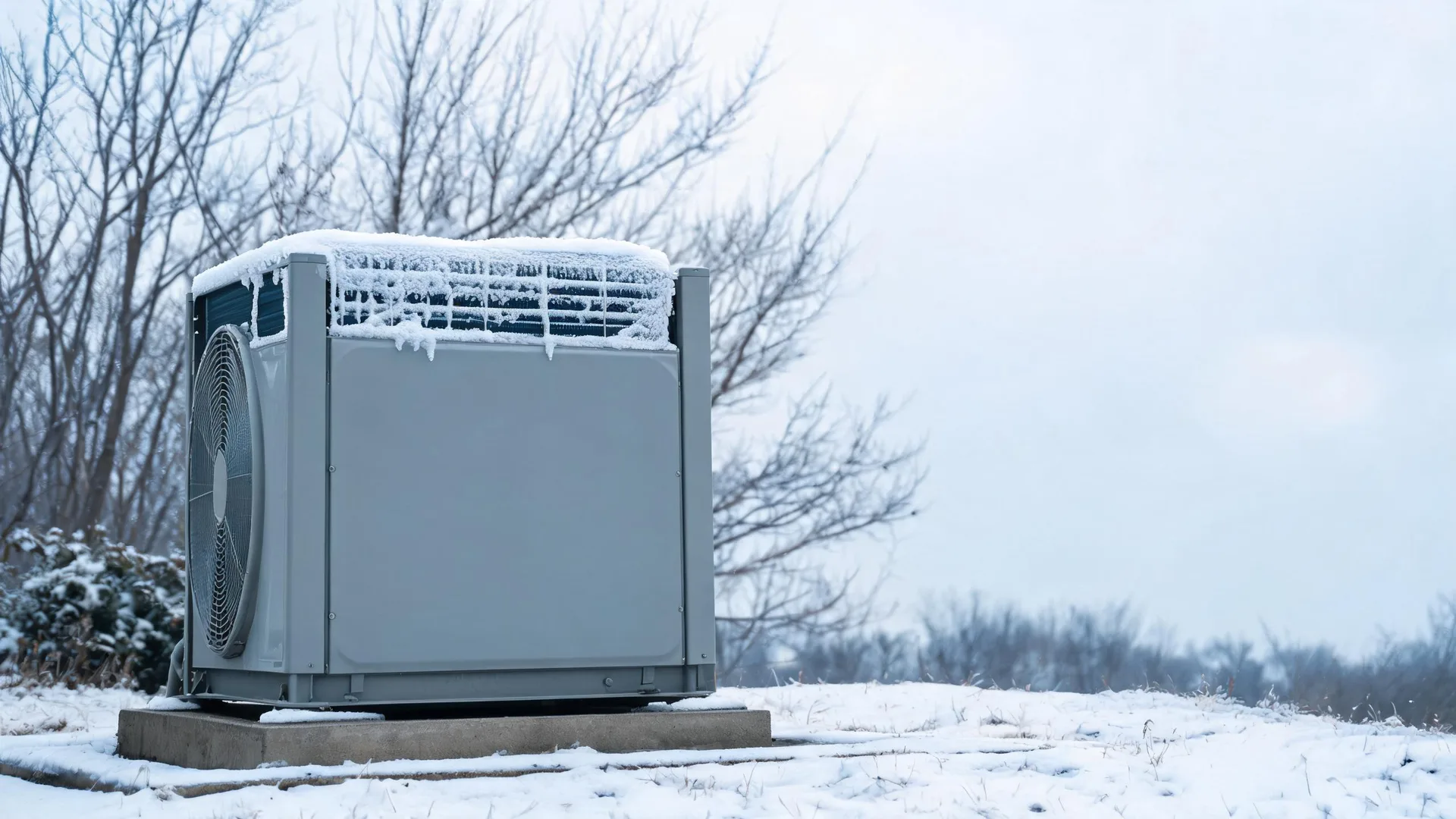
Before anyone comes out, there are a few things worth checking yourself. Look at the outdoor unit first. If it's caked in ice beyond what a normal defrost cycle clears, or if snow has piled up against it blocking airflow, that alone can cause a lot of these symptoms. Check your thermostat is actually set to heat, not auxiliary or emergency heat, since that setting runs a backup source instead of the heat pump itself and will mask what's really going on. Walk around and check your filter. A filter clogged with dust chokes airflow across the indoor coil, and that shows up as weak heat or a system that won't stop running. Check that supply vents around the house are open and not blocked by furniture or rugs. None of this will fix a bad capacitor or a stuck reversing valve, but it rules out the simple stuff before you pay someone to find it.

Not every failing part means a failing system. A heat pump is built around a handful of components that wear on their own schedule. A capacitor weakens over years. A contactor's contacts pit and burn. A defrost board stops timing cycles right. Any one of these can fail in a unit that is otherwise sound, and replacing that one part restores the whole system. Repair earns its keep when the compressor still runs strong and the coils aren't corroded through. It stops making sense when the compressor itself is failing, since that job costs close to a new system without giving you one. A straight answer takes someone looking at the actual part in front of them, not a guess based on how the system sounds over the phone.