





A row of dark-sided cottages with brown shingled roofs behind a trimmed hedge, beside a mown lawn and large leafy trees under an overcast sky.

Heat Pump Repair in Osage Beach, MO

Tell us about the job

Takes about a minute. No obligation.

RepairHeat PumpCamden County, MO
Step 1 of 2

What ZIP code is the job in?

A heat pump that's acting up isn't always on its way out. Start with the age of the compressor and the condition of the coils. If the compressor is still sound and the refrigerant circuit holds pressure, a bad capacitor, a failed contactor or a worn fan motor is a straightforward swap. What changes the math is a compressor that's failing or a coil so corroded it keeps losing charge. At that point you're paying to patch something that will just fail again somewhere else. A tech who's honest with you will check the age and condition of the big parts before touching anything small, because that tells you whether you're looking at a repair or the start of a pattern.

7 months
October through April, your system heats
5 months
May through September, it cools
25°F
the average winter night it heats against
87°F
the average summer afternoon it cools against
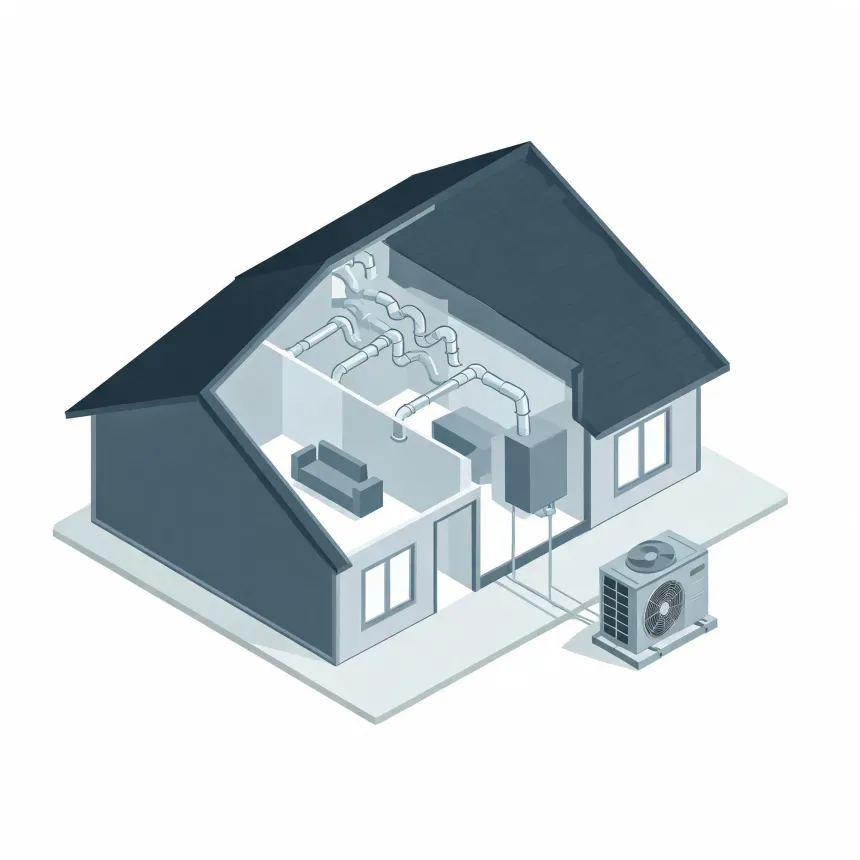
Isometric cutaway illustration of a house showing interior ductwork, an indoor air handler unit, and an outdoor condenser unit beside the building.
Your system heats October through April and cools May through September.

NOAA nClimDiv, 1991–2020 normals

Half the homes in Camden County were built in 1988 or later.

A heat pump that came with a newer house still has working life in it, and that favors repair over replacement.

Camden County sees more storms than most, and that's hard on an outdoor unit

142 severe weather events from 2015 to 2024
19% of homes statewide lost power a day or more in 2024
57 damaging wind events from 2015 to 2024
The First Cold Snap Finds the Weak PartHeat here runs October through April, and trouble usually shows up early.

If your outdoor unit took a direct hit from hail or flying debris, get it looked at even if it's still running and blowing cold or warm. Bent fins block airflow across the coil, and a tech can comb them back out before that turns into a compressor problem. A cracked fan blade or a dented cabinet can throw the fan out of balance, and that wears the motor faster than normal use would. Ask for the outdoor unit to be checked after any storm that dropped hail or heavy branches nearby, not just when you notice a problem. Catching bent fins or a cracked blade now is a smaller job than waiting for the motor or coil to fail from it.

Get it diagnosed properly

Your heat pump works hard here, and that's usually what's behind the problem. Have it diagnosed properly so the fix lasts.

Find a contractor
A gray heat pump condenser unit mounted on a concrete pad against the gray lap-siding exterior wall of a house.

A Newer System Is Worth Fixing

If your heat pump came with the house and the house is newer, that works in your favor. Ask the tech for the age of the unit when they come out. A system that's a handful of years old is almost always worth repairing, since the compressor and coils likely have plenty of life left in them and whatever failed is probably an isolated part, not a sign the whole unit is done.

What You Can Check Yourself

Look at the thermostat first. Make sure it's set to the mode you want and the temperature is actually past the point where the system should kick on. Check your breaker panel for a tripped breaker on either the indoor or outdoor unit. Look at the outdoor unit and clear away leaves, grass clippings or anything blocking airflow around it. Pull the air filter and hold it up to the light. If you can't see through it, swap it or wash it if it's the reusable kind. A dirty filter chokes airflow and can make a working system act like a broken one.
What To Leave For A Tech

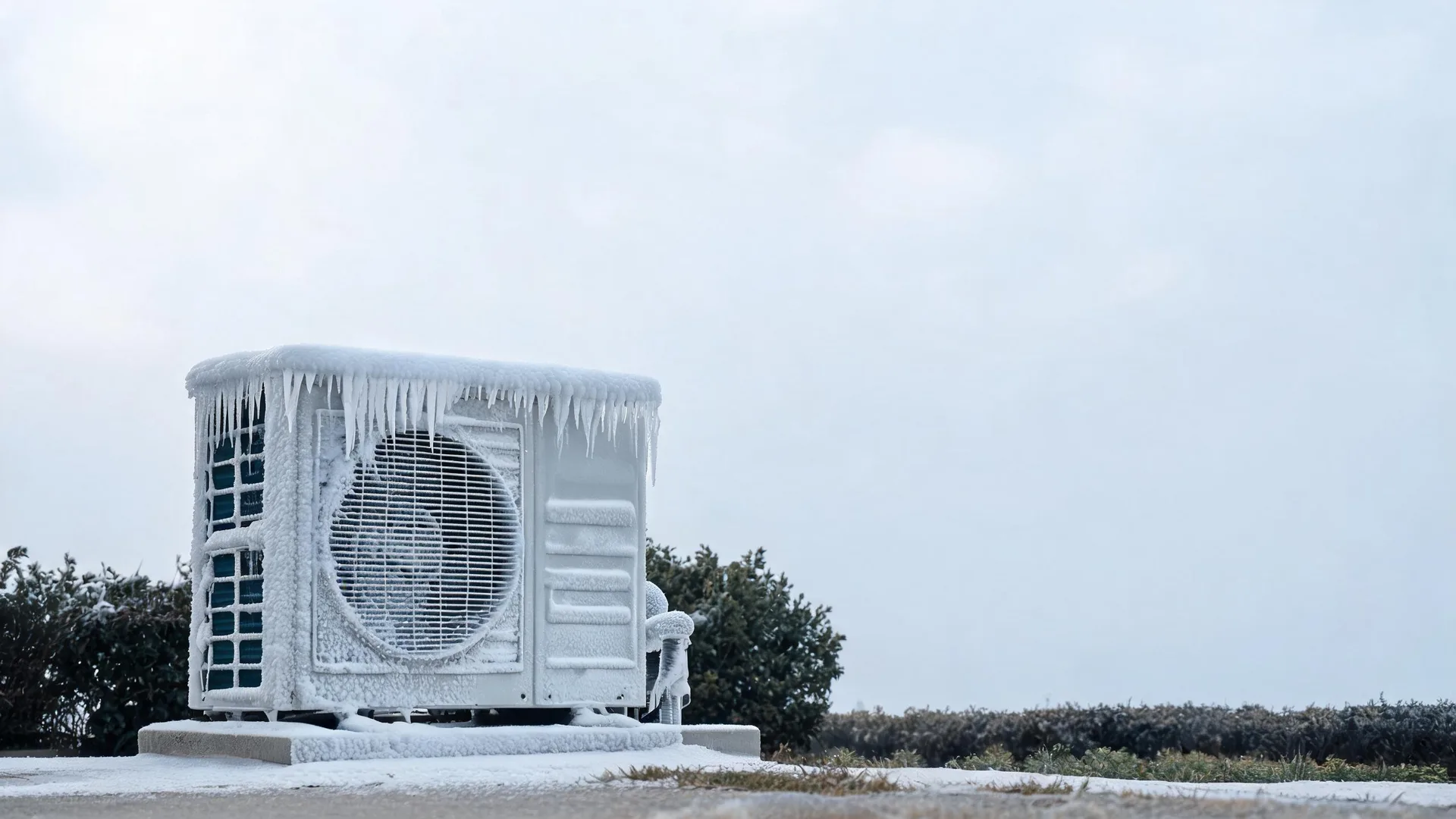
Don't open the outdoor unit's cabinet or touch anything inside it. The refrigerant lines and electrical components in there aren't safe to handle without the right tools and training. If the system is running but not heating or cooling, or you hear grinding, clicking or buzzing that wasn't there before, that's a sign something mechanical or electrical is failing, not something a filter change will fix. Ice on the outdoor coil in winter can be normal during a defrost cycle, but ice that stays for hours means something's wrong and needs a tech to sort out, not a homeowner with a hair dryer.

A heat pump that's struggling doesn't fix itself by staying on. If airflow across the indoor coil is restricted, the coil can ice over, and once ice builds up it blocks what little airflow was left, so the system keeps losing ground. A compressor running low on charge has to work harder to move the same heat, and that extra strain is what burns it out early. A failing capacitor makes the motor it's tied to draw more current than it should, and that heat breaks the motor down faster the longer it runs. None of these get better with time. Shutting the system off and calling someone out usually costs you less than letting it run while something inside wears against itself.

A diagnostic visit starts outside, not with a screwdriver. A tech checks the outdoor unit's electrical draw, the suction and discharge pressures, and the temperature split across the indoor coil before touching anything. That tells them whether the compressor is pulling too hard, whether the charge is low, and whether the reversing valve is switching the way it should. Only after that do they move to the parts that commonly fail: the capacitor, the contactor, the fan motor, the defrost board. A good tech checks the whole circuit before replacing a part, because swapping a capacitor on a system that's actually low on charge just means the new part fails too. The visit ends with a straight answer: what failed, why it failed, and whether that failure points to something bigger going on underneath it.