




A nighttime street view of several illuminated two-story red brick homes with front porches, flanked by a large tree.

Heat Pump Repair in Odessa, MO

Tell us about the job

Takes about a minute. No obligation.

RepairHeat PumpLafayette County, MO
Step 1 of 2

What ZIP code is the job in?

Heat pumps around Odessa run into the same problems they run into anywhere else. A dirty outdoor coil, a low refrigerant charge, a failing capacitor, a reversing valve stuck in one position. The one thing worth checking here is hail. Lafayette County saw 43 hail events between 2015 and 2024, and the outdoor unit sits outside year round with its fins exposed. Bent fins slow the airflow across the coil, and the system has to work harder to move the same heat. If your heat pump is struggling and you remember a hailstorm coming through, that coil is worth a look before anything else.

7 months
October through April, your system heats
5 months
May through September, it cools
23°F
the average winter night it heats against
86°F
the average summer afternoon it cools against
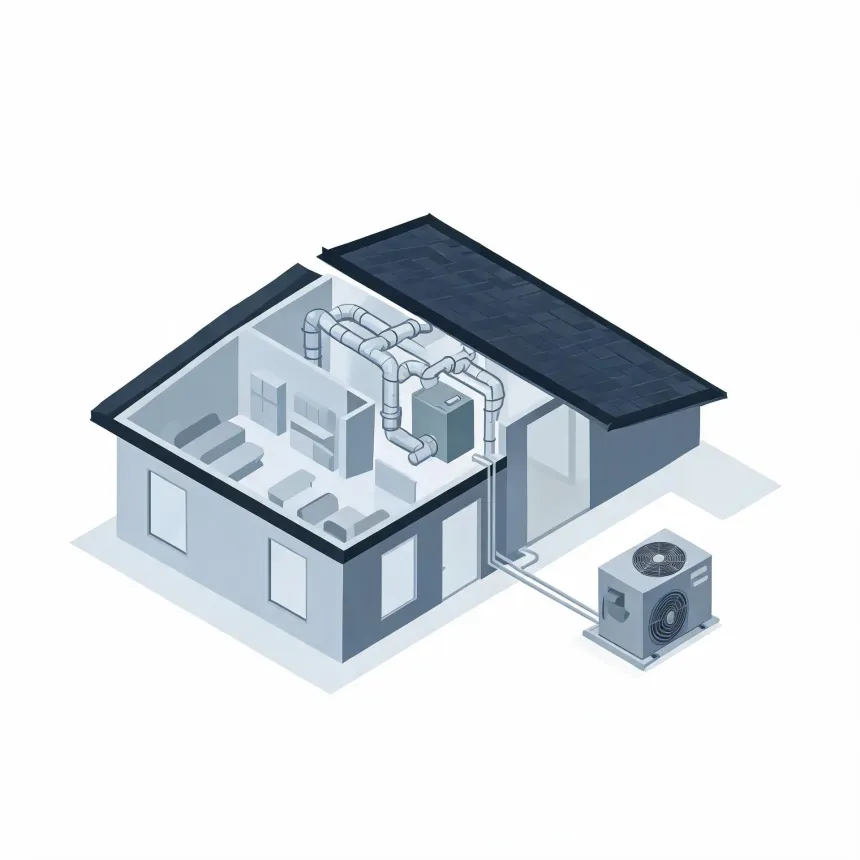
Isometric illustration of a cutaway single-story house showing interior ductwork and an air handler connected by lines to an outdoor condenser unit on a pad beside the building.
Your system heats October through April and cools May through September.

NOAA nClimDiv, 1991–2020 normals

Heat pumps here switch over to heat in October.

A weak part that made it through five months of cooling often fails in the first cold snap.

Half these homes predate central heat pumps. The climate and the power rates are nothing unusual.

Half the homes here were built by 1975
Climate zone 4A
Power costs 12.91 cents a kWh statewide

Get the usual fix

Nothing about this area is especially hard on it. It's most likely the usual problem with the usual fix.

Find a contractor
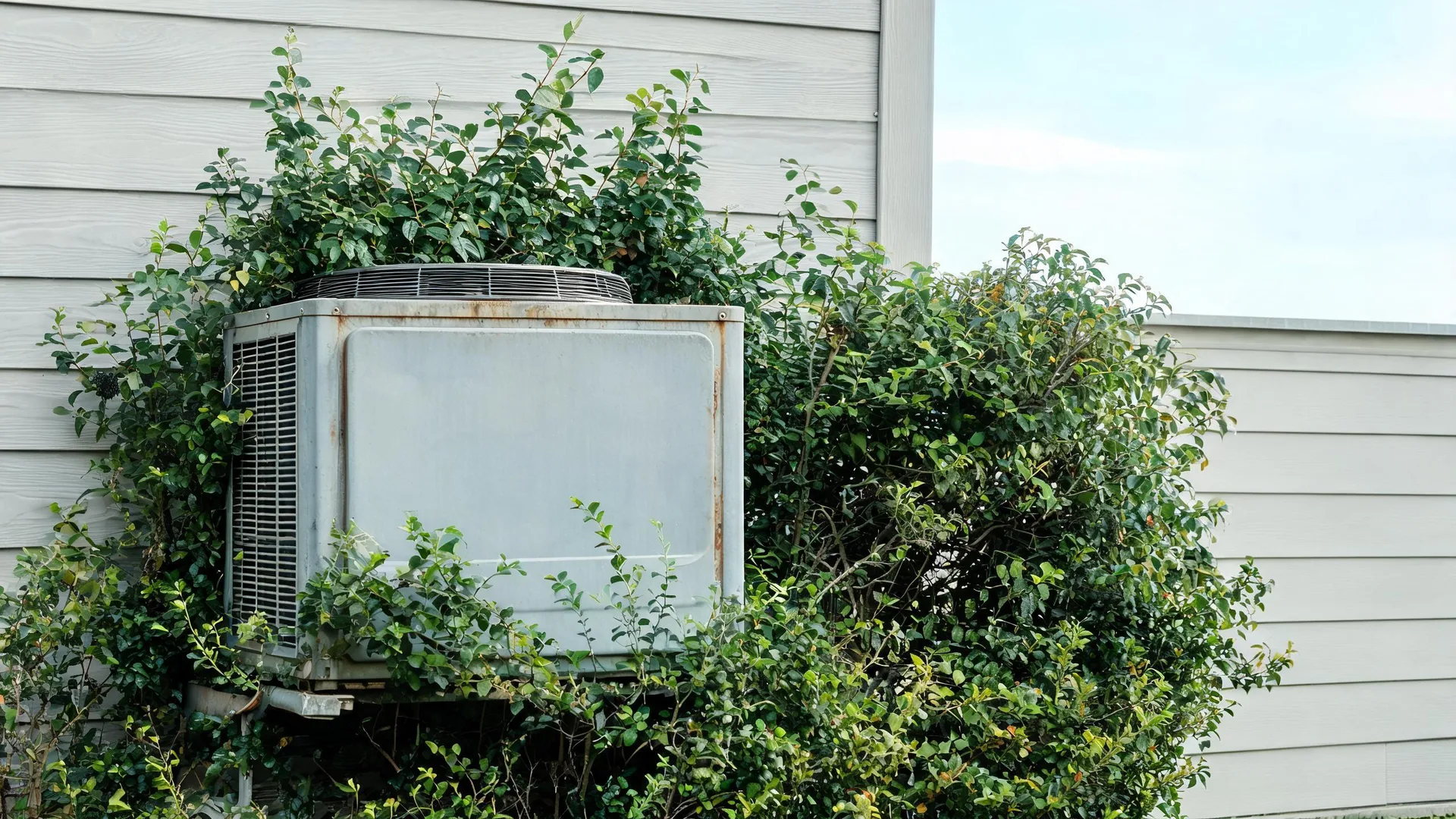
A gray outdoor HVAC unit mounted on a concrete pad beside a house with gray lap siding and a stone foundation.

Running it longer doesn't help

A heat pump that's struggling doesn't fix itself by staying on. If the outdoor coil is dirty or the fins are bent, the system pulls less heat out of the air than it's built to. It runs longer to make up the difference, and that longer runtime pushes the compressor harder than it was meant to work. A low refrigerant charge is worse. The compressor ends up pumping vapor it isn't designed to handle, and it can overheat from that alone. A reversing valve stuck halfway can make the system short-cycle, switching on and off faster than normal, and that wears the start components well ahead of their time. None of this fixes itself by running longer. It just asks more of parts that were already struggling.

What gets checked first

A tech will put gauges on the lines to read the refrigerant charge and look at the outdoor coil for dirt or bent fins. From there it's the reversing valve, the contactor, the capacitor, and the defrost board. Each one gets tested in order, not guessed at.
Why the diagnosis comes before the fix

A heat pump can show the same symptom, weak heat, short cycling, ice that won't clear, for several different reasons. Replacing a part without testing it first means paying for parts that weren't the problem. The diagnostic step is what tells the tech which part actually failed.

A lot of heat pump failures trace back to the reversing valve, since it's the part that does the extra job a straight air conditioner never has to do. It can stick from a dirty valve body or a failing solenoid, and when it does the system may blow cold air when it should blow warm, or get stuck defrosting. The defrost board and its sensor fail too, and when they do the outdoor coil ices over and stays iced, choking off airflow until the unit can't pull any heat from the air at all. Capacitors weaken with age and heat cycling, and a weak one makes the compressor or fan motor strain to start, which shortens its life further. Low refrigerant almost always means a leak somewhere in the line set or coil, not refrigerant burned off through use, and topping it off without finding the leak only buys a little time.

Age is what tips the decision, not any one broken part. A heat pump that's old and already on its second or third repair is telling you something different than one that's fairly new with a bad capacitor. The compressor is the one part that ends the conversation if it fails, since replacing it costs close to what a new system runs, and most shops won't recommend it. Everything else on a heat pump, the capacitor, the contactor, the defrost board, the reversing valve, is worth fixing on its own merits regardless of the unit's age. The other thing worth asking is whether this is the first repair or one of several lately. One failure is bad luck. A pattern of them means the system is wearing out faster than it's keeping up, and the next part to go is only a matter of time.