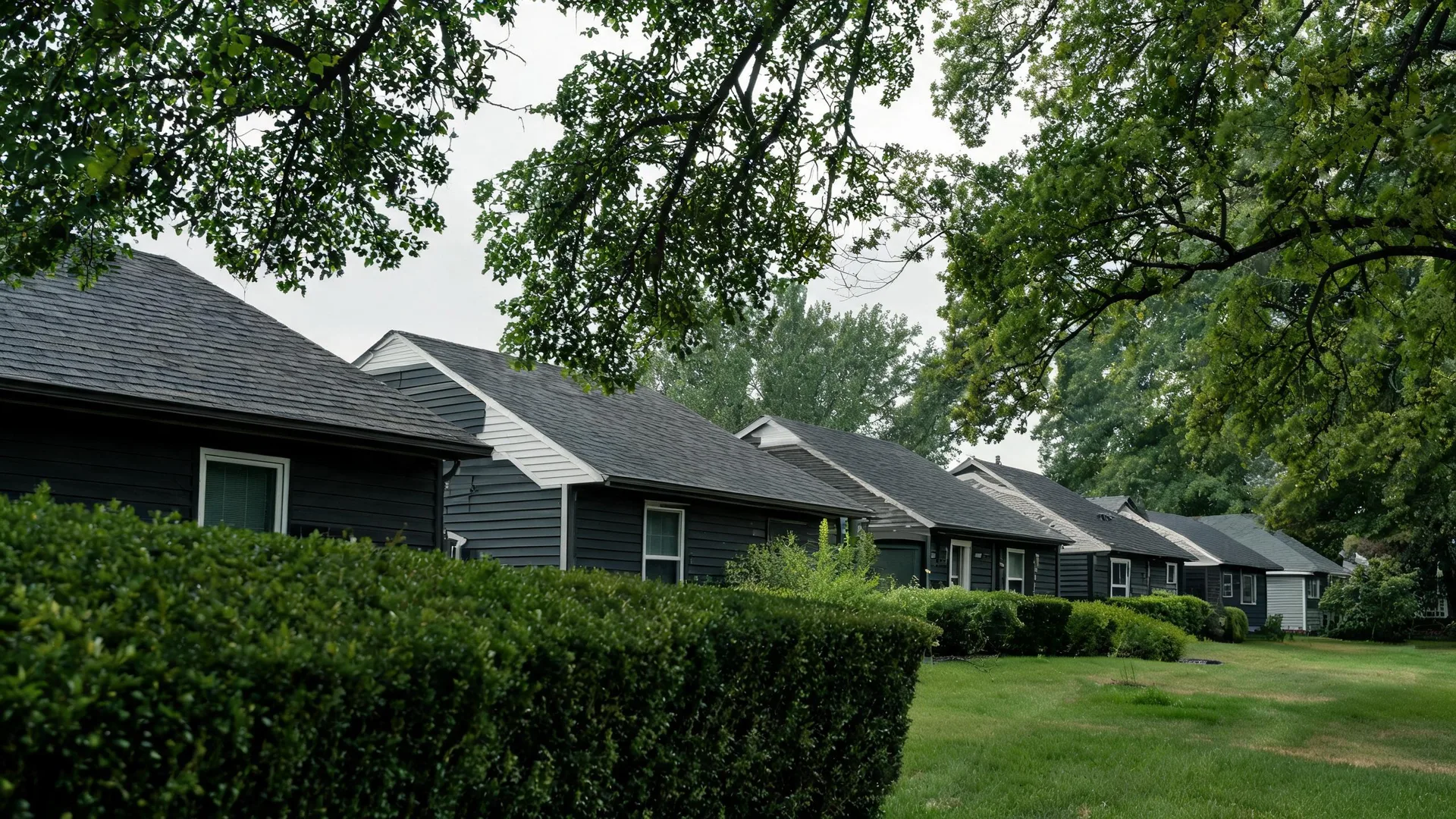





A row of dark gray single-story houses with asphalt shingle roofs behind trimmed hedges and a mown lawn, framed by overhanging tree branches under an overcast sky.

Heat Pump Repair in O'Fallon, MO

Tell us about the job

Takes about a minute. No obligation.

RepairHeat PumpSt. Charles County, MO
Step 1 of 2

What ZIP code is the job in?

St. Charles County logged 141 severe weather events between 2015 and 2024. Most of that was wind, 84 events strong enough to count, with 39 hail events and 9 tornadoes mixed in. A heat pump sits outside all year and takes whatever comes through the yard. Hail dents the fins on the outdoor coil, and wind-driven debris can bend them or crack the fan blade. The unit might keep running after a hit like that and still lose efficiency or wear down faster than it should. If a storm came through and the outdoor unit was in its path, it's worth having someone look even if you haven't noticed a problem yet.

7 months
October through April, your system heats
5 months
May through September, it cools
25°F
the average winter night it heats against
87°F
the average summer afternoon it cools against
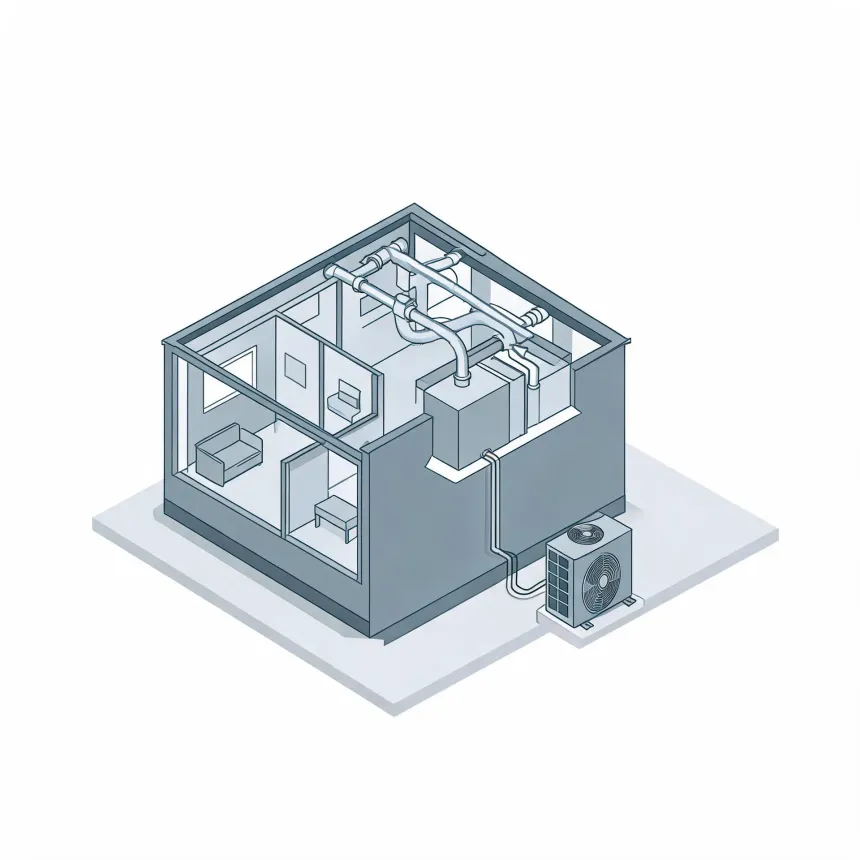
Isometric line illustration of a cutaway house showing interior rooms with furniture, ceiling ductwork connected to an indoor air handler, and refrigerant lines running to an outdoor condenser unit on a pad.
Your system heats October through April and cools May through September.

NOAA nClimDiv, 1991–2020 normals

Half the homes in St. Charles County were built in 1994 or later.

A heat pump that came with a newer house still has working life in it, and that's worth a repair call before a replacement call.

A heat pump that struggled in October rarely fixes itself by January

Cooling runs May through September
Heat runs October through April
84 damaging wind events from 2015 to 2024

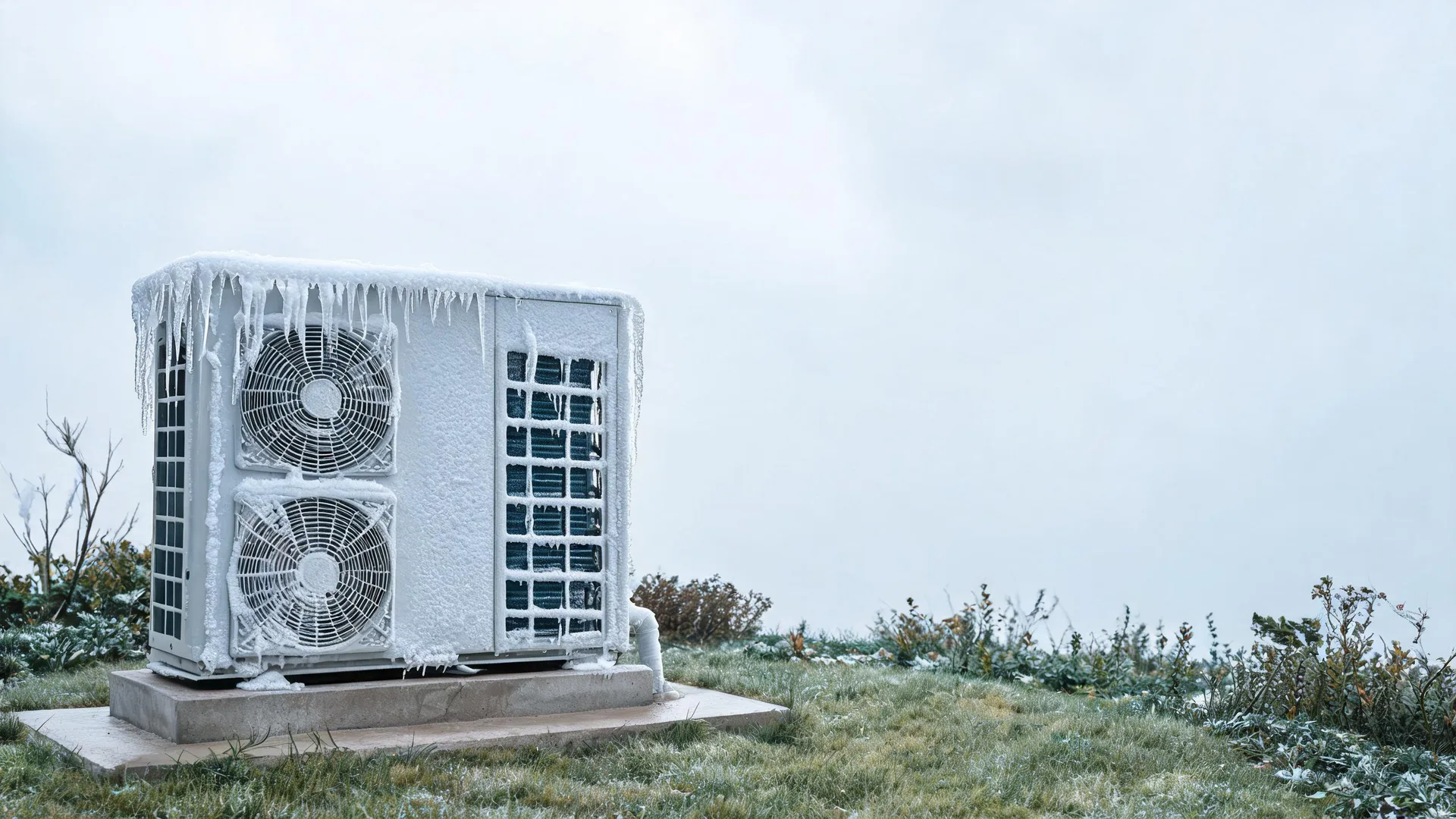
Most heat pump problems show up as a change, not a shutdown. The air coming out of the vents feels wrong before it ever stops moving. Warm air in heating mode that isn't as warm as it used to be, or a cooling cycle that runs and runs without the house catching up, both point to a system working harder to do less. Ice on the outdoor unit is another one worth watching. A little frost in cold weather is normal, but a coil that's caked in ice, even after the defrost cycle should have cleared it, means something isn't right. Short cycling, where the unit kicks on and off every few minutes instead of running a full cycle, wears on the compressor every time it happens. A burning smell or a new noise, grinding, clicking, a hum with no fan movement, is never something to wait out.

If the outdoor unit took a hit, find out before you need it

A dented coil or a bent fan blade won't always announce itself. The unit keeps running, just worse, and that's easy to miss until a bill or a breakdown makes it obvious. If a storm has come through since you last had someone look at the outdoor unit, get it checked now, before summer asks more of it.

Find a contractor
A man in a dark jacket and tan pants, seen from behind, carries a canvas tool bag up concrete steps toward a blue front door of a house with light horizontal siding and a potted shrub in a blue planter.
A gray heat pump condenser unit mounted on a concrete pad against the gray lap-siding exterior wall of a house.

What to check before you pick up the phone

Before you pick up the phone, walk outside and look at the outdoor unit. Check that nothing is pressed against the cabinet, no leaves packed against the coil fins, no branch or trash can blocking airflow on any side. Inside, check the thermostat is set to heat or cool as you expect, with batteries fresh if it takes them. Pull the air filter and hold it up to a light. If you can't see light through it, it needs to be swapped before anyone diagnoses anything else, because a clogged filter can mimic half a dozen other problems. Look at every supply vent in the house and make sure none are closed or blocked by furniture or rugs. Check your breaker panel for a tripped switch, and if you find one, reset it once. If it trips again, stop and leave it off. A breaker that won't hold is telling you something electrical is wrong, and that's not a do-it-yourself fix. Outside again, listen for the fan. If the outdoor fan isn't turning but you can hear a hum, don't keep cycling the system trying to force it. That hum with no motion usually means a failing capacitor or a seized motor, and running it that way can burn out the compressor. None of this takes tools or training, just a careful look, and it saves a service call for something as simple as a dirty filter or a flipped switch.

The reversing valve is usually the first thing to go

A heat pump switches between heating and cooling by reversing refrigerant flow through a valve that the furnace and AC never needed. That valve gets worked every day, all year, and the coil inside it wears with every switch. When it sticks, the system blows air that doesn't match what the thermostat is asking for, or it gets stuck in one mode no matter what you set.
A failing part rarely shuts the system off right away

A weak run capacitor, a dirty outdoor coil, a low refrigerant charge: none of these stop a heat pump cold. They make it run longer to do the same job, which means more wear on the compressor and a bill that climbs before anyone notices a problem. Catching it at the noise or the weak airflow is cheaper than catching it at the breakdown.

A heat pump that's struggling doesn't know to stop and protect itself. It just keeps trying to hit the setpoint, however long that takes. A refrigerant leak gets worse under load, because the compressor keeps pulling on a charge that keeps dropping, and that's how a simple leak repair turns into a compressor replacement. A failing motor bearing heats up the longer it spins, until it seizes. Even something as plain as a dirty coil forces the system to run longer cycles to move the same heat, and that extra runtime is what turns a thirty-minute fix into a damaged compressor. The unit rarely shuts itself off to warn you. It just works harder, quietly, until the part that was struggling is the part that fails.

Age isn't the only thing that decides repair versus replacement. Look at what's actually failing. A single part, a capacitor, a contactor, a fan motor, is a straightforward repair almost regardless of the unit's age, because you're replacing one piece, not rebuilding the system. The compressor is different. It's the most expensive part in the cabinet, and when it fails, the repair bill starts competing with the cost of a new unit. Refrigerant leaks sit in between. A leak in a fitting or a coil can be found and sealed, but if the leak is inside the compressor itself there's nothing to repair. Ask what failed before you ask what it costs to fix. That answer tells you more than how old the unit is.