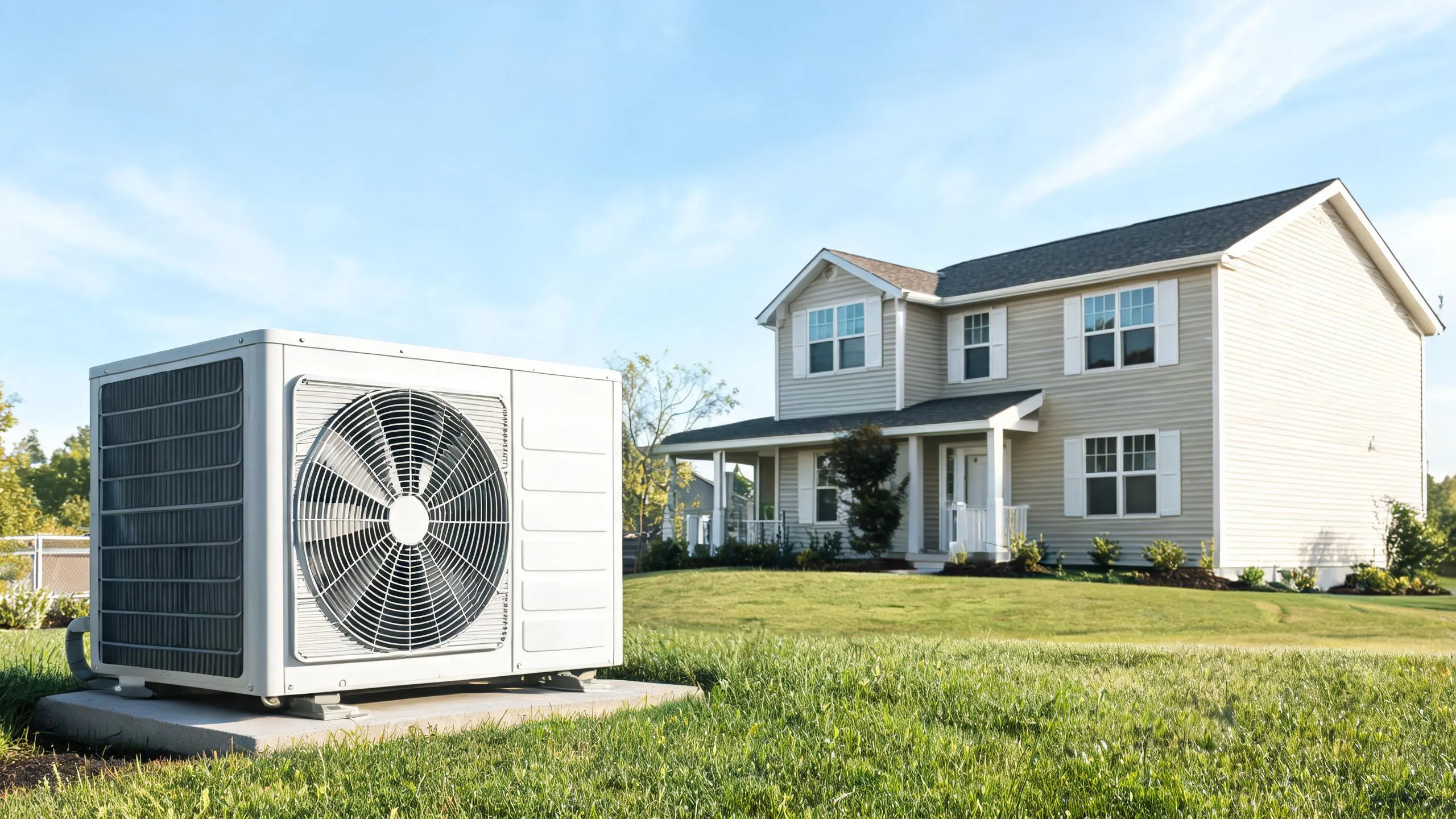






An outdoor heat pump unit mounted on a concrete pad in front of a two-story suburban house.

Heat Pump Repair in Marshfield, MO

Tell us about the job

Takes about a minute. No obligation.

RepairHeat PumpWebster County, MO
Step 1 of 2

What ZIP code is the job in?

Webster County gets hit with severe weather more than most places. 190 severe weather events were recorded here between 2015 and 2024, and 103 of those were damaging wind. Hail came through 67 times in that same stretch. Wind and hail both land on the outdoor unit, since it sits outside with nothing around it for cover. A unit that took a hit from either one doesn't always stop working right away. It can keep running with a bent fin, a cracked line or a dented cabinet, and the damage only shows up later as a bigger repair.

7 months
October through April, your system heats
4 months
June through September, it cools
25°F
the average winter night it heats against
86°F
the average summer afternoon it cools against
Isometric line illustration of a cutaway house showing interior rooms, an air handler with ductwork in the attic space, and an outdoor condenser unit beside the exterior wall.
Your system heats October through April and cools June through September.

NOAA nClimDiv, 1991–2020 normals

A heat pump won't tell you what's wrong before it quits.

Checking the thermostat, the breaker and the outdoor unit yourself first can save a wasted trip, or catch something that needs a tech today instead of next week.

Half the homes in Webster County were built in 1991 or later

Half the homes here were built by 1991
Climate zone 4A
Power here costs 12.16 cents per kilowatt-hour
Your Heat Pump Works October Through AprilMost repair calls here come in the first cold snap, when a weak part meets its first real load.

If your heat pump came with a newer build here, calling for repair first is the right move. A system that age hasn't had time to wear out on its own. Most breakdowns at that stage come down to one part failing, a capacitor, a sensor, a control board, not the whole unit giving out. That's a straightforward fix for a tech, and cheaper than people expect when they assume the worst. Replacement makes more sense once a system's past its working life, which isn't where a newer install stands yet.

Storm Damage Doesn't Always Show Up Right Away

If your outdoor unit took a hit from hail or a falling branch, don't wait for it to act up. A bent fin or a cracked line can sit there for weeks before the system actually fails. Have a tech look at it now, while it's a simple check instead of a breakdown later on.

Find a contractor
A gray air-source heat pump mounted on a concrete pad next to a house with gray vinyl siding, surrounded by gravel and flanked by green shrubs and white hydrangea flowers.

A Heat Pump Never Gets a Break

A heat pump doesn't get a season off. It runs the compressor to heat the house, then switches that same compressor into reverse to cool it, so every part wears from both directions all year. The reversing valve takes the brunt of that. It's the one part unique to a heat pump, and when it sticks, the system can get stuck blowing cold air when it should be heating, or it won't defrost right in cold weather. The outdoor unit takes its own kind of wear just from sitting outside: the fan motor bearings go, the coil gets caked with dirt and debris until it can't shed heat the way it should, and the capacitor that gives the compressor its starting kick weakens with age until the compressor struggles to start at all. Refrigerant doesn't get used up, so if a system runs low, it's leaking somewhere, usually at a fitting or a coil, and it's worth finding before the compressor runs on a low charge and burns out. None of this fails on a schedule. It fails when a part that's been weakening finally gets asked to work hard, which is exactly what happens the first really cold night or the first really hot afternoon of the year.

A Small Problem Doesn't Stay Small

A heat pump with a failing part doesn't usually shut itself off to protect the rest of the system. A weak capacitor makes the compressor strain to start over and over until it burns out. A low charge from a slow leak makes the compressor run hotter than it should, which wears it down from the inside. The machine keeps answering the call for heat or cool air right up until the part that's struggling finally gives out, and it often takes a more expensive part down with it.
Running It Costs More Than Stopping It

Once something is off, a tech can diagnose it at its own pace. A system that's still running with a problem is harder to read, because the fault can hide behind the parts compensating for it. A failing reversing valve might still heat the house some of the time, just poorly, which makes it easy to put off a call until the valve sticks for good. Shutting it down and calling for a look costs less than waiting for the part that's covering for it to fail too.

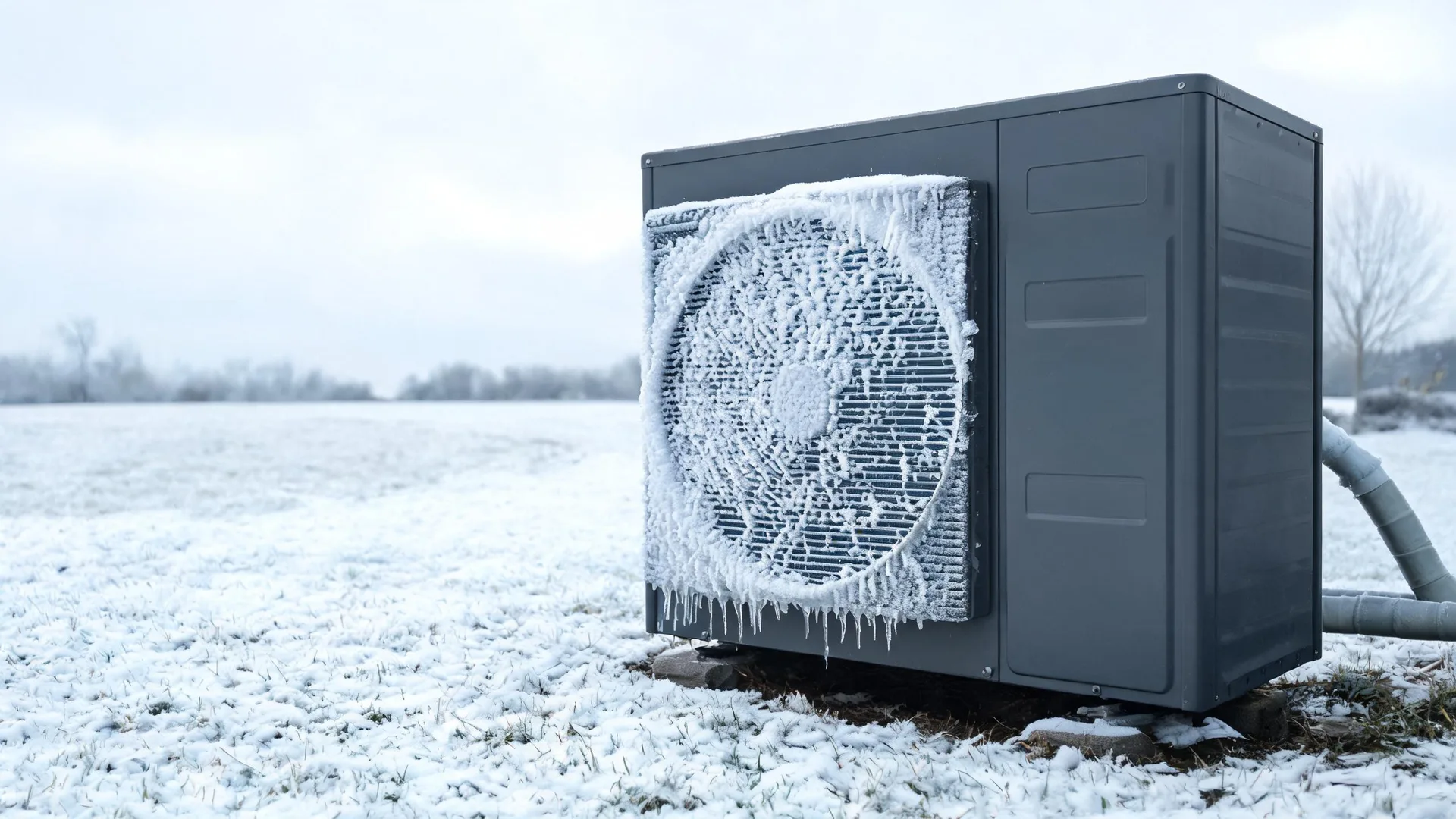
Most heat pumps give some warning before they quit outright. Short cycling is one, where the system kicks on, runs for a minute or two, then shuts off before the house actually cools or warms. Ice building up on the outdoor coil is another, especially if it's there outside of a normal defrost cycle, since that usually points to a refrigerant or airflow problem rather than just cold weather. Listen for the system too. A clicking relay, a hum with no fan movement, or a compressor that tries to start and can't are all signs a part is failing, not fixing itself. Air coming out lukewarm instead of hot or cold often means the reversing valve isn't fully switching. Any of these is worth a call before the part that's struggling takes something bigger with it.

A diagnostic visit starts before the panels come off. A tech will ask what the system is doing, when it started, and whether it's heating, cooling, both, or neither, because that narrows down which parts to check first. Then comes the thermostat call for heat or cool, checked against what the indoor and outdoor units actually do in response. From there it's gauges on the refrigerant lines to check the charge, a meter on the capacitor and the electrical components, and a look at the reversing valve to see if it's switching the way it should. The outdoor coil gets checked for dirt or ice, since either one stops the system from doing its job even if every part inside is fine. Airflow gets checked too, because a starved system can mimic a failing part that isn't actually failing. By the end, the tech should be able to point to the one part causing the trouble, not just the symptom it's causing.