




An outdoor heat pump unit mounted on a concrete pad in front of a two-story suburban house with a landscaped lawn.

Heat Pump Repair in Liberty, MO

Tell us about the job

Takes about a minute. No obligation.

RepairHeat PumpClay County, MO
Step 1 of 2

What ZIP code is the job in?

A tech starts outside at the outdoor unit, checking the compressor and the reversing valve before touching anything inside. That valve is what switches the system between heating and cooling, and a lot of heat pump complaints trace back to it sticking or failing. From there they check refrigerant charge, since too little or too much puts strain on the compressor and shows up as weak heat or weak cooling. Inside, they look at the air handler, the filter, and the coil, because restricted airflow can mimic a refrigerant problem and send someone chasing the wrong fix. They'll also check the defrost cycle and the sensors that control it, since a heat pump that can't defrost properly will ice over and stop heating. By the end they can usually point to one part doing the damage, not just a vague sense that something's off.

7 months
October through April, your system heats
5 months
May through September, it cools
22°F
the average winter night it heats against
86°F
the average summer afternoon it cools against
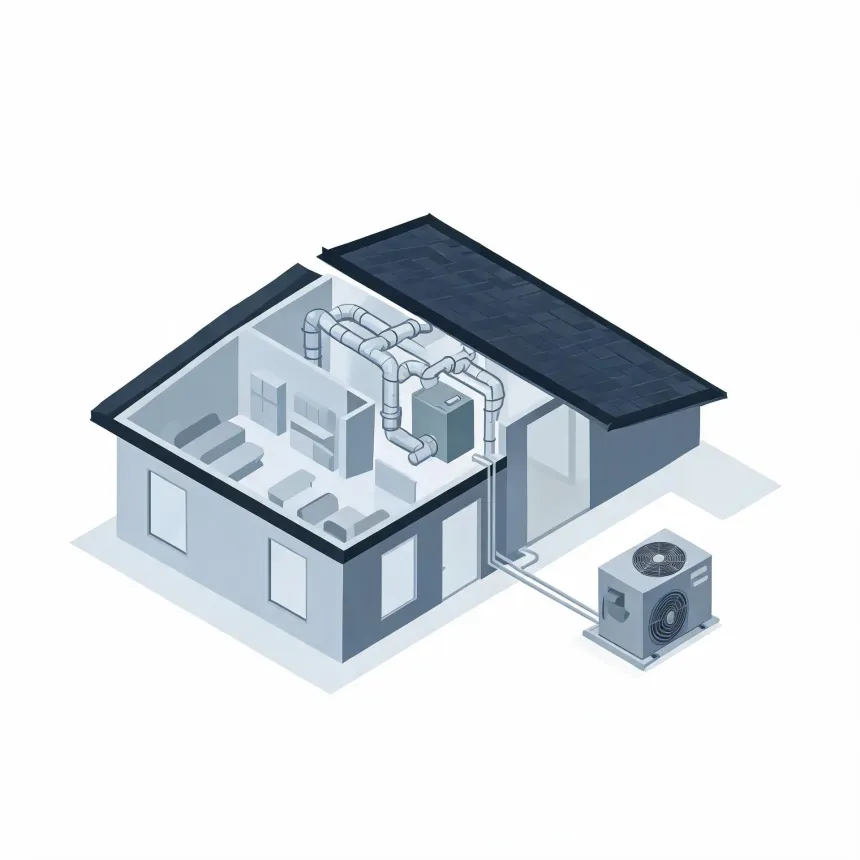
Isometric illustration of a cutaway single-story house showing interior ductwork and an air handler connected by lines to an outdoor condenser unit on a pad beside the building.
Your system heats October through April and cools May through September.

NOAA nClimDiv, 1991–2020 normals

Clay County saw 227 severe weather events between 2015 and 2024, including 94 hail storms and 116 rounds of damaging wind.

The outdoor unit sits outside through all of it, so hail dents and wind-blown debris can hurt it even while it keeps running.

A heat pump here works seven months of heat and five months of cooling, almost year round

Cooling runs May through September
Heat runs October through April
Climate zone 4A

Half the homes in Clay County were built in 1987 or later. If yours is one of them, the heat pump likely has years of working life ahead, and a repair now is probably the right call rather than a sign the whole system is done. Even a newer unit runs hard here, so a part failing early doesn't mean the system is failing. If your heat pump came with an older house, it's worth asking whoever installed it when the unit itself went in. The house's age and the system's age aren't always the same thing.

Find out what's actually failing before it costs you more

The outdoor unit sits through the hail and wind this county sees most years, and summer air here stays heavy enough to push the system hard for months at a stretch. That kind of load wears a part down before it has any business failing. A proper diagnosis finds which part took the hit, so the repair holds instead of masking something that surfaces again.

Find a contractor
A gray outdoor HVAC unit mounted on a concrete pad beside a house with gray lap siding and a stone foundation.

One worn part isn't the whole system

A newer system is worth repairing. If the heat pump came with the house and the house is recent, get the part replaced and keep running it rather than pricing out a full replacement. The time-lapse above is the same unit day after day, and that steady load is exactly what a repair restores it to handle. Ask the contractor what failed and why before you decide it means more than it does.

Running in reverse shortens the compressor's life

A heat pump asks its compressor to work both directions, pumping heat in during winter and pulling it out in summer. That reversing duty adds wear a standard air conditioner compressor never sees. Over years, that's often where the money problem ends up, in a compressor that's tired from doing twice the job.
Moving parts outside fail before parts inside do

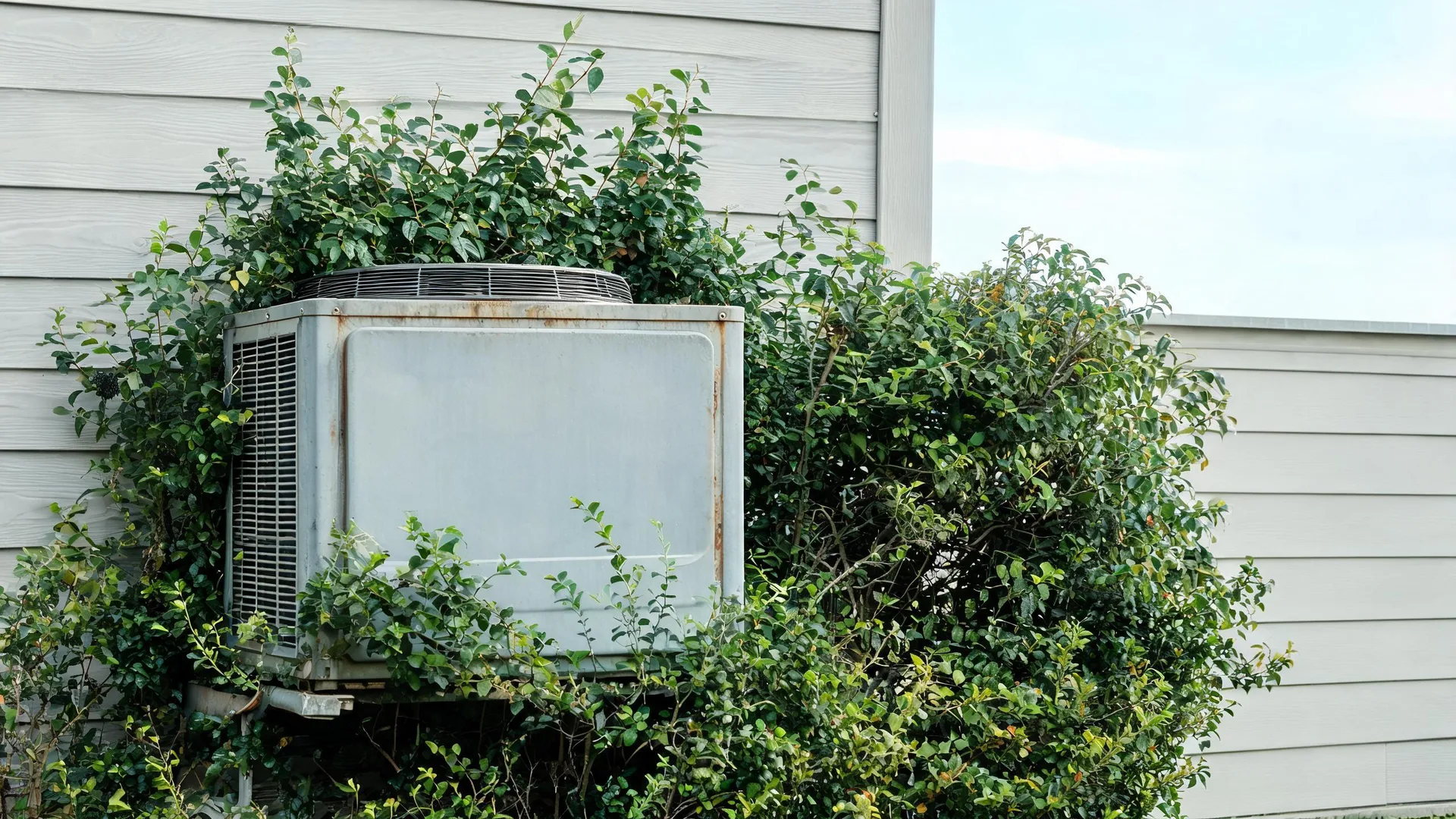
The outdoor unit carries the reversing valve, the fan motor, and the coil, all exposed to weather every day of the year. Contacts corrode, fan motor bearings wear, and the coil picks up dirt and debris that block airflow. Indoor parts live in a conditioned space and tend to last longer for that reason alone.

Before calling anyone, go outside and look at the unit. Clear away leaves, grass clippings, or anything piled against it, and make sure nothing is blocking airflow on any side. Check the air filter inside and swap it if it's dirty, since a clogged filter can make a heat pump struggle the same way a real mechanical problem would. Look at the outdoor coil for a heavy buildup of ice. A little frost during a defrost cycle is normal, but a solid sheet of ice means something's wrong and the system needs a real diagnosis. Check your thermostat batteries and settings too, since a dead battery or a setting bumped to the wrong mode causes more no-heat calls than people expect. If the system is blowing air but it feels off, don't assume the worst. If it's not blowing air at all, or the outdoor unit isn't running, that's worth getting looked at soon.

If the outdoor unit took a hit this year, from hail, a falling branch, debris thrown by wind, get it checked even if the heat pump still runs. A dented cabinet can mean bent fins underneath, and bent fins restrict the airflow the coil needs to work right. A tech can check the coil and fan blade for damage you can't see from a glance across the yard. Clay County has had six tornadoes and nine winter storms between 2015 and 2024, so the outdoor unit has had plenty of chances to take a hit without anyone noticing at the time. Catching that kind of damage now is cheaper than waiting for it to take out the compressor.