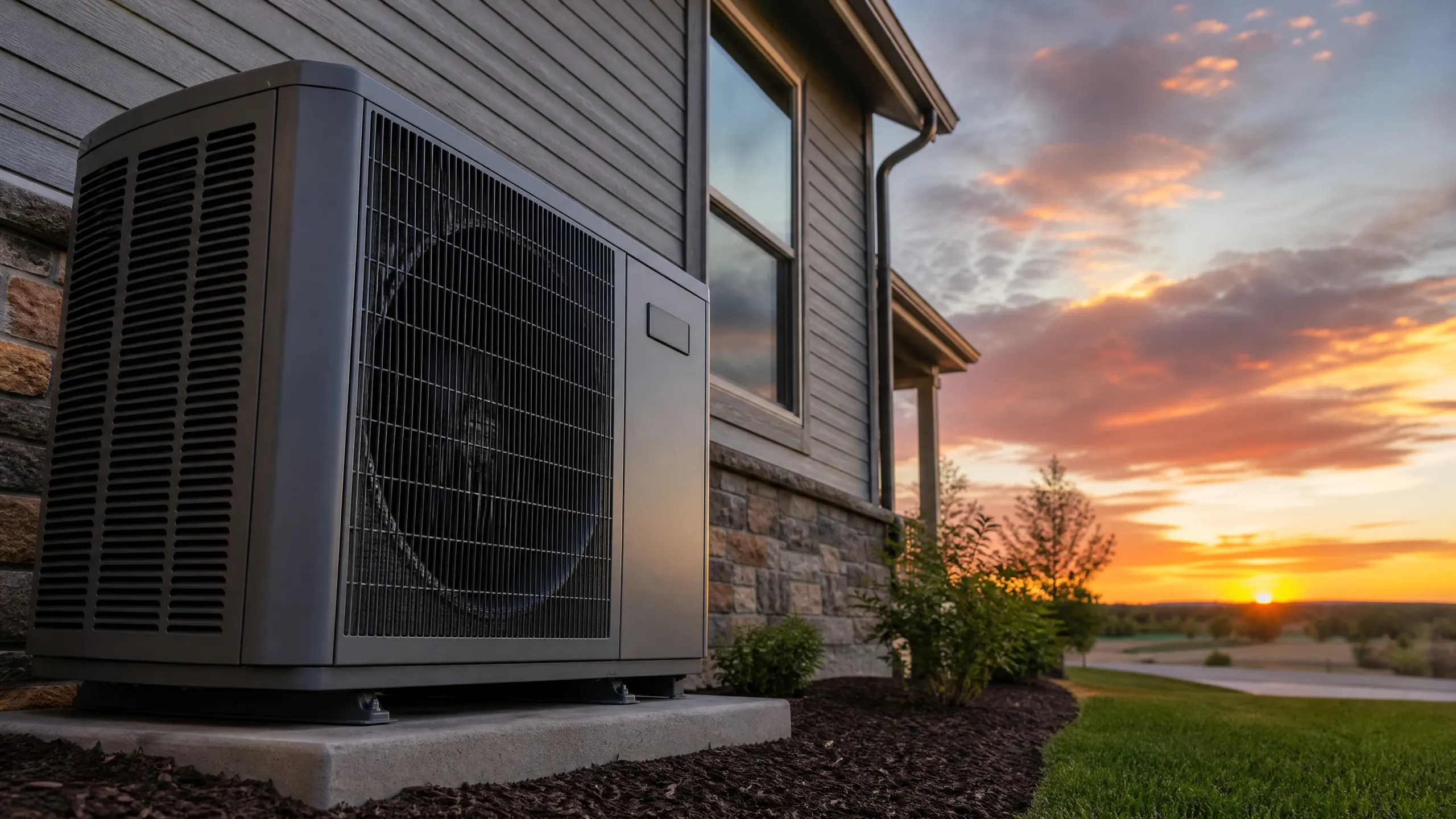





An outdoor air conditioning condenser unit mounted on a concrete pad next to a residential house at sunset.

Heat Pump Repair in Lebanon, MO

Tell us about the job

Takes about a minute. No obligation.

RepairHeat PumpLaclede County, MO
Step 1 of 2

What ZIP code is the job in?

A heat pump that struggles usually shows it in the first cold snap or the first hot stretch, not in the middle of the season. September is the month to get a heat pump looked at here, before heat starts running in October. By December the overnight low is averaging 25 degrees, and that is a hard ask for a unit that already had a weak part going into fall. The same goes in reverse come May, before cooling starts in June. A problem that was minor in mild weather turns into a no-heat or no-cool call once the system has to run flat out.

7 months
October through April, your system heats
4 months
June through September, it cools
25°F
the average winter night it heats against
86°F
the average summer afternoon it cools against
Isometric cutaway illustration of a single-story house showing interior ductwork, an indoor air handler and furnace unit, and an outdoor condenser connected by a line, on a white background.
Your system heats October through April and cools June through September.

NOAA nClimDiv, 1991–2020 normals

Summer dew points in Laclede County average 65°F through June, July and August, so the air feels heavy on top of the heat.

A heat pump with a weak capacitor or a low charge struggles on days like that, same as it would in any other humid county.

Laclede County doesn't put any unusual strain on a heat pump

113 severe weather events from 2015 to 2024
19% of homes statewide lost power a day or more in 2024
47 damaging wind events from 2015 to 2024

Half the houses in Laclede County were built in 1984 or later. If yours is one of them, the heat pump probably isn't old enough to be failing from sheer age. Most of these units are built to last well past the teens with regular upkeep. So a system coming out of a newer home that's icing up, short cycling, or blowing warm air is more likely dealing with a single failed part than a cabinet full of problems. That's worth knowing before anyone talks about replacing it. Worn out and broken are not the same thing, and a repair tech can tell you which one you're looking at.

Get the real cause found before anyone talks about replacing it

A newer system icing up or blowing warm air is usually a single part worth fixing, not a system worth replacing. A repair tech can look at what's actually failing and tell you which one you're dealing with.

Find a contractor
A gray outdoor HVAC unit mounted on a concrete pad beside a house with gray lap siding and a stone foundation.

It Runs Both Ways, So It Wears in More Places

A heat pump runs in both directions all year, and that's exactly where most failures start. The reversing valve is the part unique to this machine, and it can stick from simple wear, leaving the system stuck in one mode or cooling when it should heat. The defrost board and sensor are next. If the sensor misreads the coil temperature, the unit either never defrosts and ices over, or defrosts too often and can't keep up. Capacitors weaken over time and show up as a fan that hums but won't spin, or a compressor that struggles to start. Refrigerant charge matters more here than in a cooling-only system, since a low charge hurts both heating and cooling instead of just one. None of this is damage from hard use. It's ordinary wear on parts that work twice as hard as they would in a furnace or an AC alone, because they're doing both jobs in one box.

What you can check yourself

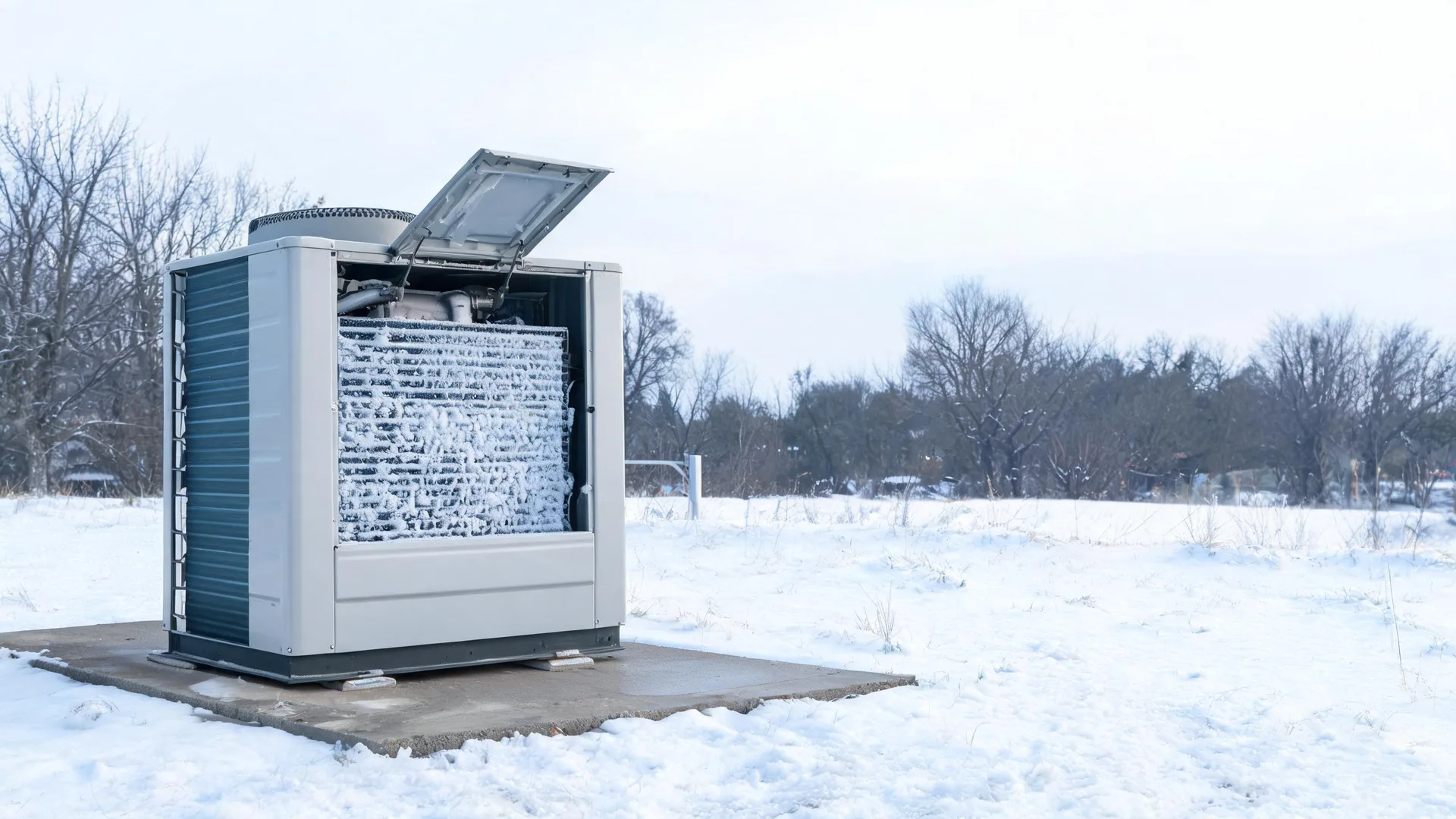
Look at the outdoor unit first. If the coil is caked in ice, leave it alone and switch the thermostat to emergency heat if there is a setting for it, then let the ice melt before anyone works on it. Check that nothing is blocking the outdoor unit, no leaves, no snow piled against it, no fence or shrub choking off airflow. Inside, pull the filter and hold it up to light. If you can't see light through it, replace it. Check the thermostat batteries if it has a screen that looks dim or blank. Walk the vents and make sure none are closed or blocked by furniture.
What to leave for the tech

A reversing valve that's stuck, a defrost sensor giving bad readings, a weak capacitor, a refrigerant leak, none of these show themselves from the outside and none of them are safe to chase without gauges and training. If you've checked the filter, the airflow, and the breaker, and the system still won't heat or cool right, the cause is inside the unit. Guessing at that point usually just delays the real fix.

Most heat pump problems announce themselves long before the system quits outright. A unit that runs but never quite reaches the set temperature is often low on charge or losing airflow across a dirty coil. Short cycling, where it turns on and off in quick bursts instead of running a full cycle, usually points to a control or sensor problem rather than the compressor itself. Ice on the outdoor coil that doesn't clear during the defrost cycle means the defrost board or sensor isn't doing its job. A hissing or bubbling sound near the lines can mean refrigerant escaping, and that's worth a call right away since it won't fix itself. If the system blows air but it's not warm or not cold enough, or if one room never feels right while others do, something in the system is already struggling, even if it hasn't failed yet.

A diagnostic visit starts outside, at the unit itself, checking the coil, the fan, and the refrigerant lines before anything gets opened up. Gauges go on next to check the charge, since a system can look fine and still be running low. Inside, the tech checks the air handler, the filter, and the airflow across the coil, because a starved system can mimic a dozen other problems. Electrical readings come next: the capacitor, the contactor, the board, checking each one does what it's supposed to under load rather than just sitting there looking fine. If the system is stuck in one mode or won't defrost right, the reversing valve and the defrost sensor get tested directly rather than guessed at. The point of all this is narrowing a list of possible causes down to the one actual cause, so the repair that happens afterward fixes the problem instead of a symptom of it.