







A dark two-story house with a covered porch stands behind a hedge and large deciduous trees, viewed from a low angle across a mowed lawn under an overcast sky.

Heat Pump Repair in Kimberling City, MO

Tell us about the job

Takes about a minute. No obligation.

RepairHeat PumpStone County, MO
Step 1 of 2

What ZIP code is the job in?

Stone County logged 190 severe weather events between 2015 and 2024. Most of that was wind, with 100 damaging wind events over the same stretch, plus 68 hail events and 8 tornadoes. A heat pump's outdoor unit sits outside through all of it, with coil fins exposed to hail and wind-blown branches and grit. It can take a hit and keep running for a while before the damage shows up as a refrigerant leak or a fan that struggles. If a storm has come through and your system seems fine, that's not proof the coil or fan escaped it.

7 months
October through April, your system heats
4 months
June through September, it cools
27°F
the average winter night it heats against
87°F
the average summer afternoon it cools against
Isometric line illustration of a cutaway house showing interior rooms with furniture, ceiling ductwork under a dark shingled roof, and an outdoor condenser unit connected by lines on the right.
Your system heats October through April and cools June through September.

NOAA nClimDiv, 1991–2020 normals

Heat runs October through April here, about seven months straight.

A heat pump that's been limping along since September usually gives out in those first cold weeks, right when it has to work hardest.

100 wind events and 68 hail storms. Your heat pump sits outside through all of it.

100 damaging wind events from 2015 to 2024
68 hail events from 2015 to 2024
Climate zone 4A
Your house may be newer than you thinkHalf the homes in Stone County were built in 1992 or later.

After a storm like that, guessing at the problem isn't worth it. A bent fin or a nicked line set can look minor and still be the reason your system is low on refrigerant or straining to push air. A tech who checks the coil, the fan blade, and the refrigerant charge will know whether you're looking at a simple cleaning or a leak that needs real repair. Fixing the symptom without finding what the weather did to the unit means you're likely back to the same call in a month. Get it looked at properly once, and the fix has a chance to hold.

Get the outdoor unit checked, not just the symptom

If hail or wind has come through since this started acting up, get the outdoor unit checked before you pay for any fix. A coil or fan damaged in a storm will send you right back to square one.

Find a contractor
A man in a cap, dark long-sleeve shirt and tan work pants climbs porch steps toward a blue front door, carrying a waxed canvas tool bag with tools visible inside.
A dark gray heat pump unit mounted on a concrete pad next to a house with gray siding and a stone veneer wall.

How old is the unit you're fixing

If the system came with the house, there's a good chance it still has years of work left in it. That's worth knowing before a storm-related repair turns into a conversation about replacing the whole unit. A heat pump with plenty of life left is worth fixing right, coil, fan blade, and charge all checked and corrected, rather than swapped out over one bad season. Ask the tech what year it was installed. That answer, more than the damage you can see, should drive the decision.

What you can check yourself

Look at the thermostat first. Make sure it's set to heat or cool, not fan only, and that the batteries aren't dead. Check your breaker panel for a tripped breaker on both the indoor and outdoor unit. Walk outside and look at the outdoor unit. Clear away leaves, branches or anything piled against it so air can move through the coil. Check the indoor air filter and swap it if it's gray or clogged. A dirty filter can make a heat pump seem broken when it's just starved for airflow.
What tells you to stop and call

If the outdoor fan isn't spinning at all, or it's spinning but the unit isn't blowing warm or cool air, that's not something to keep testing on your own. Ice built up on the outdoor coil beyond a light frost, a hissing or bubbling sound near the lines, or a burning smell from the indoor unit all mean it's time to shut the system off at the thermostat and get a tech out. Running a heat pump with a frozen coil or an electrical fault can turn a repair into a bigger one.

Most heat pump failures trace back to a handful of parts. The capacitor that kicks the compressor and fan motors on wears out with age and heat cycling, and when it goes, the outdoor unit hums but won't start. The reversing valve, which is what lets the system switch between heating and cooling, can stick in one position, so you'll get the wrong temperature air or none at all. Refrigerant leaks show up at joints and coils over time, and a system low on charge will run long and still underperform. Contactors pit and stick from years of electrical arcing, and a stuck contactor can leave the outdoor unit running nonstop even after the thermostat is satisfied. None of these announce themselves clearly. They show up as a system that runs but doesn't heat or cool right, which is why the fix has to start with finding the part, not guessing at it.

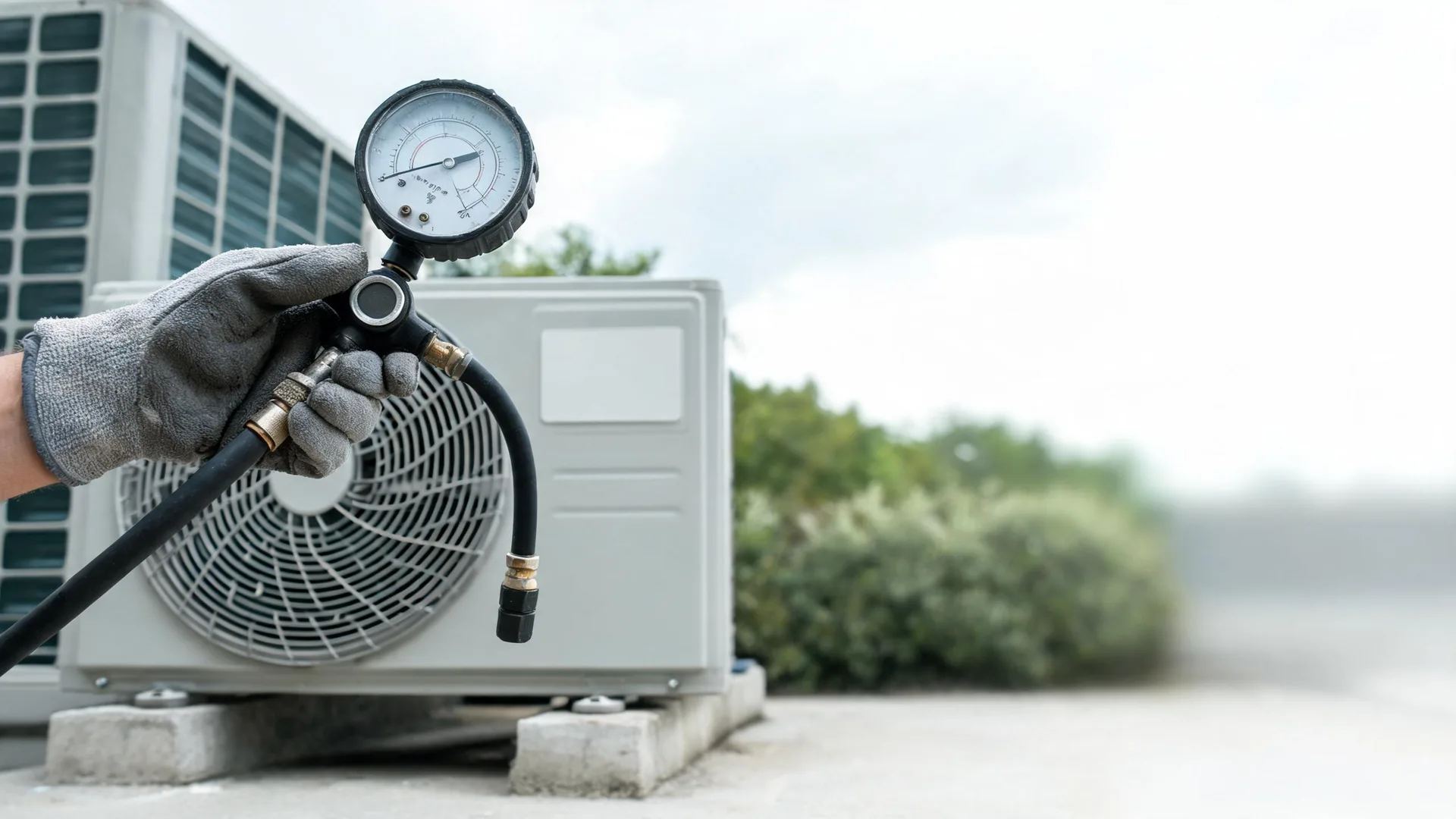
A diagnostic visit starts before any panel comes off. A tech will ask what the system is doing, when it started, and whether anything changed right before, like a storm or a power blip. Then they check the thermostat and the breakers, since those take two minutes to rule out and save everyone time. Gauges go on the lines next to read the refrigerant charge, because a system running low will act strange in ways that mimic other problems. They'll pull the access panel and look at the capacitor, the contactor, and the reversing valve, watching how each behaves when the system cycles on. The outdoor coil and fan get a visual check too, since a bent fin or a dragging blade can throw off readings that otherwise look like a bigger failure. By the end, the goal isn't just a part to replace. It's knowing why that part failed, so the same visit doesn't repeat itself next season.