A lit residential street at dusk featuring large two-story brick houses with glowing windows, mature trees, and a street lamp.

Heat Pump Repair in Joplin, MO

Tell us about the job

Takes about a minute. No obligation.

RepairHeat PumpJasper County, MO
Step 1 of 2

What ZIP code is the job in?

Short cycling wears out the compressor

A heat pump that kicks on, runs a few minutes, and shuts off again is struggling to satisfy the thermostat or tripping a safety switch. Left alone, that stop-start pattern puts real wear on the compressor every time it happens.


Warm air from the vents in heating mode doesn't mean it's broken

Heat pumps move heat instead of burning fuel for it, so the air at the vent is warm, not hot like a furnace. What's worth noticing is air that's barely warm or outright cold, or a system that runs constantly trying to catch up. That points to low refrigerant charge, a failing reversing valve, or a compressor that isn't pulling its weight.

7 months
October through April, your system heats
5 months
May through September, it cools
27°F
the average winter night it heats against
88°F
the average summer afternoon it cools against
Isometric line illustration of a cutaway single-story house showing interior rooms, ceiling ductwork, an indoor air handler unit, and an outdoor condenser connected by a line set.
Your system heats October through April and cools May through September.

NOAA nClimDiv, 1991–2020 normals

Half the homes in Jasper County were built in 1986 or later.

A heat pump that came with a newer house still has years ahead of it, and a repair is usually what gets it there.

October is when a weak heat pump finally gives out

Cooling runs May through September
Heat runs October through April
124 damaging wind events from 2015 to 2024

Before calling for a replacement, ask when the heat pump went in. If it came with the house and the house is from the newer half of the county, that's a unit that should still have years of service left in it. A compressor or reversing valve issue doesn't change that math. Get the part diagnosed and priced before anyone talks about pulling the whole system out.

Repair it

If your system came with a newer house, it likely has plenty of life left. Repair is usually the right call.

Find a contractor
A dark gray heat pump unit mounted on a concrete pad next to a house with gray siding and a stone veneer wall.

What a diagnostic visit actually finds

A tech starts outside at the outdoor unit, checking refrigerant pressures and looking at the reversing valve. That's the part that lets a heat pump switch between heating and cooling, and it's a common failure point. Inside, they'll check the air handler, the blower motor, and the condition of the filter. They're listening for how the system cycles. A unit that runs a full cycle and satisfies the thermostat is doing its job. One that short cycles or trips off early is not. A set of gauges shows whether the charge is low, which points to a leak somewhere in the line set. An amp reading on the compressor shows whether it's drawing power without doing the work it should. Most of this gets sorted out in one visit. By the end of it you know which part is failing and what it takes to fix it.

Check the filter first

A clogged filter starves the system of airflow, and a heat pump will struggle to heat or cool with weak airflow across the coil. Pull it out and hold it up to a light. If you can't see through it, replace it. This alone fixes a surprising number of no-heat and no-cool calls.

Check the outdoor unit

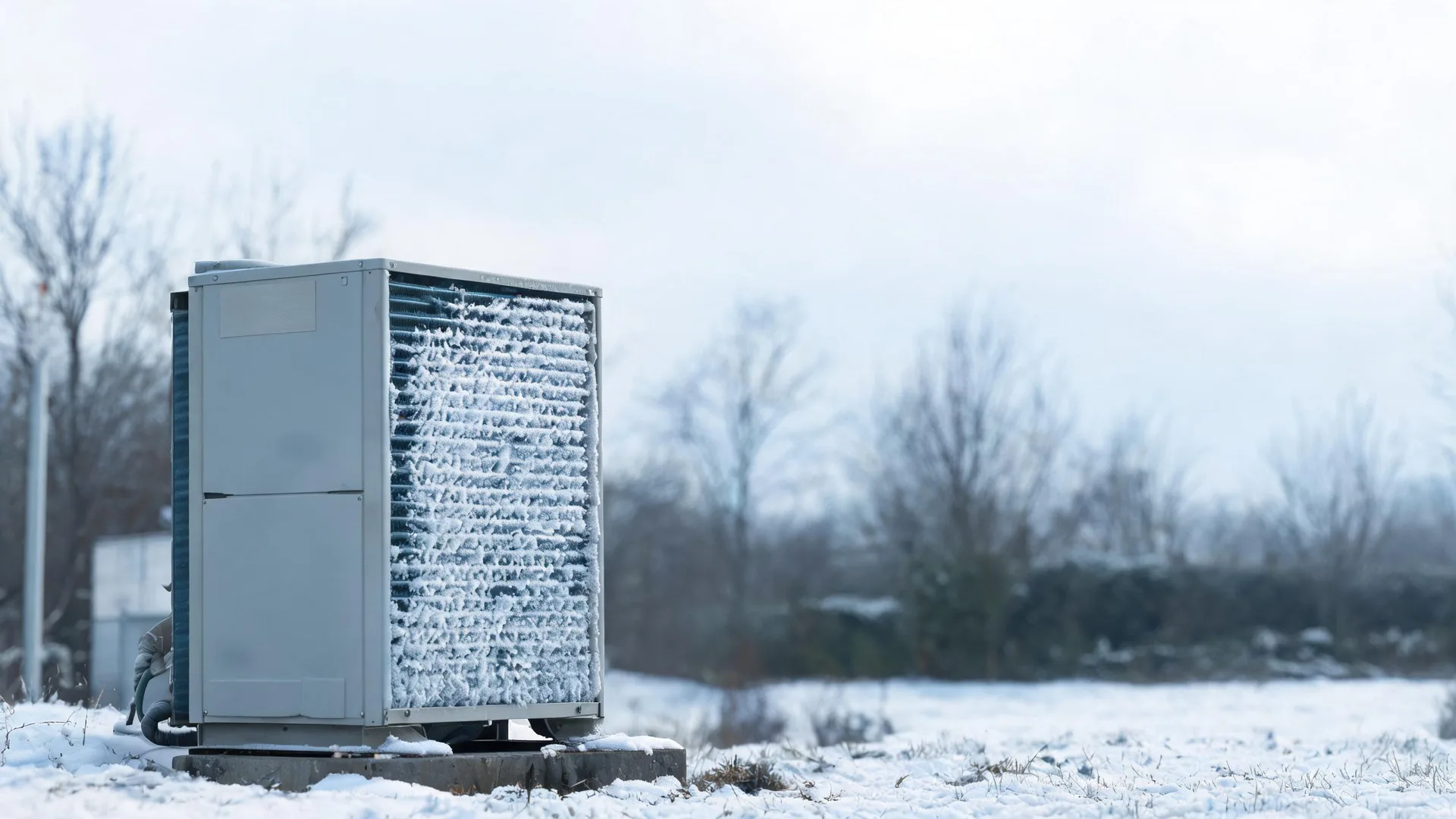
Walk outside and look at the outdoor unit. Leaves, ice, or anything piled against it blocks airflow and stops the system from doing its job. Clear away debris and brush off any ice you can reach by hand. If the coil is caked in ice and it keeps coming back, that points to a problem with the defrost cycle or the refrigerant charge, and that part is for a tech to sort out.

A refrigerant leak is a good example. Run a heat pump low on charge and the compressor has to work harder to move the same amount of heat. It draws more current, runs hotter, and pulls refrigerant back toward itself in a state it wasn't built to handle. That's what burns out a compressor that otherwise had years left in it. Short cycling does similar damage a different way. Every start puts a surge of current through the compressor windings, and a unit that's starting and stopping every few minutes takes that hit over and over instead of once per cycle. Neither problem fixes itself by running longer. Both put more strain on the compressor the longer they go unaddressed.

Most heat pump failures trace back to a handful of parts. The reversing valve sticks or fails electrically, and the system gets stuck heating when you want cooling or the other way around. The defrost control board misreads the outdoor coil and either skips defrost cycles, so ice builds up and chokes airflow, or runs defrost too often, so the home never gets warm. Capacitors weaken with age and the compressor or fan motor draws hard on startup without getting the kick it needs to run. Low refrigerant almost always means a leak somewhere in the line set or coil, not a system that just needs a top-off, since a sealed system doesn't use refrigerant up on its own. Contactors pit and burn from years of making and breaking that connection, and eventually they don't make contact at all. None of these show up on a thermostat. They show up as a system that runs but doesn't deliver, or won't run at all.