This county takes a beating
Cape Girardeau County logged 160 severe weather events between 2015 and 2024, including 120 rounds of damaging wind, 23 hail events, and 7 tornadoes. That is a lot of chances for something outside to get hit.
Takes about a minute. No obligation.
Cape Girardeau County logged 160 severe weather events between 2015 and 2024, including 120 rounds of damaging wind, 23 hail events, and 7 tornadoes. That is a lot of chances for something outside to get hit.
The outdoor unit has no cover from wind-blown branches or hail. A storm can bend the fins or crack the fan blade without stopping the system right away, so it can be worth a look even when the heat pump still runs.

NOAA nClimDiv, 1991–2020 normals
Half the homes in Cape Girardeau County were built in 1982 or later.
A heat pump that came with a newer house usually still has life in it, and that's worth knowing before you replace instead of repair.
October is when heat here switches on for the winter, and that first cold stretch is when a weak part tends to get found. A heat pump doesn't get a break between seasons. It goes from cooling the house in September straight to pulling heat out of cold air in October. Overnight lows average 27°F across December, January and February, so the load only gets heavier from there. If a capacitor or a sensor was already marginal, it tends to give out in those first weeks rather than wait for the coldest night. Having it checked when the heat first goes on beats finding out on a night near 27°F.
A heat pump that still runs after a storm can be hiding a bent fin or a cracked fan blade. Those don't always stop the system right away. This county saw 120 rounds of damaging wind and 23 hail events between 2015 and 2024, so a hit at some point is likely. A quick check now settles the question either way.
Find a contractor
A heat pump works year round here, cooling through the muggy stretch and then pulling heat out of cold air all winter. That is a lot of running hours on the same unit. If yours came with a newer house, it hasn't had to rack those hours up over as many years, so the parts inside have less wear behind them even with the same daily workload. That makes repair the straightforward move when something fails. A system with most of its working life still ahead of it is worth fixing, not replacing, when a capacitor or a sensor goes.
A heat pump switches between heating and cooling with a reversing valve, and that valve only exists because the system runs both ways. It can stick from a weak solenoid or built-up debris, and when it does, the system may blow cold air when it should heat, or run nonstop without catching up. That symptom alone usually points straight to the valve.
The outdoor unit runs in all weather, so the coil fins and fan motor take the brunt of it over time. Bent fins choke airflow and make the system work harder to move the same heat. A fan motor that's wearing out will often run slow or noisy before it quits outright. Keeping the coil clear and the fan spinning freely is most of what keeps a heat pump out of trouble.
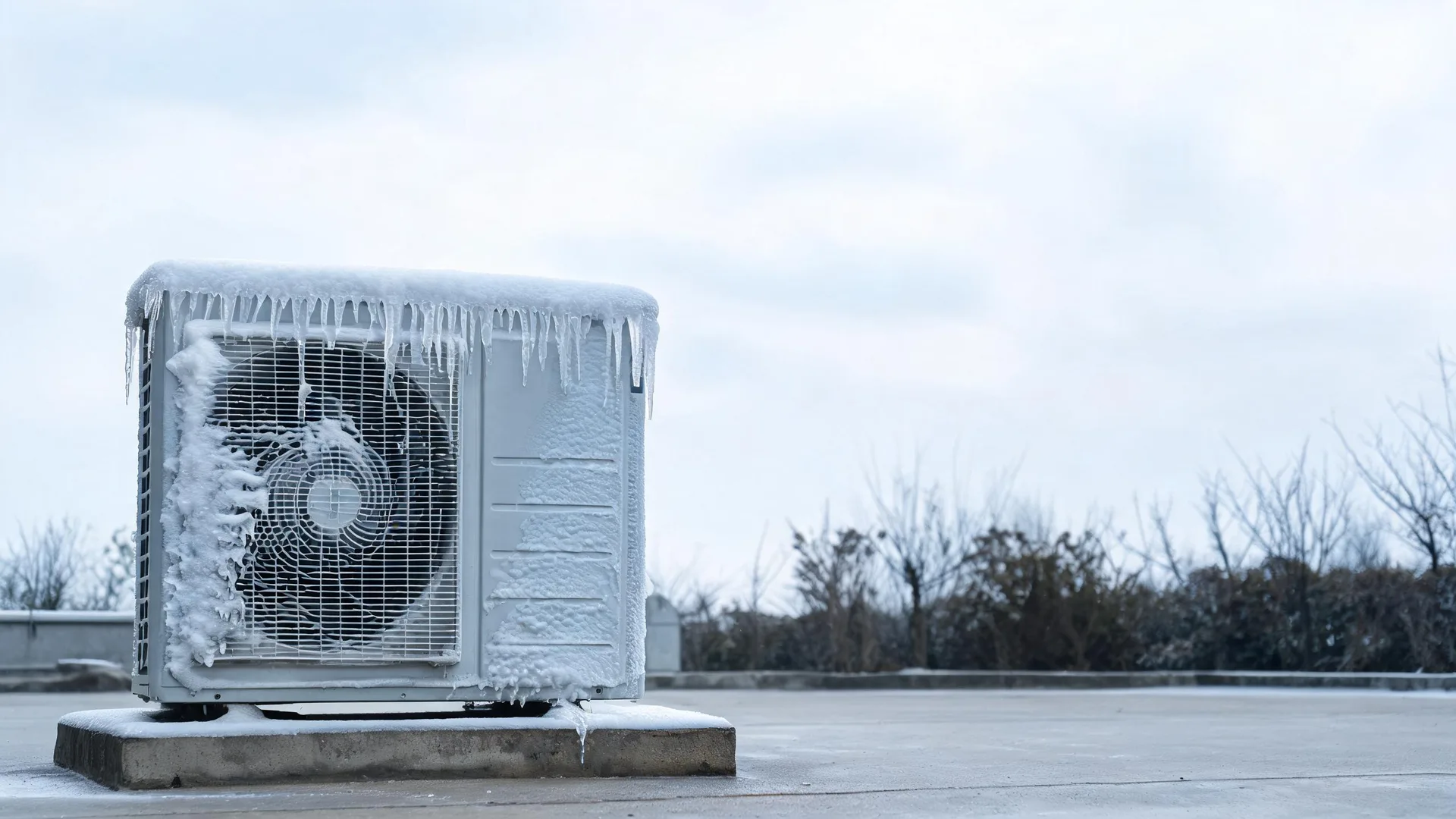
A heat pump usually tells you something is wrong before it quits. Warm air coming out of the vents in the dead of winter is one of the first signs, because the system should be putting out air that feels warm against your hand, not just lukewarm. Ice building up on the outdoor coil and staying there is another. Some frost in the cold months is normal, the unit melts it off on a defrost cycle, but a coil caked in ice that never clears points to a stuck reversing valve or a fan that has stopped pulling air through it. Short cycling, where the system kicks on and off every few minutes instead of running a full cycle, wears on the compressor and is worth having looked at before it leads to a bigger failure. A hissing or bubbling sound near the lines usually means refrigerant is escaping somewhere it shouldn't. Any grinding or squealing from the outdoor unit is the fan motor or bearings telling you they're on the way out.
Wind is the other thing this unit has to stand up to, separate from the heat and the cold. Cape Girardeau County logged 120 rounds of damaging wind between 2015 and 2024. The outdoor unit sits outside through every one of those, fins exposed, fan blade exposed, nothing standing between it and whatever the wind carries. A system that takes a hit like that doesn't always stop working right away. It keeps running, a little worse than before, until a fin is bent enough to choke airflow or a blade is cracked enough to throw the fan out of balance. That kind of wear doesn't show up on a thermostat. It shows up when a tech opens the cabinet and looks.