





A nighttime view of a tree-lined residential street with illuminated two-story brick houses and street lamps.

Heat Pump Repair in Bolivar, MO

Tell us about the job

Takes about a minute. No obligation.

RepairHeat PumpPolk County, MO
Step 1 of 2

What ZIP code is the job in?

Polk County saw 190 severe weather events between 2015 and 2024. Damaging wind caused 99 of those, hail caused 72, and 12 tornadoes touched down in the county in that span. Your heat pump's outdoor unit sits outside through all of it, exposed to wind-driven debris and hail that a furnace never has to deal with. A dented cabinet or bent fins don't always stop the unit from running, but they can mean a damaged coil or a fan pulling out of balance. If a storm has come through recently, it's worth having the unit looked at even if it still seems to be working.

7 months
October through April, your system heats
5 months
May through September, it cools
25°F
the average winter night it heats against
87°F
the average summer afternoon it cools against
Isometric cutaway illustration of a small house showing interior ductwork and an air handler connected by lines to an outdoor condenser unit on a pad beside the building.
Your system heats October through April and cools May through September.

NOAA nClimDiv, 1991–2020 normals

Half the homes in Polk County were built in 1987 or later.

A heat pump that came with a newer house usually has years of working life left, and that makes a repair call worth it.

October asks the most of a system that's been sitting since spring

Cooling runs May through September
Heat runs October through April
Climate zone 4A

Your heat pump doesn't get a break here. Summers run long and the air sits heavy, with the dew point averaging 66°F through June, July and August, so the system is pulling moisture out of the air as hard as it's cooling it. Then winter turns around and asks it to heat the house the other half of the year. That kind of steady work adds up differently than it does on a machine that only runs part of the year. A capacitor, a contactor, a sensor, whatever's acting up, it's usually wear that caught up with the unit rather than something installed wrong. Getting it looked at properly means the actual part gets fixed instead of just the symptom.

If a storm has come through, get the outdoor unit checked

If hail or wind has come through since the unit was installed, a look at the outdoor unit now can catch a damaged coil or an unbalanced fan before it leads to a bigger repair.

Find a contractor
A dark gray heat pump unit mounted on a concrete pad next to a house with gray siding and a stone veneer wall.

It runs most of the year here

The clip beside this shows what that steady back and forth looks like hour to hour. A repair call is the right time to let someone trace the actual cause instead of swapping the first part that looks worn. If the unit is original to the house, say so when you call. That changes what a contractor checks first.

A frozen coil gets worse, not better

A heat pump low on refrigerant or starved for airflow will start icing the outdoor coil. Left running, that ice builds thicker and blocks airflow completely, and the compressor keeps trying to do its job against a coil that can't exchange heat anymore. A compressor that overheats or struggles against that kind of load can fail outright, turning a refrigerant leak into a full system replacement.
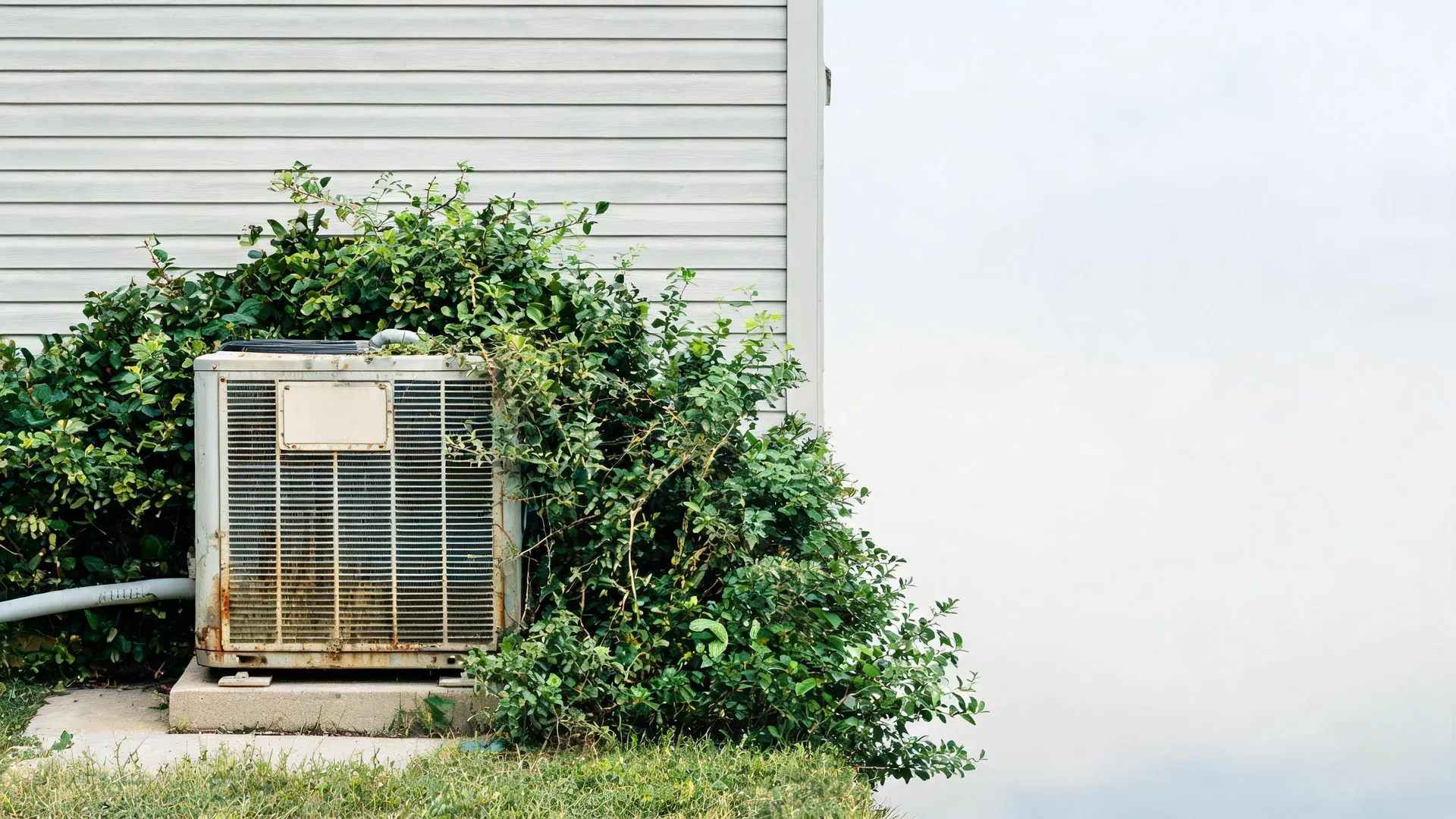
A failing part rarely fails alone

A weak capacitor makes the compressor or fan motor pull harder to start each cycle. That extra strain wears down the motor it's starting. Shutting the system off when something sounds or feels wrong protects the parts around the one that's already failing. Waiting for it to stop on its own usually means more than one part needs replacing by the time it does.

A heat pump usually tells you something is wrong before it quits outright. It might run longer than it used to, or cycle on and off more than it should. You might feel air coming from the vents that's cooler than usual on heat, or warmer than usual on cool, like it's not working as hard as it needs to. A hissing or bubbling sound points to refrigerant. A hard clunk or rattle at startup usually points to the fan motor or a loose part inside the cabinet. Ice on the outdoor coil when it shouldn't be there, or the outdoor fan not spinning while the system is clearly trying to run, are both worth a call rather than a wait.

If your heat pump came with the house, repair is usually worth it rather than a stopgap before a bigger purchase. Half the homes in Polk County were built in 1987 or later, so plenty of these systems still have real years left in them. Tell the contractor the age when you call, or whether it's original to the house if you know. That detail changes how they size up the problem, whether it's a part worth replacing or a sign the unit is closer to the end of its run. A part failing early on a newer system is usually just that part, not the whole unit giving out.