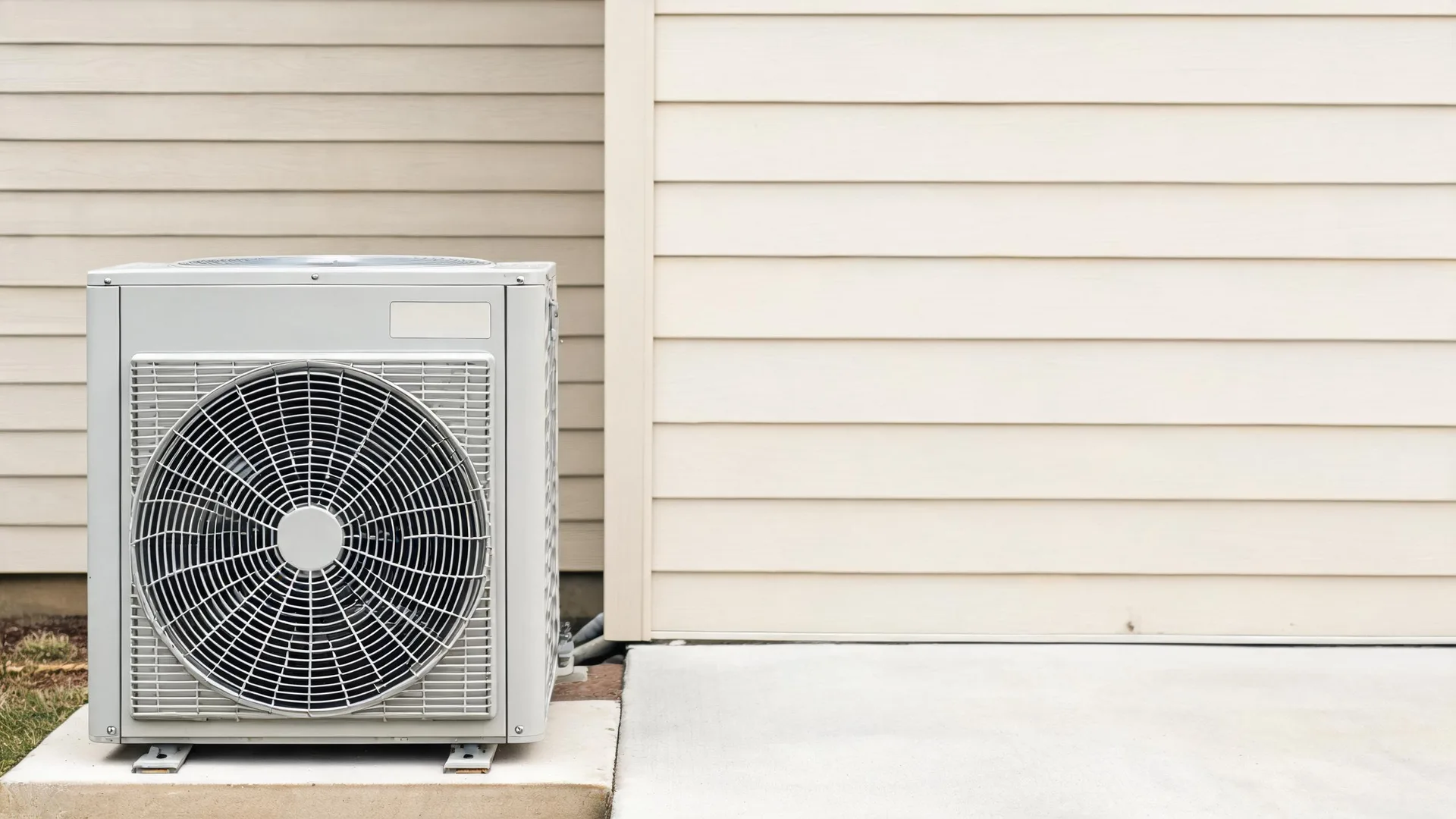
Storms come through often
Johnson County logged 148 severe weather events between 2015 and 2024. That includes 61 damaging wind events, 73 hail events, two tornadoes and 10 winter storms with heavy snow or ice.
Takes about a minute. No obligation.
Johnson County logged 148 severe weather events between 2015 and 2024. That includes 61 damaging wind events, 73 hail events, two tornadoes and 10 winter storms with heavy snow or ice.
Nearly one in five Missouri households went at least 24 hours without power in 2024. A heat pump handles both heating and cooling, so a long outage here means losing both at once, plus hot water if it runs on the same electric service.

NOAA nClimDiv, 1991–2020 normals
Johnson County logged 73 hail events between 2015 and 2024.
The outdoor unit sits through that weather year after year, so installation has to account for it, not just the price on the quote.



Johnson County falls in climate zone 4A, which asks real work of both the heating and cooling side of a system. Any split-system heat pump installed here now has to meet the federal minimum for that zone: at least 14.3 Btu of heat moved per watt-hour of electricity over the summer, and at least 7.5 Btu per watt-hour over the winter. That standard applies to units manufactured from January 1, 2023 onward, so it's not optional and it's not a feature to shop for separately. It narrows what a contractor can legally install, and it's worth asking which models on a quote clear that bar.
Ask where the outdoor unit will sit and what will shield it from hail and wind. Ask what happens to heat and hot water if the power is out for a day. A heat pump installed with both answers worked out ahead of time is one less thing to deal with when the next storm comes through.
Find a contractor
Heat here runs seven months, October through April. Cooling runs five, May through September. That leaves only April and September as real gaps, and both are short. September sits right before heat starts, and April sits right before cooling starts. A heat pump put in outside those two windows goes straight to work, no easing in, since whichever season is closest is already on its way. Overnight lows average 24 degrees across December, January and February, so a system that starts heating under pressure is already being asked for a lot. Installing before the season that needs it most gives the contractor time to size the unit and set it up right, instead of doing that work while the house is already cold or already sticky.
A heat pump has to be sized against how much heat the house loses in winter and gains in summer, room by room, not just swapped in at whatever tonnage the last unit happened to be. A unit sized too big short cycles, turning on and off before it ever settles into steady running, which wears the compressor and leaves rooms uneven. One sized too small runs constantly and still can't keep up on the coldest or hottest days. Getting this right takes a load calculation, not a guess based on square footage.
A heat pump moves air at different temperatures and speeds than the furnace or air conditioner it replaces, so the ducts it inherits have to be able to carry what it puts out. Ducts that are too narrow, leaky, or poorly routed force the system to work against itself no matter how good the equipment is. Sealing joints, fixing crushed runs, or adding a return can matter more to how the system performs than which brand sits outside.
A load calculation looks at the whole house: how much heat escapes through the walls and windows, how much sun the roof takes on, how many people and appliances add heat inside, how the rooms connect to each other. Square footage alone misses all of that, which is why two houses the same size can need different sized units. The calculation also has to account for both directions, since the heat pump has to pull heat out in summer and pull it in from outside air in winter, and those two jobs don't always point to the same size unit. A contractor worth hiring will walk the house and run these numbers before writing a quote, not after. If a quote shows up with a tonnage already decided and no mention of a load calculation, that number came from the old equipment or a square footage chart, not from this house.
Electricity here runs 12.40 cents a kilowatt-hour, cheaper than most of the country pays. That changes what's worth paying extra for. A higher efficiency heat pump still costs less to run month to month, but at this rate the gap between a good unit and a top-tier one takes longer to earn back. That doesn't make efficiency pointless, it just means it shouldn't be the only thing a quote sells on. What matters more here is whether the unit is sized right, installed right, and built to keep running through the storms this county gets. A contractor who leads with efficiency numbers and skips the load calculation or the outdoor unit's placement is pitching the wrong priority for this place.