




What the cold does to a heat pump here
Heat runs seven months here, October through April, longer than cooling runs. The overnight low averages 24°F across December, January and February. That number matters because of where a standard heat pump starts to struggle. Below 40°F its heat output falls short of its rating. Below about 35°F it often needs backup heat to make up the difference. An average winter night here is below both marks, not close to them.
Over half the nights in heating season here, about 115 of roughly 210, drop to freezing or below. A standard heat pump spends most of its working season leaning on something else to keep the house warm. Nights that reach 0°F are rare, about 4 a year, so the deep cold is not the issue. The ordinary cold, the kind that shows up more nights than not, is.
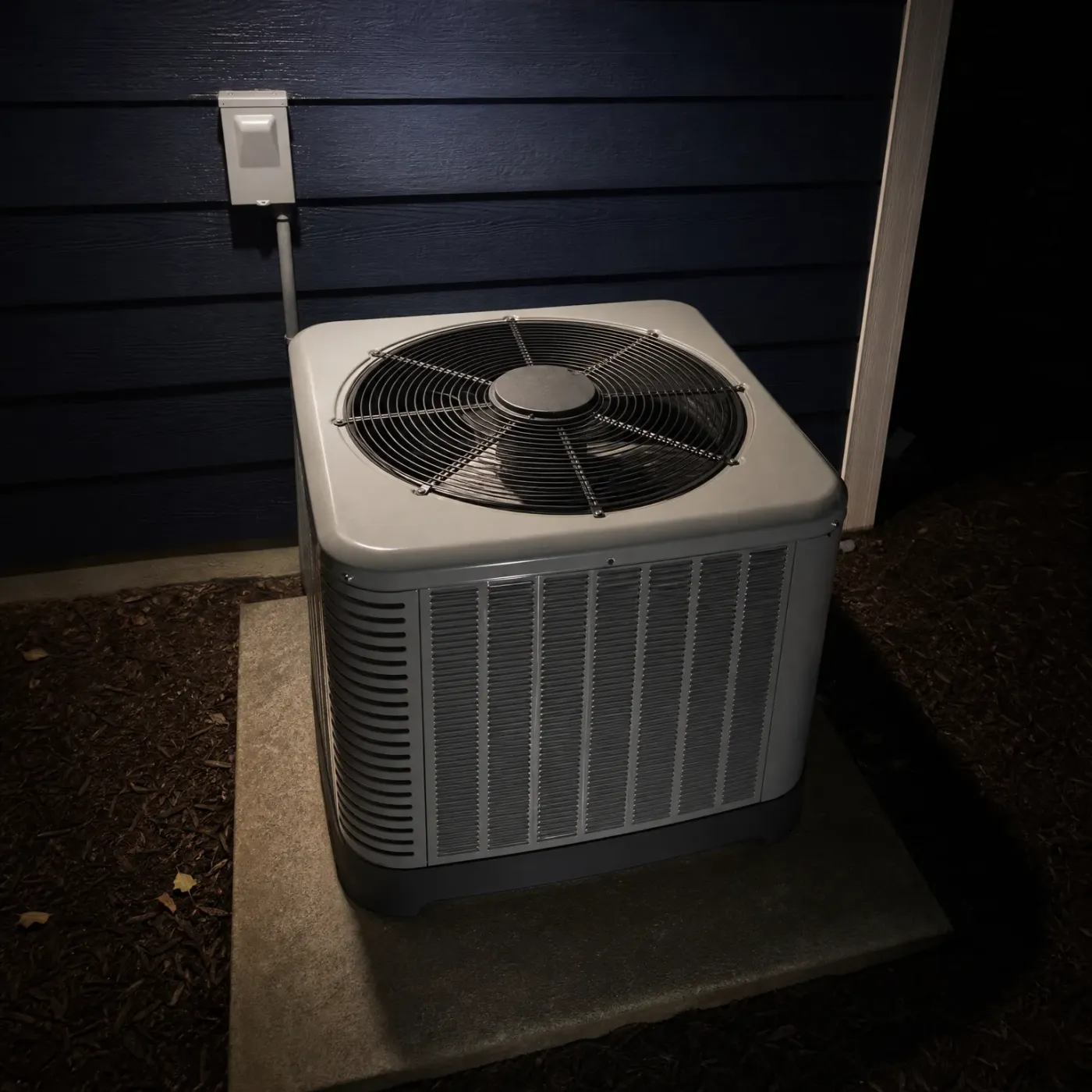
This is where the two kinds of heat pump split. A standard central heat pump is built and rated around that 40°F to 35°F drop-off. A cold climate heat pump is tested and certified against a harder mark: at 5°F it still has to produce at least 1.75 units of heat for every unit of electricity it uses, and hold onto at least 70 percent of its 47°F capacity. That is a machine built for the nights this county actually has most of the winter, not just the mild ones.