Low-angle view across a mown green lawn toward a dark-sided building at left and a cream-colored single-story house with trees in the background under an overcast sky.

Heat Pump Installation in Raymore, MO

Tell us about the job

Takes about a minute. No obligation.

New system or replacementHeat PumpCass County, MO
Step 1 of 2

What ZIP code is the job in?

Storms come through often

Cass County logged 178 severe weather events between 2015 and 2024. That includes 89 damaging wind events and 74 hail events, plus 6 tornadoes. Nine winter storms brought heavy snow, ice or blizzard conditions in that same stretch. Statewide, almost one in five Missouri households went at least 24 hours without power in 2024.


What it means for your installation

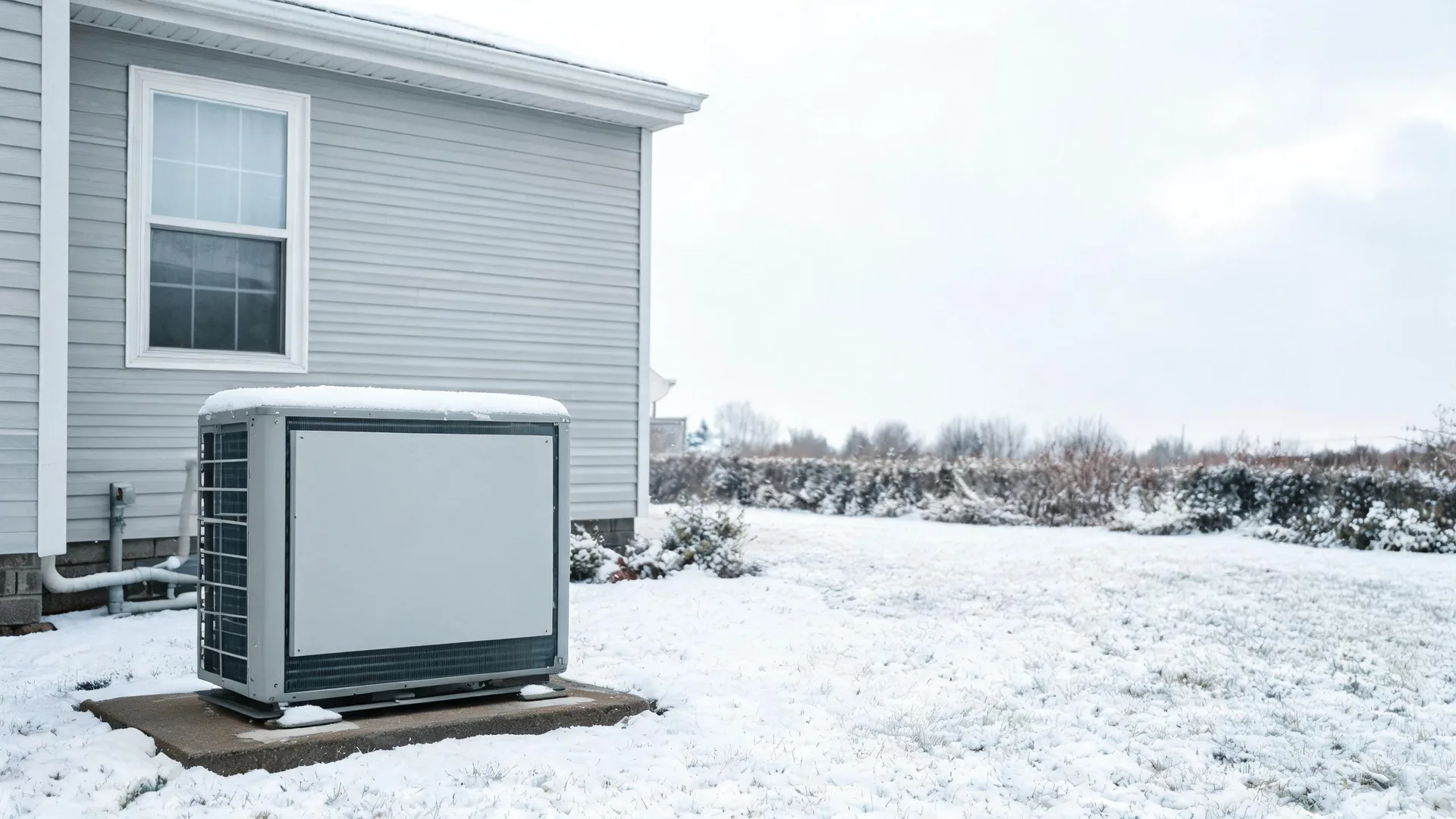
The outdoor unit has to sit somewhere that keeps it clear of falling branches and away from the worst of the hail, and it needs to be set up to take a hard wind without becoming the problem. An outage means no heat pump either way, so hot water and a way to stay warm matter as much as the equipment itself.

7 months
October through April, your system heats
5 months
May through September, it cools
24°F
the average winter night it heats against
87°F
the average summer afternoon it cools against
Isometric line illustration of a cutaway single-story house showing interior rooms, ceiling ductwork connected to an indoor air handler, and refrigerant lines running to an outdoor condenser unit on a pad.
Your system heats October through April and cools May through September.

NOAA nClimDiv, 1991–2020 normals

October is when heat pump installations here start to get booked up.

Get it installed before then and it's running on your schedule, not during the first cold snap.

Most homes here already run on gas, and that shapes how a heat pump gets added in

54.8% of homes heat with gas
Climate zone 4A
Power here costs 13.08 cents per kilowatt-hour
Built for weather that doesn't let up89 damaging wind events and 74 hail events hit Cass County between 2015 and 2024.

Cass County falls under climate zone 4A, which asks a lot of a system in both directions: real cooling load in summer, real heating load in winter. Any split-system heat pump installed here now has to meet the federal minimum for that, set for units built from January 1, 2023 onward. It has to pull out at least 14.3 Btu of heat for every watt-hour it uses over the summer, and deliver at least 7.5 Btu of heat per watt-hour over the winter. That's the floor, not a target, so it narrows down which equipment can legally go in. A contractor sizing your installation is working within that limit already, before efficiency even comes up as a selling point. On top of meeting it, a qualifying heat pump installed now can also put you in reach of the federal tax credit for energy-efficient home upgrades.

Plan the install around the weather it has to survive

Where the outdoor unit goes and how the install handles a power cut aren't details to settle later. Get those placed before this one goes in.

Find a contractor
A dark gray heat pump unit mounted on a concrete pad next to a house with gray siding and a stone veneer wall.

Sized right, it holds up. Sized cheap, it won't

A heat pump installed here has to handle real heat load and real cold load every year, and the storms on top of that aren't rare. When it's time to size the install, go with a contractor who sizes for your house, not for the lowest bid. An undersized unit runs longer to keep up, and that's more hours of wear on a system already working both sides of the year. Ask where the outdoor unit will sit and whether that spot keeps it out of the way of falling limbs and wind-blown debris. That's a question worth more than a few dollars off the quote.

Sizing comes from a load calculation, not square footage

A heat pump has to be matched to how fast the house gains heat in summer and loses it in winter. That comes from a room by room load calculation that looks at insulation, windows, ceiling height and how much wall faces the sun, not a rule of thumb based on floor area. Two houses the same size can need different sized equipment.

Oversized and undersized both cause problems

A heat pump that's too big cools the air fast then shuts off before it pulls the moisture out, so the house feels clammy even at the right temperature. One that's too small runs constantly during the hardest days of summer and winter, never quite catching up, and that extra runtime wears on the compressor and the outdoor fan motor years before it should.

A quote should tell you the heating and cooling output at different outdoor temperatures, not just one number for the whole system. Heat pumps lose capacity as it gets colder outside, and the spec sheet shows that drop at specific temperatures. Ask what the unit still puts out at the coldest temperatures this area sees, and whether the system needs backup heat to cover the gap. Ask about the sound rating too, since an outdoor unit installed near a bedroom or a patio matters more once it's running. Find out what refrigerant it uses, since older refrigerants are being phased out and parts availability follows that. Ask what the warranty covers on the compressor versus the rest of the unit, and whether it requires registration to stay valid. Two systems can look alike on paper and perform very differently once they're sized and installed for the house in front of them.

Install day starts with the equipment that's already there. The old unit gets disconnected, the refrigerant recovered rather than vented, and the lines, pad and electrical checked to see what can be reused and what can't. Most jobs call for a new outdoor pad or bracket, since the new unit's footprint rarely matches the old one exactly. The indoor coil and air handler or furnace connection get swapped or tied in next, then new refrigerant lines get run if the old ones aren't sized right for the new system. Once everything's connected, the lines get pressure tested for leaks before any refrigerant goes in, then the system gets evacuated to pull moisture and air out of the lines. Only after that does it get charged, started up, and checked against the airflow and temperature numbers the equipment is supposed to hit.