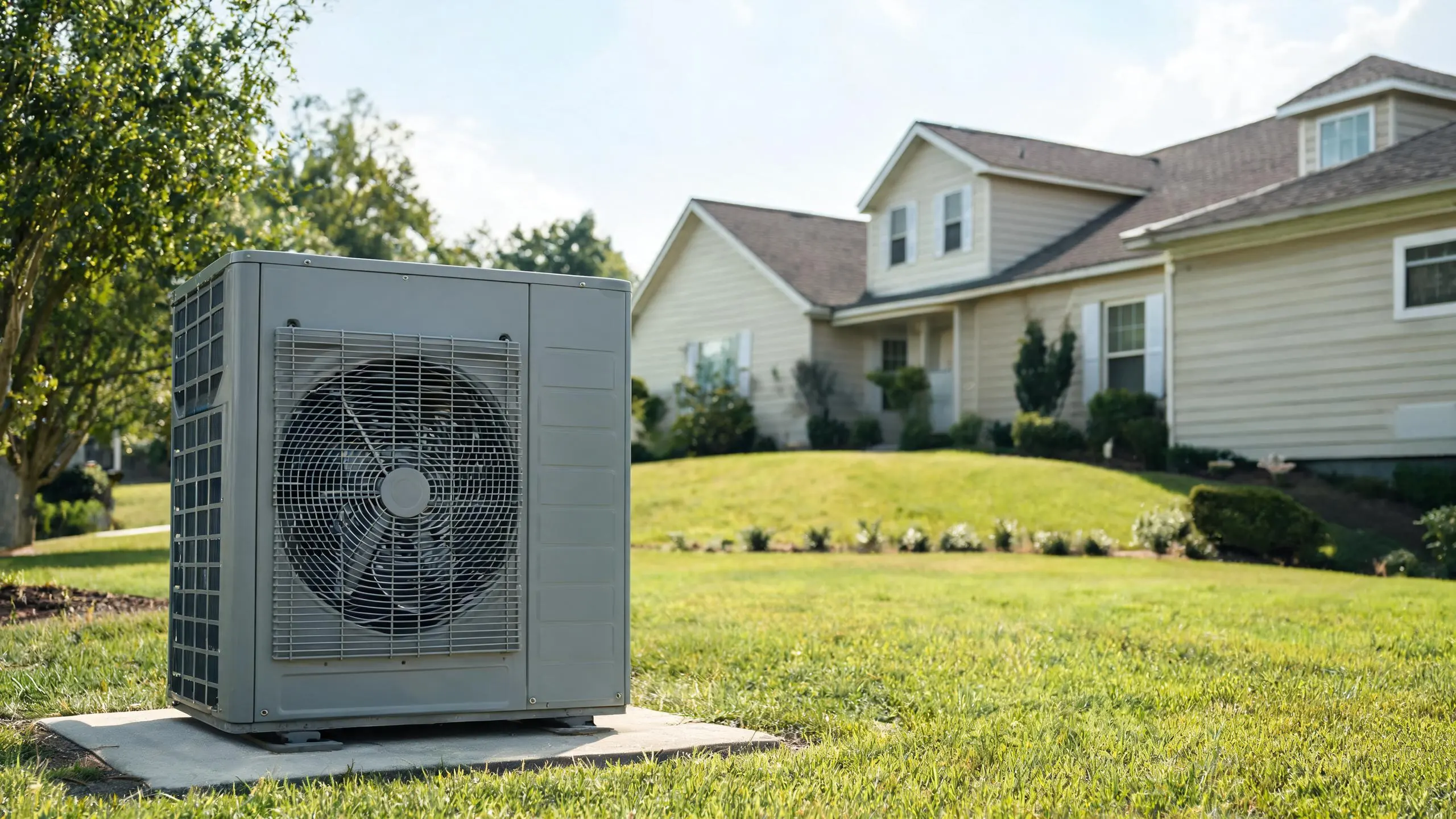





A gray outdoor HVAC condenser unit mounted on a concrete pad in the front yard of a two-story suburban house.

Heat Pump Installation in Poplar Bluff, MO

Tell us about the job

Takes about a minute. No obligation.

New system or replacementHeat PumpButler County, MO
Step 1 of 2

What ZIP code is the job in?

Butler County sees its share of rough weather. Between 2015 and 2024 it recorded 152 severe weather events, and damaging wind caused 110 of them. Hail came through 22 times in that span, and 9 tornadoes touched down. Winter brings its own risk too, with 11 ice storms, blizzards or heavy snow events recorded over the same years. Statewide, close to one in five Missouri households lost power for a full day or longer in 2024. A heat pump sits outside and runs on electricity, so both of those facts matter when you're deciding where the unit goes and what backup you need for the times the grid goes down.

7 months
October through April, your system heats
5 months
May through September, it cools
29°F
the average winter night it heats against
89°F
the average summer afternoon it cools against
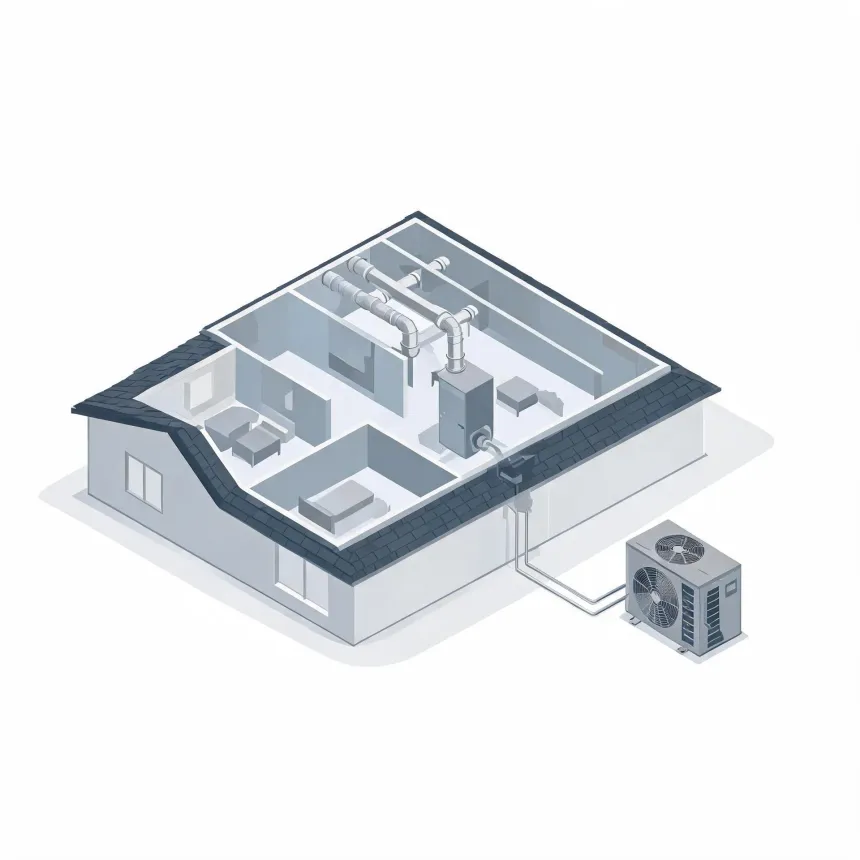
Isometric cutaway illustration of a single-story house showing interior rooms with ductwork, a furnace or air handler, and refrigerant lines running outside to a condenser unit on a pad.
Your system heats October through April and cools May through September.

NOAA nClimDiv, 1991–2020 normals

Electricity heats 67.8% of homes in Butler County, more than gas and propane combined.

A heat pump replacing electric heat is a straight swap, with the ductwork and power already set up for it.

Cheap power here, so pick for reliability, not payback

Power here costs 11.84 cents per kilowatt-hour
110 damaging wind events from 2015 to 2024
Climate zone 4A
This heat pump has to work harder than mostDamaging wind hit the county 110 times between 2015 and 2024, and summer air here averages a 67°F dew point.

Butler County falls in climate zone 4A, which asks real work of a heat pump in both directions. Any split-system heat pump installed new has to clear federal minimums to be sold at all: at least 14.3 Btu of cooling for every watt-hour it draws over the summer, and at least 7.5 Btu of heating for every watt-hour over the winter. That floor rules out the old low-efficiency units some homeowners remember from years back. It still leaves a range of equipment above it, and higher-efficiency models cost more going in. A federal tax credit is available toward the cost of a qualifying system, which offsets some of that difference.

Plan for the outage before the install, not during it

Decide now where the new unit will sit and what happens to your heat and hot water when the power drops. That's a question for the installer, not an afterthought once the system's in.

Find a contractor
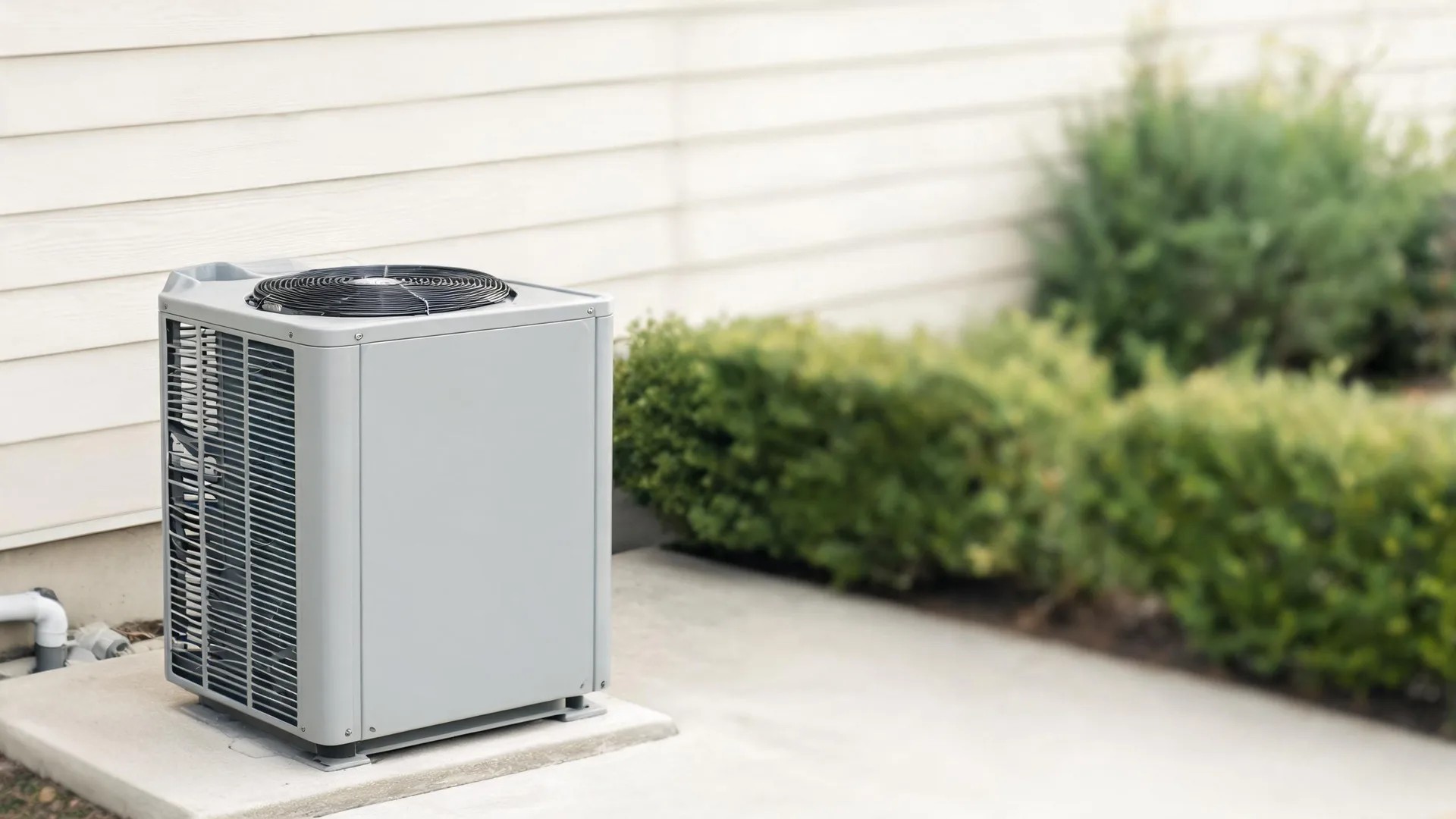
A gray heat pump outdoor unit mounted on a concrete pad next to the stone-accented exterior wall of a house.

This system doesn't get an off season

This heat pump runs heat from October through April, about seven months, then switches to cooling from May through September. April and September are the only gaps between one job and the next. Installing before one of those gaps closes means the swap happens on a day you picked. Wait, and a failure in the middle of either stretch forces the timing instead. Overnight lows average 29°F across December, January and February, and a heat pump has to keep pulling heat out of air that cold on every one of those nights. Getting the unit in before October gives it a mild month to settle in first.

The rating is two numbers, not one

The cooling number and the heating number on that label come from separate tests, run at mild outdoor temperatures the lab picks to standardize the test. Neither one tells you what the unit draws on the coldest night of the year or the hottest afternoon. A unit with a strong cooling number can still have a middling heating number, because the compressor, the refrigerant charge and the outdoor coil all behave differently pulling heat out of cold air than dumping heat into hot air.
The rating only holds if the install is right

That number was measured on a correctly sized unit with the refrigerant charge set exactly to spec and full airflow across the coil. Oversize the unit, shortchange the duct airflow, or leave the charge off even a little, and the system won't deliver the efficiency printed on its own label. The rating describes the equipment. What you actually get depends on whether the person installing it hits every one of those marks.

A heat pump that's too big cools the room down fast, then shuts off before it pulls the moisture out of the air. The space feels clammy even at the right temperature, and the compressor spends the whole day cycling on and off instead of running steady. That short-cycling wears on the compressor faster than a full, even run would. Go too small and it never shuts off at all, straining to keep up on the hottest and coldest days and still falling short. Getting the size right starts with a load calculation, a room-by-room look at the house itself: window area, insulation, ceiling height, air leakage, which way the walls face. It has nothing to do with the square footage of the house next door or the size of the unit being replaced, since that one may have been wrong from the start.

With wind that comes through this often, it's worth asking the installer directly what the house falls back on when the power goes. A heat pump runs on electricity and nothing else, so when the grid drops, so does the heat or the cooling, unless something else is in place to carry the house through it. Some setups pair the heat pump with a backup power source, some don't, and that gets decided at install, not after the fact. The unit that costs less up front may be the one with no answer for that day. Ask before you sign, not after the next outage.