A row of illuminated two-story brick houses with front porches and mature trees photographed at twilight.

Heat Pump Installation in Neosho, MO

Tell us about the job

Takes about a minute. No obligation.

New system or replacementHeat PumpNewton County, MO
Step 1 of 2

What ZIP code is the job in?

Weather here is hard on outdoor equipment

Newton County logged 219 severe weather events between 2015 and 2024, including damaging wind and hail. A heat pump's outdoor unit sits outside year-round, so where it goes and what shields it from wind-blown debris and hail is worth working out before installation.


Power cuts affect heat and hot water alike

19% of Missouri households went at least 24 hours without power in 2024. A heat pump needs electricity to run, so an outage takes out your heat the same way it takes out your water heater. Worth asking your contractor what backup options exist for this system before you need one.

7 months
October through April, your system heats
5 months
May through September, it cools
27°F
the average winter night it heats against
88°F
the average summer afternoon it cools against
Isometric line illustration of a cutaway house showing interior rooms with furniture, ceiling ductwork, and an outdoor condenser unit connected by lines along the exterior wall.
Your system heats October through April and cools May through September.

NOAA nClimDiv, 1991–2020 normals

Electricity heats half the homes in Newton County, more than any other fuel.

A heat pump runs on the same power a home already has, so swapping in one is usually a straightforward job here.

Heat runs October through April here, so get a heat pump in before September

Cooling runs May through September
Heat runs October through April
105 damaging wind events from 2015 to 2024

Electricity in Missouri ran 12.91 cents per kilowatt-hour in 2024, cheaper than most of the country. That changes the math on which heat pump to buy. A top-tier efficiency model costs more up front, and with power this cheap, it takes longer to earn that back in lower bills. That doesn't make it the wrong choice. It just means the decision should rest more on what holds up through a Neosho summer and winter, and what a contractor can service locally, than on the efficiency rating alone.

Any new heat pump here has to clear 14.3 SEER2 and 7.5 HSPF2

Newton County falls in climate zone 4A, which asks real work of both heating and cooling. Split-system heat pumps built from 2023 onward have to meet 14.3 SEER2 for cooling and 7.5 HSPF2 for heating to be sold at all, and a federal tax credit is available on top of that. That sets the floor. A contractor can walk you through which models clear it and which go further.

Find a contractor
A man in a cap, dark shirt and cargo pants, seen from behind, carries a canvas tool bag up wooden porch steps toward a blue front door.
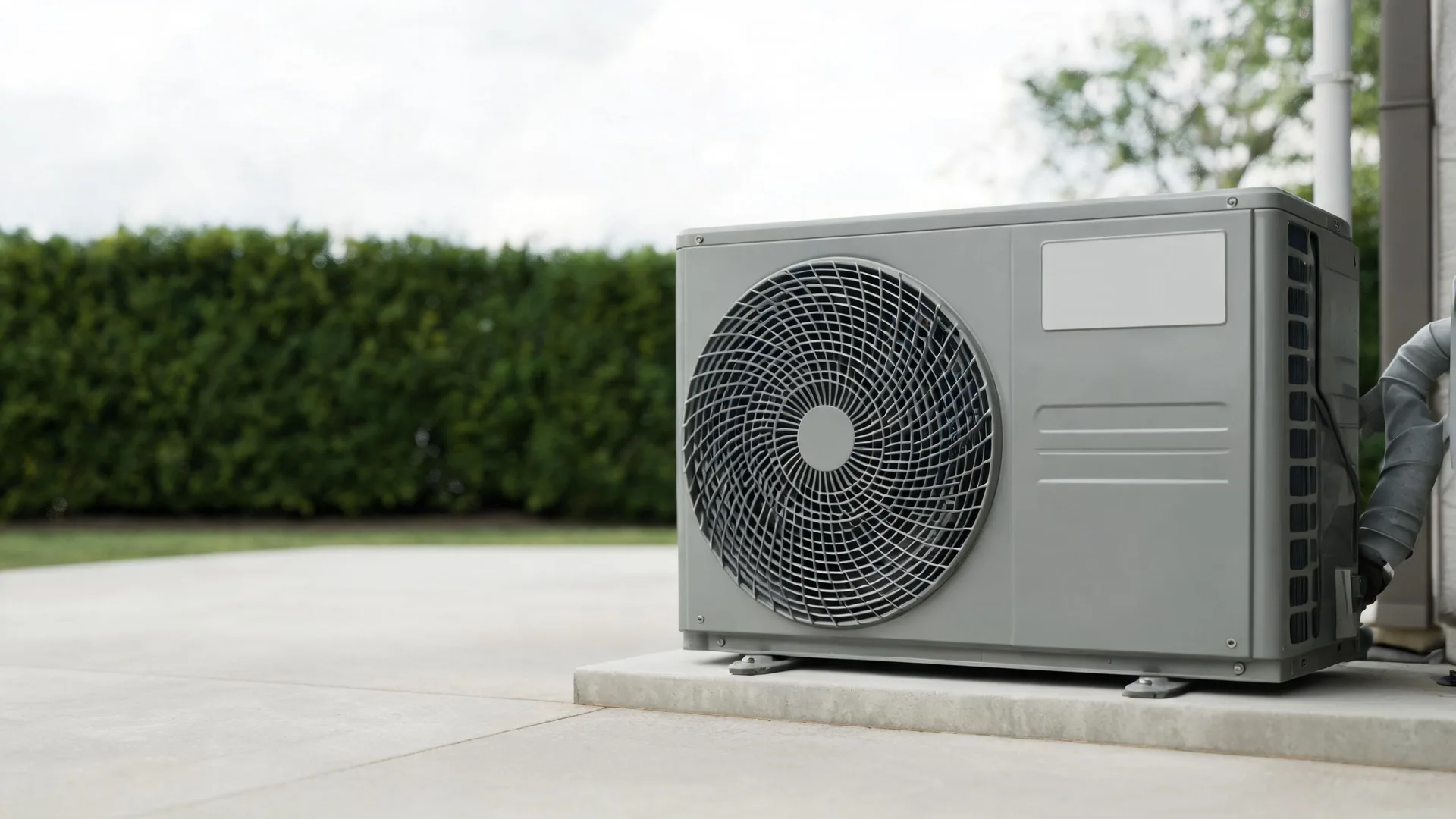
A gray outdoor HVAC unit mounted on a concrete pad beside a house with gray lap siding and a stone foundation.

What moves the price has little to do with the heat pump itself

A heat pump installation isn't one price times a size. Several things move it independently, and it helps to know which is which. Ductwork is usually the biggest swing. If the existing ducts are the right size and sealed up well, a contractor connects to them and moves on. If they're leaky, undersized, or missing in parts of the house, that's real work before the heat pump even gets set. Electrical is the next one. Some panels have room for a new dedicated circuit and disconnect. Others need a subpanel or a service upgrade first, and that's a different job entirely. Where the outdoor unit goes matters too. A straightforward pad on level ground costs less than a mounting bracket built up off a wall or a spot that needs extra clearance worked out. The indoor coil and air handler add their own cost depending on whether they fit the existing cabinet or need modification. And the line set between indoor and outdoor units gets replaced any time the new system calls for different sizing or a different refrigerant, which rules out reusing the old copper. None of this is about the heat pump's price tag alone. It's about how much of the house around it has to change to make it work.

Size comes from a load calculation, not the old unit's label

A contractor works out heat loss and heat gain room by room, based on window area, insulation and how the house is laid out, then sizes the heat pump to match. Going by the square footage alone, or matching whatever was there before, skips the parts that actually decide what's needed.

A heat pump too big cycles on and off instead of running steady

Oversized equipment blasts the house to temperature fast, shuts off, then starts again soon after. That short cycling wears the compressor down faster and leaves the air damp and uneven, since the system never runs long enough to pull moisture out properly. The right size runs longer, steadier stretches and holds the house even.

Ask what happens below freezing, since every heat pump loses capacity as the outdoor temperature drops and needs backup heat to cover the gap. That backup is usually electric resistance heat, and it costs more to run than the heat pump itself, so ask how the system decides when to switch over and whether you can see or control that point. Ask about the compressor type too. A single-stage compressor runs at one speed, full on or off. A variable-speed compressor adjusts its output to match the load, which holds the house steadier and puts less strain on the equipment over time. Ask what refrigerant it uses, since older refrigerants are being phased out and that affects what a contractor can service down the road. And ask what the warranty actually covers, parts versus labor, and for how long, because that difference shows up the first time something needs fixing.

Installation day starts with the old equipment coming out, the indoor coil, the outdoor unit, and the line set running between them. If the new system uses different line set sizing or a different refrigerant, that copper gets replaced rather than reused. The outdoor unit goes on a pad or mounting bracket and gets leveled, since a unit sitting crooked strains the compressor over time. Electrical work comes next. That means a dedicated circuit, a disconnect box within sight of the unit, and a connection to the thermostat wiring that already runs to the indoor coil. Once everything is connected, the lines get pressure tested for leaks, then pulled down to a vacuum to clear out moisture and air before refrigerant goes in. The last step is charging the system to the exact weight the manufacturer specifies and checking airflow at the vents. A system can be installed correctly and still run poorly if the charge or the airflow is off.