A low ground-level view across a mown lawn toward a dark two-story house with a covered front porch, flanked by large leafy trees under an overcast sky.

Heat Pump Installation in Monett, MO

Tell us about the job

Takes about a minute. No obligation.

New system or replacementHeat PumpBarry County, MO
Step 1 of 2

What ZIP code is the job in?

Ask what size they calculated, not guessed

A heat pump sized off the old system's tonnage or a quick glance at square footage can end up wrong in both directions. A contractor who walks the house, checks the windows and insulation, and runs a load calculation will land on a size that actually matches the place. Too big and the unit short cycles without pulling humidity down. Too small and it struggles on the coldest days.

Ask how it handles the cold snaps

Every heat pump loses capacity as the outdoor temperature drops, and each model has a different point where it needs backup heat to keep up. Ask what that point is and what the backup source will be, whether that's electric strip heat or a furnace working alongside it. This is what tells you how the system actually performs on the worst night of the year, not just the mild ones.

7 months
October through April, your system heats
4 months
June through September, it cools
27°F
the average winter night it heats against
87°F
the average summer afternoon it cools against
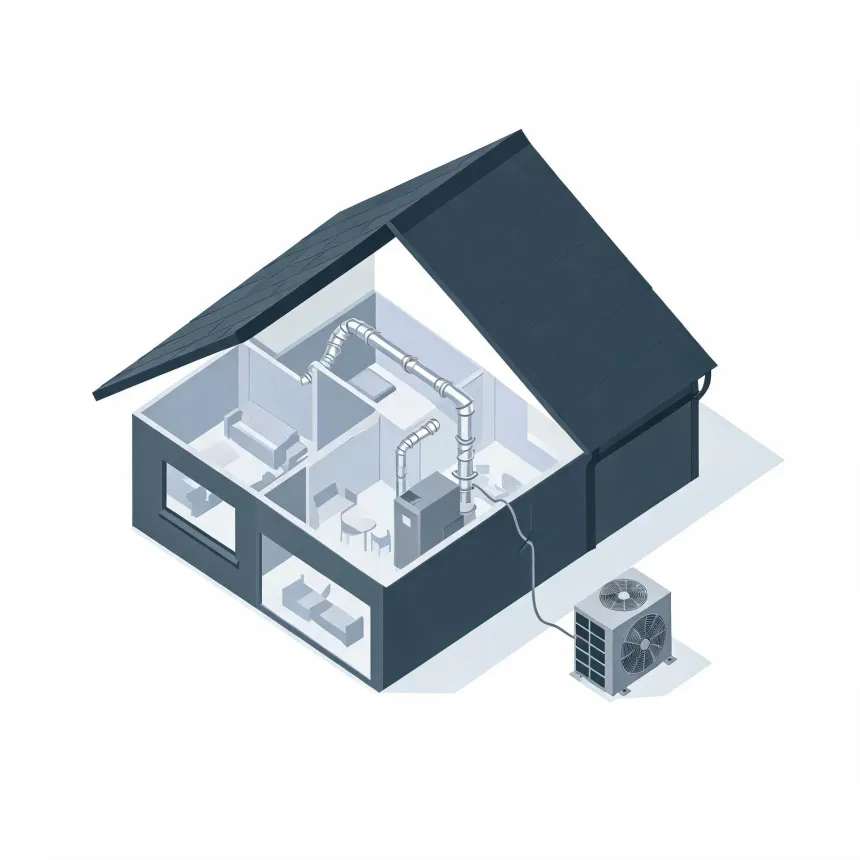
Isometric illustration of a cutaway house showing interior rooms with furniture, a furnace and ductwork, connected by a line to an outdoor condenser unit on the ground outside.
Your system heats October through April and cools June through September.

NOAA nClimDiv, 1991–2020 normals

Most heat pump installs here happen before June, ahead of the four months of cooling.

Get it in by September instead, and it has had a full month of mild weather to prove itself before it has to carry the house through winter.

Cheap power here means payback matters less than picking a unit that won't quit

Power costs 12.91 cents a kWh statewide
Climate zone 4A
Cooling runs June through September
Monett runs on electricity. A heat pump fits right in.Electricity heats 40.6% of homes in Barry County, more than gas or propane.

Barry County falls under zone 4A, a mixed climate that works both the heating and cooling sides of the system hard. Any split-system heat pump installed here, if manufactured from 2023 on, has to hit 14.3 SEER2 and 7.5 HSPF2 at minimum. That floor is federal, so it's the same whether the contractor is quoting a budget unit or a top-tier one. A system built to just clear that number will run differently than one built well past it, especially on the days this climate throws at both ends of the year. Ask where the unit you're quoted actually lands above that minimum.

Replace it before the season

Replace it before the season starts, so it happens on your schedule, not in a hurry.

Find a contractor
A man in a dark long-sleeved shirt and tan work pants, seen from behind, carries a canvas tool bag up porch steps toward a blue paneled front door of a house with light lap siding and a potted flowering plant.
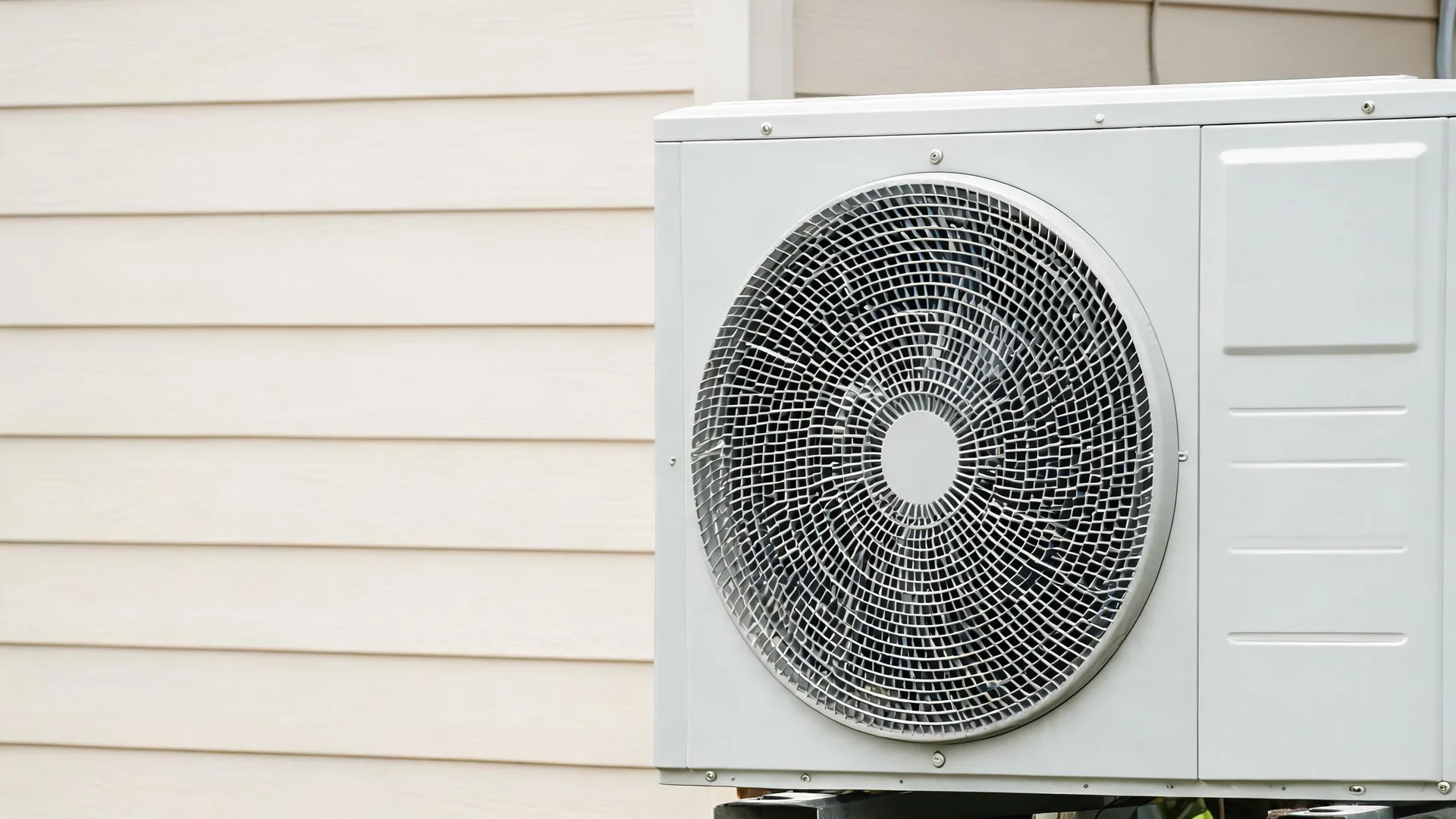
A dark gray heat pump unit mounted on a concrete pad next to a house with gray siding and a stone veneer wall.

Sized for the long run, not just the first day

A heat pump that's sized right runs long, slow cycles, which is how it's supposed to work. It moves heat gently for most of an hour, holds the house steady, and pulls moisture out of the air along the way. Size it off a rule of thumb instead of a load calculation and you lose that. An oversized unit blasts the house to temperature fast, shuts off, and starts again soon after, so the air never sits in the house long enough to give up its humidity. That's why a too-big system can leave a home feeling clammy even though the thermostat says it's cold enough. An undersized one runs close to flat out on the mildest days just to keep up, then can't close the gap at all when it's harder outside. Over years, the unit that short cycles wears its compressor out faster, and the one that never gets a break does the same from the other direction. The right size isn't a guess. It comes from measuring the house, the windows, the insulation, and the direction it faces, then working out how much heat it gains in summer and loses in winter.

The old equipment doesn't just get hauled off

A contractor doing the install has to disconnect the old system safely first. If it's a heat pump or an AC, the refrigerant inside has to be recovered, not vented, before anything gets cut apart or hauled out. That's a legal requirement, not a courtesy. If the old system runs on gas, the line needs to be capped off correctly, not just shut at the valve.

The new unit may not use the old spots

The indoor and outdoor pads from the old system might not fit the new equipment's footprint, electrical needs, or clearance requirements. A heat pump needs space around the outdoor unit for airflow, and the old slab or mounting spot was built for whatever used to sit there. Don't assume the new one just drops into the old footprint. Ask where it's actually going and why.

What drives the price isn't the equipment alone, it's everything the installer has to do to make it work right in your house. Running new line sets, adding or upgrading electrical circuits, modifying ductwork so it can actually move the air a heat pump puts out, these add labor and material before the unit itself even factors in. A straightforward swap where the electrical and refrigerant lines already fit costs less than a job where the panel needs upgrading or the ducts need resizing. The brand and the efficiency level matter too, but so does the manufacturer's warranty and what it actually covers versus what the installer offers on their labor. A lower bid that skips the load calculation or reuses old line sets without checking them can look cheaper upfront and cost more over the life of the system. Ask what's included and what happens to the parts of the job that aren't.

On install day the outdoor unit and the indoor coil get set, the line set gets run or replaced, and everything gets connected, charged, and tested before anyone leaves. The refrigerant lines get pulled into a vacuum first. That clears out moisture and air that would otherwise ruin the system's efficiency and shorten its life. Once that holds, the system gets charged to the exact weight the manufacturer specifies, not just run until it feels cold. Then comes the test. The contractor checks refrigerant pressures, airflow across the coil, and the temperature split between the air going in and the air coming out. A thermostat that handles both heating and cooling needs its wiring and settings checked too, since a heat pump switches between them in a way a furnace or straight AC never has to. A contractor rushing through any of this is skipping the part of the job that decides whether the system runs right for years or gives trouble from the first week.