




What the cold nights here do to a heat pump
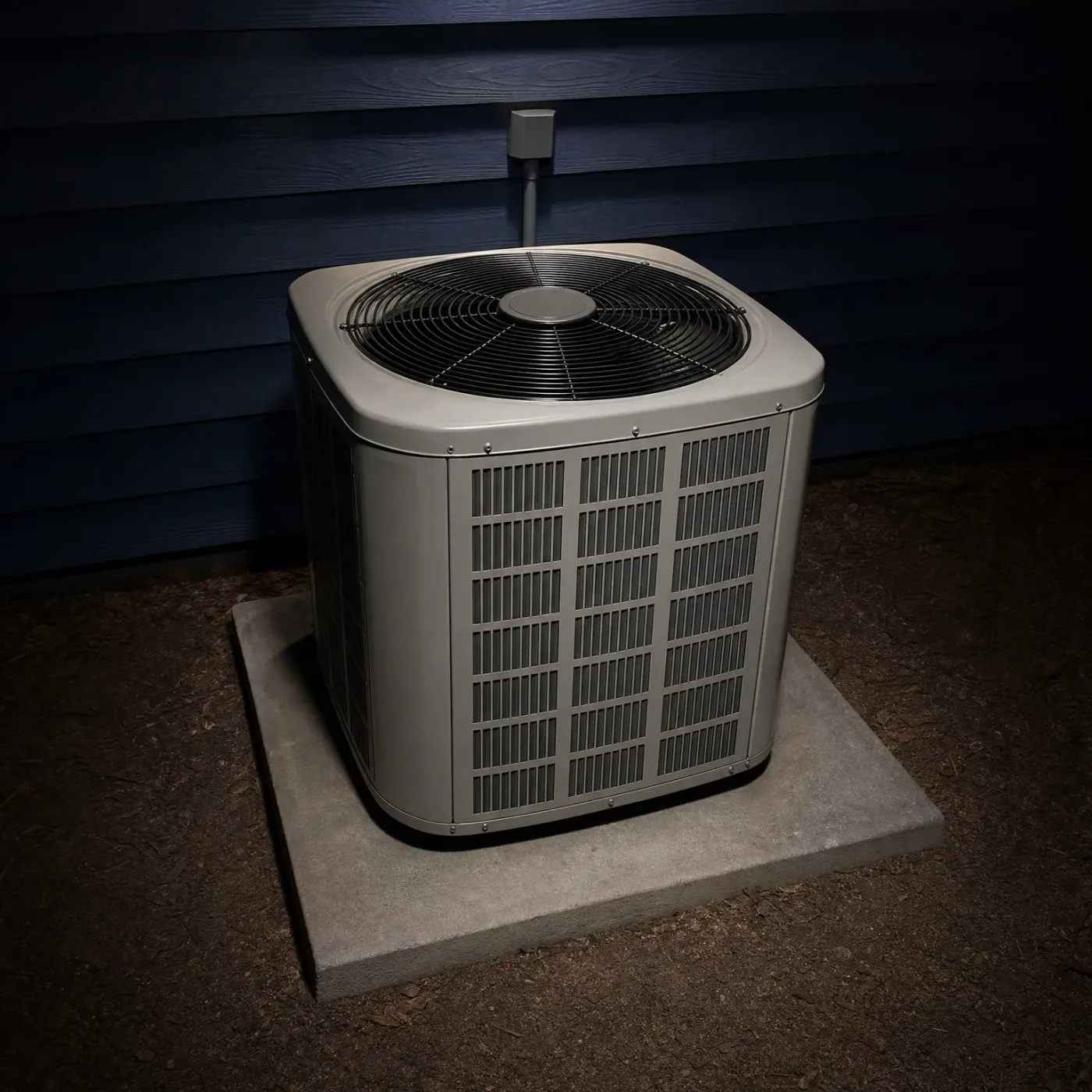
Your heat runs seven months a year here, October through April, and that's the number that should decide this, not the running cost. A heat pump already wins on cost: $1.72 against $2.06 per 100,000 Btu, about 16% cheaper to run. If this were a mild climate the choice would be easy. It isn't, because of what happens on the cold nights.
The overnight low here averages 27°F across December, January and February. A standard heat pump starts losing heating capacity below 40°F, and below about 35°F it typically needs backup heat to keep up. 27°F is under both marks. So is every one of the roughly 105 nights a year here that fall to freezing or below, about half the nights in the heating season. This isn't a system that dips below its comfort range once or twice a winter. It's below that line on half the nights it has to work.
The backup heat built into most heat pump systems is electric resistance heat, and it costs more to run than the heat pump itself. The $1.72 figure is what the heat pump costs on its own, with nothing added for the nights it leans on backup. On a county where half the heating season sits below the point where backup kicks in, that matters.