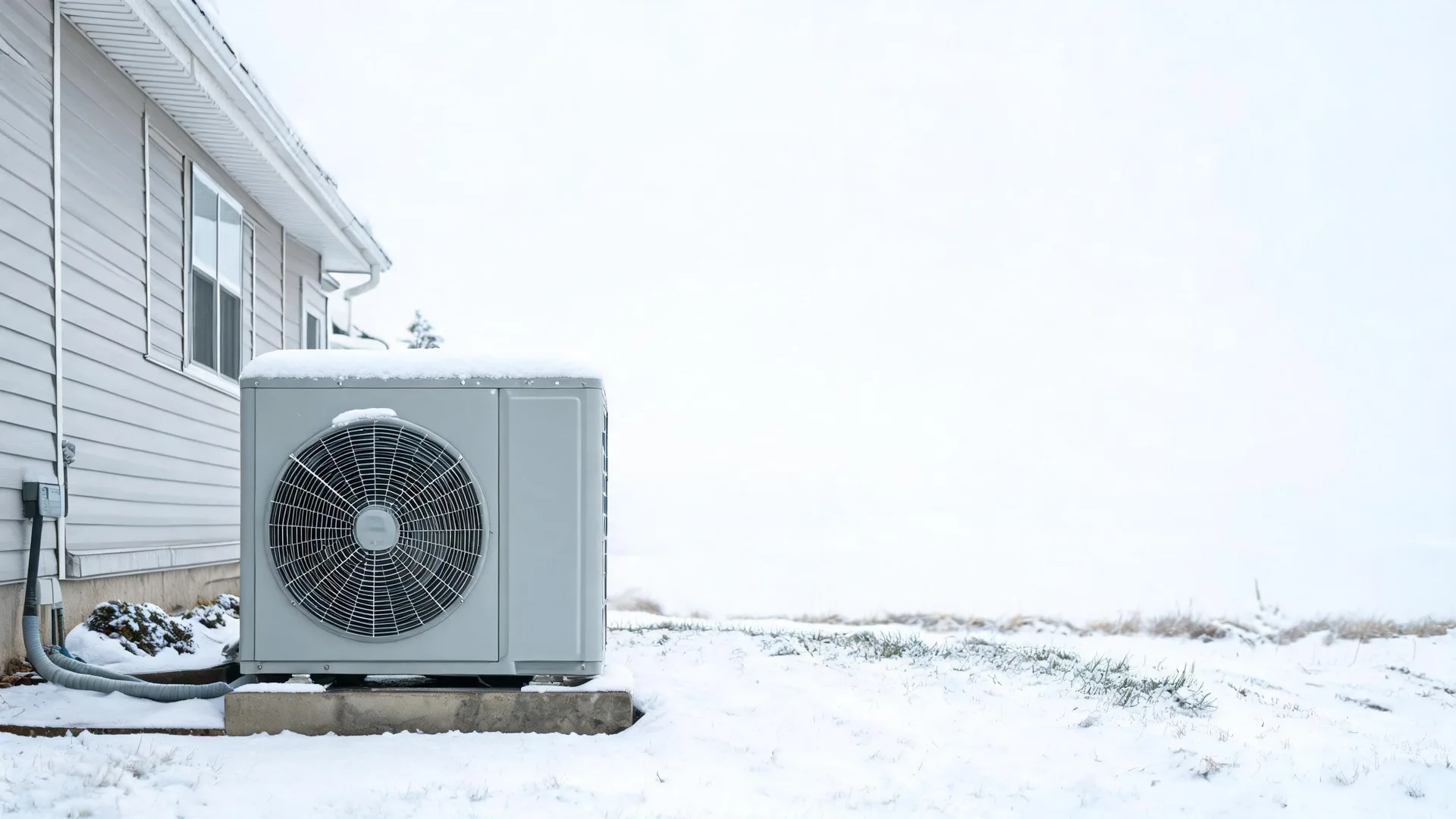
An outdoor heat pump unit mounted on a concrete pad in front of a single-story suburban house with beige siding.

Heat Pump Installation in Branson, MO

Tell us about the job

Takes about a minute. No obligation.

New system or replacementHeat PumpTaney County, MO
Step 1 of 2

What ZIP code is the job in?

Storms come through often

Taney County logged 253 severe weather events between 2015 and 2024. That includes 136 damaging wind events, 94 hail events, and 11 tornadoes. Ten winter storms hit the county in that same stretch, bringing heavy snow and ice.


Outages follow the storms

Almost one in five Missouri households went at least 24 hours without power in 2024. A heat pump is an electric system, both the heating and the cooling side. When the power drops here, it takes the whole thing down at once, not just one part of it.

7 months
October through April, your system heats
4 months
June through September, it cools
27°F
the average winter night it heats against
88°F
the average summer afternoon it cools against
Isometric cutaway illustration of a small house showing interior ductwork and an air handler connected by lines to an outdoor condenser unit on a pad beside the building.
Your system heats October through April and cools June through September.

NOAA nClimDiv, 1991–2020 normals

Electricity heats 82% of homes in Taney County.

A heat pump replacing an electric furnace or baseboard heat is swapping one electric system for another, no new fuel line or gas hookup to plan around.

September gets you ready for heat, May gets you ready for cooling. Either way, go before the weather decides for you.

Cooling runs June through September
Heat runs October through April
136 damaging wind events from 2015 to 2024

Humidity is the other load this system carries. Summer dew points here average 66°F across June, July and August, which is heavy, sticky air. A heat pump has to pull that moisture out while it cools, not just drop the temperature a few degrees. That's steady, repeated work on the compressor and coil all summer long, in a zone the energy code already rates as asking real work of both heating and cooling. Size the unit for what this air actually demands, not for the number on the price tag.

Plan this install around the outages, not just the weather

Where the outdoor unit sits and how it's protected matters here. So does having a plan for heat and hot water when the power is out, since a heat pump runs on electricity alone. Settle both before the install, not after the first storm tests it.

Find a contractor
A white mini-split heat pump outdoor unit mounted on a concrete pad beside a gray-sided house, surrounded by gravel and green shrubs.

This machine doesn't get an easy season here

This system doesn't get a break between seasons. It runs hard pulling moisture out of the air all summer, then switches straight into heating through a cold winter, and in this county it does that against wind and hail that knock out power 136 times over a decade on the wind side alone. A unit sized right for the load, with a contractor who sets it up to handle a hard restart after an outage, holds up to that. One sized off the sticker price is the one that shows wear first.

A load calculation, not a square footage chart

The right size comes from a room by room load calculation, checking insulation, window area, ceiling height and air leakage, not a quick rule based on square footage. Two houses the same size can need different sized systems depending on how they're built. A contractor who skips this and sizes off the old equipment or a chart is guessing.

Oversized and undersized both cause problems

A heat pump that's too big cools the air fast and shuts off before it pulls the moisture out, leaving the house cold and clammy. One that's too small runs constantly and still can't keep up on the hardest days, leaning hard on backup heat strips that drive up the electric load. The right size runs long steady cycles that handle both temperature and humidity.

The efficiency rating on a heat pump's label tells you how much heat it moves for the electricity it uses, both pulling heat in during winter and pulling it out during summer. A higher rated unit does more work per unit of power, which matters most on the days the system runs longest. It's a rating of efficiency, not of size or capacity, so two units with the same rating can still heat and cool very different amounts of space. The rating also assumes the system is sized and installed correctly. A unit with a strong rating that's oversized or undersized for the house won't deliver the performance on the label, because it's cycling wrong or straining to keep up. Ask what the rating is measured against and whether it accounts for both the heating and cooling side, since a heat pump is doing both jobs year round.

Taney County falls in climate zone 4A, which the energy code already rates as asking real work of both heating and cooling. Any split-system heat pump installed here, if manufactured from 2023 on, has to meet the federal minimums that come with that: at least 14.3 Btu of heat moved per watt-hour of electricity over summer, and at least 7.5 Btu per watt-hour over winter. That floor narrows what a contractor can offer you, since anything rated below it isn't legal to install. It's worth asking which units on your quote clear that minimum and which exceed it, since the rating on the label has to hold up on both sides of the year here, not just one.