





A gray forced-air furnace with metal ductwork stands in an unfinished basement with exposed wooden joists, concrete walls, and a single hanging light bulb.

Furnace Repair in Troy, MO

Tell us about the job

Takes about a minute. No obligation.

RepairFurnace or heatingLincoln County, MO
Step 1 of 2

What ZIP code is the job in?

Furnace here runs about seven months a year, October through April. Overnight lows in December and January average 23°F, so it gets real use in the coldest months. None of that is unusual for a furnace. It's the normal load this machine is built for, not something wearing it out early. So when yours stops heating right or short cycles or won't light, the cause is usually ordinary. A dirty flame sensor. A failed igniter. A clogged filter choking airflow. A contractor can track down which one it is and fix it without much guesswork.

7 months
October through April, your furnace is on duty
23°F
the average winter night it heats against
8 winter storms
in ten years, the nights a failure hurts most
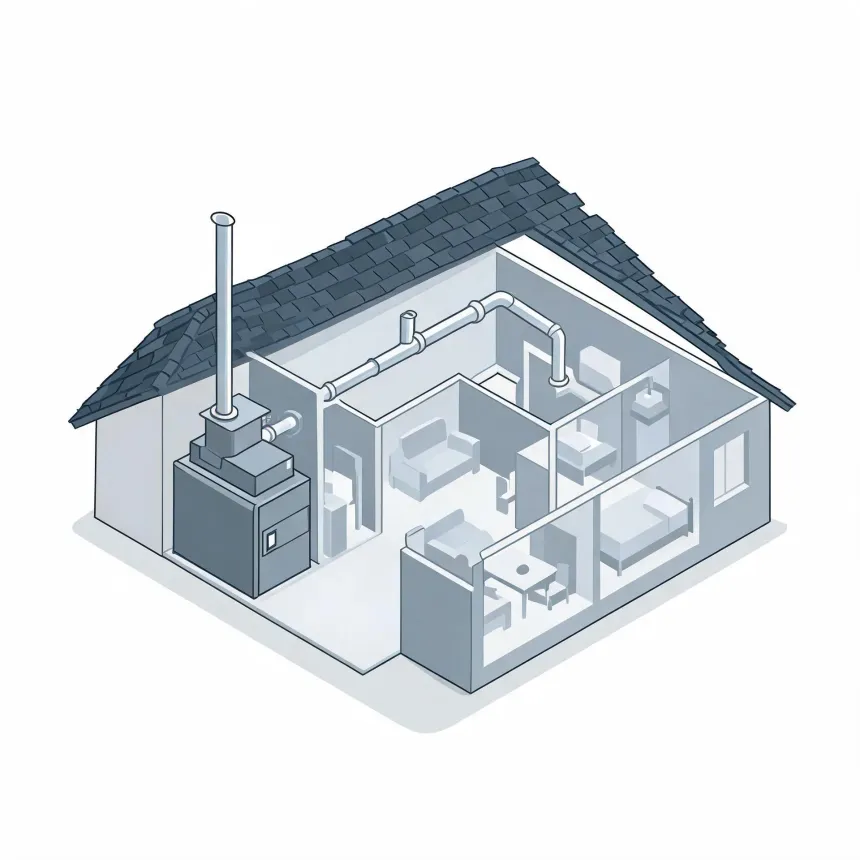
Isometric cutaway illustration of a single-story house showing interior rooms with furniture, ceiling ductwork, and a large furnace unit with a tall flue pipe in a corner room.
Your furnace works hardest from November through March.

NOAA nClimDiv, 1991–2020 normals

A tech checks the flame sensor, the igniter and the pressure switch before touching anything else.

Checking in that order finds the actual fault instead of swapping parts until one works.

Furnace here starts up in October, and the first cold snap is when a weak part finally gives out

Heat runs October through April
Winter nights average 23°F
Climate zone 4A
Half the homes in Lincoln County were built in 1997 or laterA furnace that came with a newer house is usually still well within its working life

A furnace that short cycles or runs longer than it should to hold the same temperature is burning more power the whole time it's broken. At Missouri's rates, that difference lands on next month's bill before anything else tells you something is wrong. Waiting it out costs more than having someone look at it now. A stuck flame sensor or a bad igniter making it fire repeatedly doesn't fix itself with time, it just keeps drawing power while it struggles.

If your furnace is still within its working life, fix what's wrong with it

A furnace that came with a newer house usually has the years left to make repair worth it. Get the actual cause fixed, flame sensor, igniter or pressure switch, instead of planning around a replacement it probably doesn't need yet.

Find a contractor
A gray high-efficiency gas furnace installed in an unfinished basement, surrounded by gas lines, a condensate drain, and sheet-metal ductwork.

Running it another week rarely leaves it where it started

A furnace that's struggling still runs when you ask it to, so it's easy to let a small problem ride. A flame sensor coated in a little carbon makes the furnace shut off early and relight, and each cycle adds a bit more buildup until it won't stay lit at all. A cracked heat exchanger gets worse under heat and cooling cycles, not better. An inducer motor that's starting to go draws harder to do the same job, and that strain is what pushes it past the point of an easy fix. A clogged filter makes the blower push against resistance it wasn't built for, and a furnace running hot from restricted air stresses the same heat exchanger that shouldn't be stressed. None of this reverses itself once the furnace shuts off for the night. It just picks up where it left off the next time it fires.

Most failures are wear parts, not the furnace itself

A flame sensor coated in carbon, an igniter at the end of its life, a pressure switch hose that's slipped off, a blower motor losing its bearings. These are small, specific parts that wear out from ordinary use and get replaced on their own. The furnace around them keeps working.
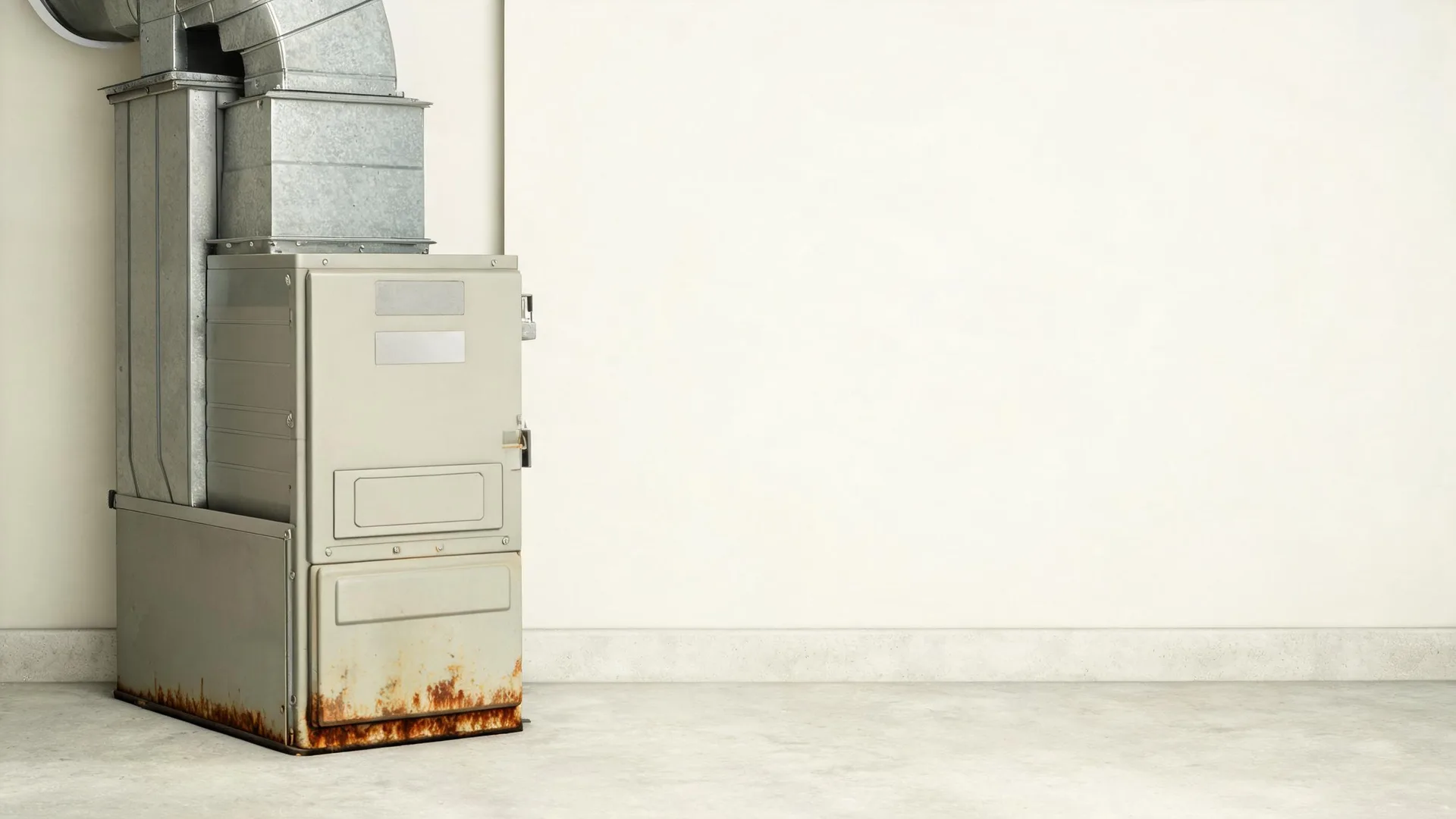
A cracked heat exchanger is the one that matters more

A heat exchanger splits after years of heating and cooling with every cycle, so it shows up less often than a dirty sensor or a worn igniter. When it happens, that furnace needs to come out of service rather than get a part swapped, because a cracked exchanger can let combustion gas mix into the air moving through the house.

Most of the time, you'll hear it before you see it. A furnace that's starting to struggle makes noise it didn't used to, a rattle from the blower, a screech from a motor bearing, a hard bang when the burners light. Some of it shows up as behavior instead of sound. It runs longer than it used to to reach the same temperature, or it shuts off and restarts more than it should, or the air coming out of the vents feels cooler than it used to. A pilot or burner flame that's yellow instead of blue is worth paying attention to on its own, that's a combustion problem, not a wear issue. Any of these is the furnace telling you something specific is wrong, not a sign it's quitting on you.

A repair fixes the part that failed and leaves the rest of the furnace alone. That's most calls. A cracked heat exchanger is different, because the exchanger isn't a part you swap, it's the core the whole furnace is built around, and once it splits the unit needs to come out of service rather than get patched. So the real question isn't the age of the furnace, it's which kind of failure you're looking at. If a contractor traces the problem to a sensor, an igniter, a motor or a switch, fixing that one part is the whole job. If it traces back to the exchanger itself, that's the one failure repair doesn't solve.