Furnace making a loud noise in Springfield, MO

Skip the calls

A furnace that bangs, screeches, or rattles during a cold Greene County night is not something to wait on, and you already know it. The harder part is finding someone who can actually get to it without a week of phone tag. You could search around Springfield, call a few numbers, explain the noise and when it started to each one, then sit with a stack of quotes trying to guess who's worth the call. Or you can skip that. This connects you with one licensed local contractor who works on furnaces around Springfield all winter and has heard most of the noises yours could be making. No list of companies calling you back at once, no retelling the story over and over. One match, suited to your situation, so you can get someone looking at the actual problem instead of the search for help.

Why is my furnace making a loud banging or screeching noise?

A furnace that bangs or screeches is unsettling, especially when it happens at night and the house is cold. You want to know whether this is something minor or a sign the furnace is about to fail on you. The sound itself usually points to where the problem is, and whether it is safe to keep running the furnace until a technician can look at it.

A bang on startup usually means delayed ignition. A screech usually means the blower motor or its bearings.

A loud bang when the furnace kicks on is often gas building up in the burner before it lights, then igniting all at once instead of catching smoothly. That puts stress on the heat exchanger every time it happens. A screech or squeal, on the other hand, usually comes from the blower motor, either a bearing wearing out or the belt in older units slipping. Rattling is different again. It usually means something has come loose, a panel, a duct connection, or a screw inside the cabinet. With Greene County winters running cold and most homes here heating with gas, a furnace that makes noise and keeps running on repeated cold nights is one worth having checked before the ignition problem damages the heat exchanger.

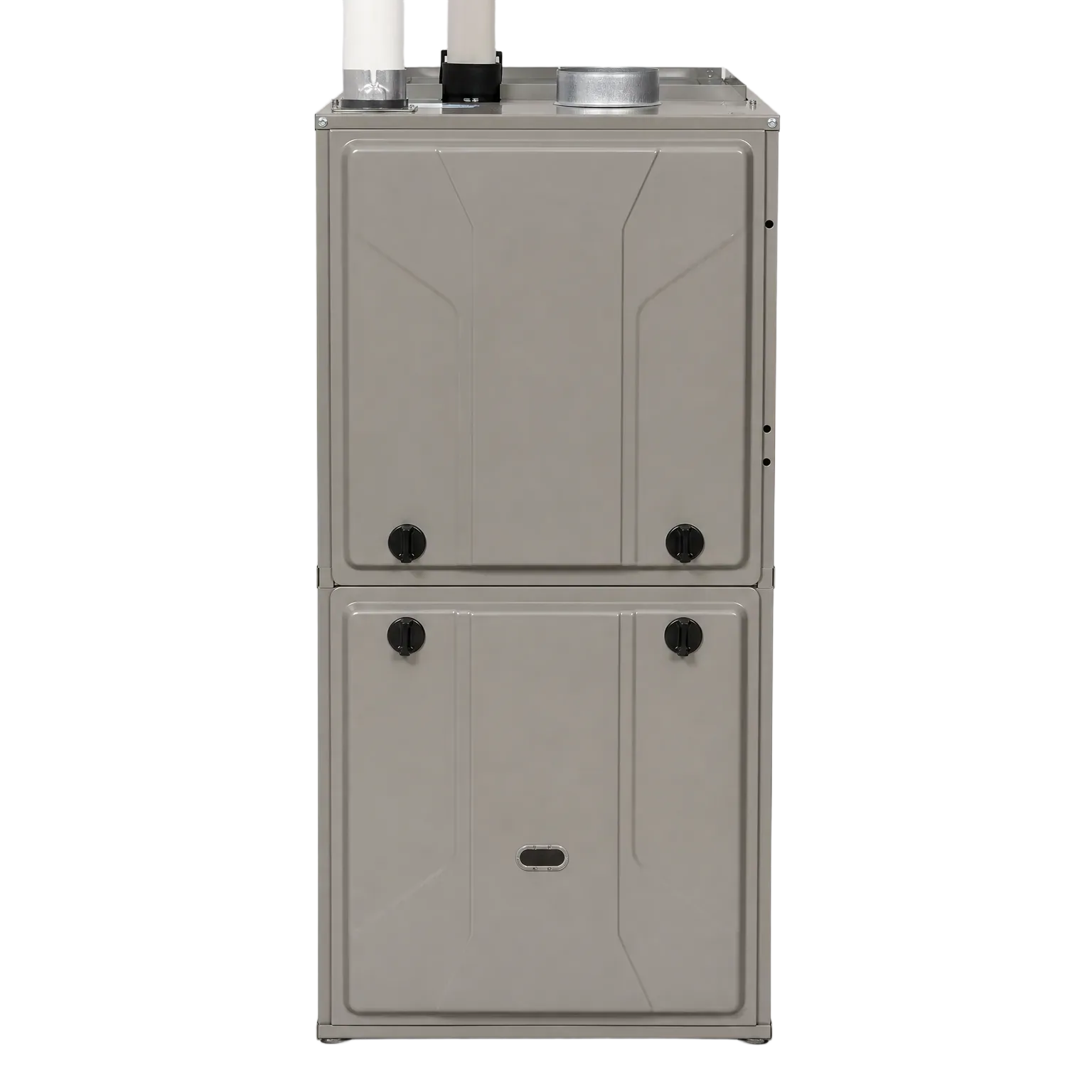
A beige high-efficiency furnace with white PVC vent pipes stands beside galvanized sheet-metal ductwork in a basement with a concrete floor, exposed wood studs, and metal piping along the wall.

Running quiet

A furnace that starts with a soft whoosh, runs on an even hum, and shuts off the same way is doing what it should. Air moves through the ducts without a rattle. No metallic ping as it heats up, no screech when the blower kicks on. This is the sound to expect most nights.

An older beige furnace with a louvered vent panel stands on a concrete basement floor beside galvanized sheet-metal ductwork, a metal flue pipe and vertical pipes along a concrete wall.

Something's wrong

Banging when the burners light, a screech from the blower, or a rattle that wasn't there last winter all point to a specific part giving out. An older furnace like this one, with a flue pipe and cabinet showing their age, is more likely to be the one making the noise.

Why does a loud furnace matter more in Greene County than somewhere warmer?

  • Winter nights average 25°F

    Overnight lows average 25°F here in December, January and February, so a furnace that quits in the middle of the night leaves the house cold fast.

  • Heat runs October through April

    Furnaces in Greene County run from October through April, about seven months. A noise you ignore in October is still there, and often worse, come January.

  • 52.2% of homes heat with gas

    Just over half of homes here, 52.2%, heat with gas. A banging or screeching gas furnace isn't a minor noise to put off checking.

NOAA nClimDiv 1991-2020 · ACS 2020-2024

What each noise is telling you

  • A bang at startup usually means gas built up in the burner chamber before it caught, often from a dirty burner or a weak igniter.
  • A metal screech when the blower kicks on points to the blower wheel or motor bearing, not the burner itself.
  • A rattle that comes and goes with the blower speed often traces to a loose panel or a duct connector working itself free.
  • Popping or ticking from the ductwork as the furnace runs is usually metal expanding as it heats, not a sign of damage on its own.
  • A deep rumble instead of a clean whoosh at ignition can mean the burners need cleaning or the flame is burning unevenly.
  • A squeal that fades after a few seconds often comes from a belt or motor mount loosening with age, though most furnaces here run belt-free.

Every noise a furnace makes points to a place, if you know where to listen. A bang when the burners light means gas gathered in the chamber for a second too long before catching, and it ignites all at once instead of lighting smoothly. That delay usually traces back to a burner that needs cleaning or an igniter that is losing its charge. A screech is almost always metal on metal, and in a furnace that means the blower wheel or the motor bearing it spins on, not the burner or the heat exchanger. A rattle that changes with blower speed is often not the furnace itself but a panel that has worked its screws loose, or a duct connector nearby doing the same. Ticking and popping from the ducts as the system runs is the metal sheeting expanding as warm air moves through it, which on its own does not mean anything is wrong. A rumble in place of a clean whoosh at startup usually means the burners are dirty enough that the flame is not burning evenly across them. Belts are rare in furnaces built in the last few decades, so a squeal that fades after startup more often points to a motor mount or bearing wearing down than to a belt. Knowing which of these you are hearing is most of the way to knowing what a contractor will find.

A gray high-efficiency furnace with two PVC vent pipes stands in an unfinished basement beside sheet-metal ductwork, a framed and plastic-covered wall, and a bare concrete wall with vertical pipes.
This furnace fires without a sound, the burners catching clean and the blower settling into a steady hum.
A gray furnace cabinet in a basement, connected to galvanized sheet-metal ductwork and white PVC pipes, against a concrete wall with exposed metal piping and insulation overhead.
A bang, a screech, or a rattle means something inside has already worked loose or worn down.
A woman in a gray sweatshirt with her hair pinned up sits in a living room looking off to the side, with a pale sectional sofa, cushions, a potted plant, framed wall art and a large window behind her.
A woman with long wavy brown hair in a gray top and dark cardigan stands near a window, looking to the side, with a living room, fireplace and round mirror blurred behind her.
A woman with curly dark hair in a grey long-sleeved top sits on a grey couch with patterned cushions, looking off to the side in a softly lit living room.
A woman in a gray knit sweater with her hair in a bun sits on a couch indoors, smiling and looking off to the side, with a dining area and framed picture blurred in the background.

No calling every shop in Greene County

A licensed pro who repairs furnaces in Greene County gets your request.

No charge to send it. You decide if you hire them.

Why a bang gets worse fast

Gas that builds up before it catches burns off in that one bang, but the dirty burner or weak igniter causing it doesn't fix itself. Each startup delays ignition a little more, and each delay means more gas collects before it lights. What's a soft thump now can turn into a harder bang within weeks, and a furnace that fails to ignite at all leaves the house with no heat on a night when it's 25°F outside.

Why the blower noise spreads

A blower motor with a worn bearing doesn't stay contained to the blower compartment. The motor has to work harder to turn a wheel that's binding, and that strain shows up as higher amp draw, which is what trips a breaker or burns out the motor outright. Once the bearing goes, the wheel can shift enough to hit the housing, turning a screech into a grinding that a contractor will hear from the driveway.

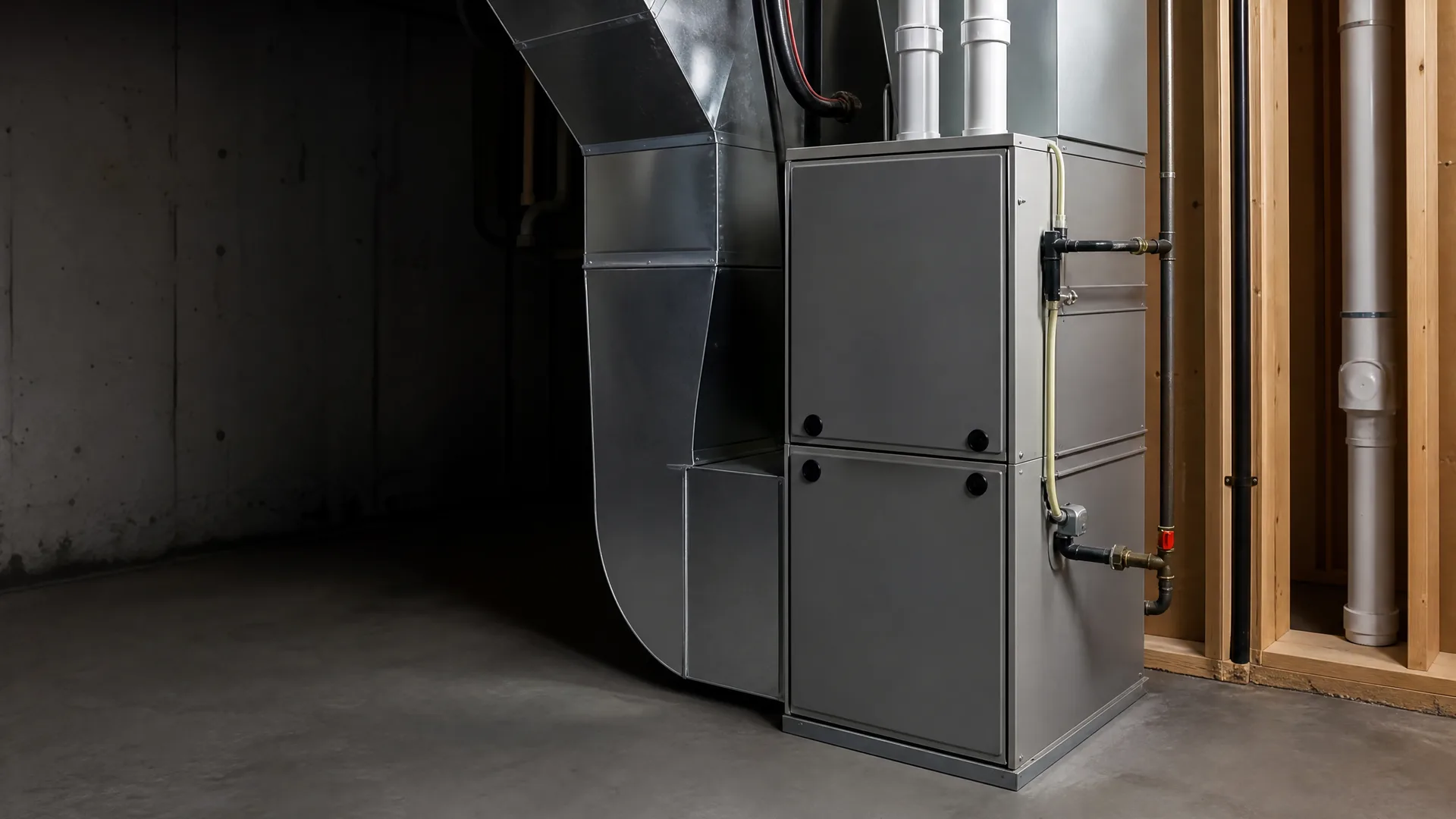
A gray metal furnace with two white PVC vent pipes stands on a concrete floor beside galvanized sheet-metal ductwork in a basement or utility space with wood framing.
Before you get your furnace repair
A gray furnace cabinet in a basement with sheet-metal ductwork, white PVC vent pipes, and black gas piping against a concrete wall and wood-framed partition on a bare concrete floor.
After you get your furnace repair

25°F outside

That's the average overnight low here in December and January. If the noise is a sign the furnace is about to quit, you find out at the worst possible hour.

Describe it once

One call, not five

Skip searching Springfield listings and repeating the same noise description to different shops. One licensed local contractor who hears this furnace every winter takes the call.

Describe it once

Call It In Now, or Wait

Call it in now

  • A tech can still hear the noise or get a clear description of it from you before anything else fails alongside it.
  • Catching a bang at startup before it gets worse usually means replacing one part, the igniter or the burner, not several.
  • A loud furnace in a cold snap is the kind of call a local contractor can usually work in quickly, since it affects heat.
  • You get one contractor who services furnaces in Greene County every winter, not a list of names to call and compare.
  • Fixing the noise now means you're not relying on a furnace that might quit on one of those 25°F nights.

Wait and see

  • The noise doesn't go away on its own, so waiting just means living with it a few more nights.
  • A bang that happens every startup is gas building up a little longer each time before it catches.
  • A screech from the blower motor bearing tends to get louder, not quieter, the longer it runs like that.
  • If it fails on a night near that 25°F average low, you're calling after hours instead of during the day.
  • Waiting doesn't save the repair, it just moves it to whenever the part finally gives out.
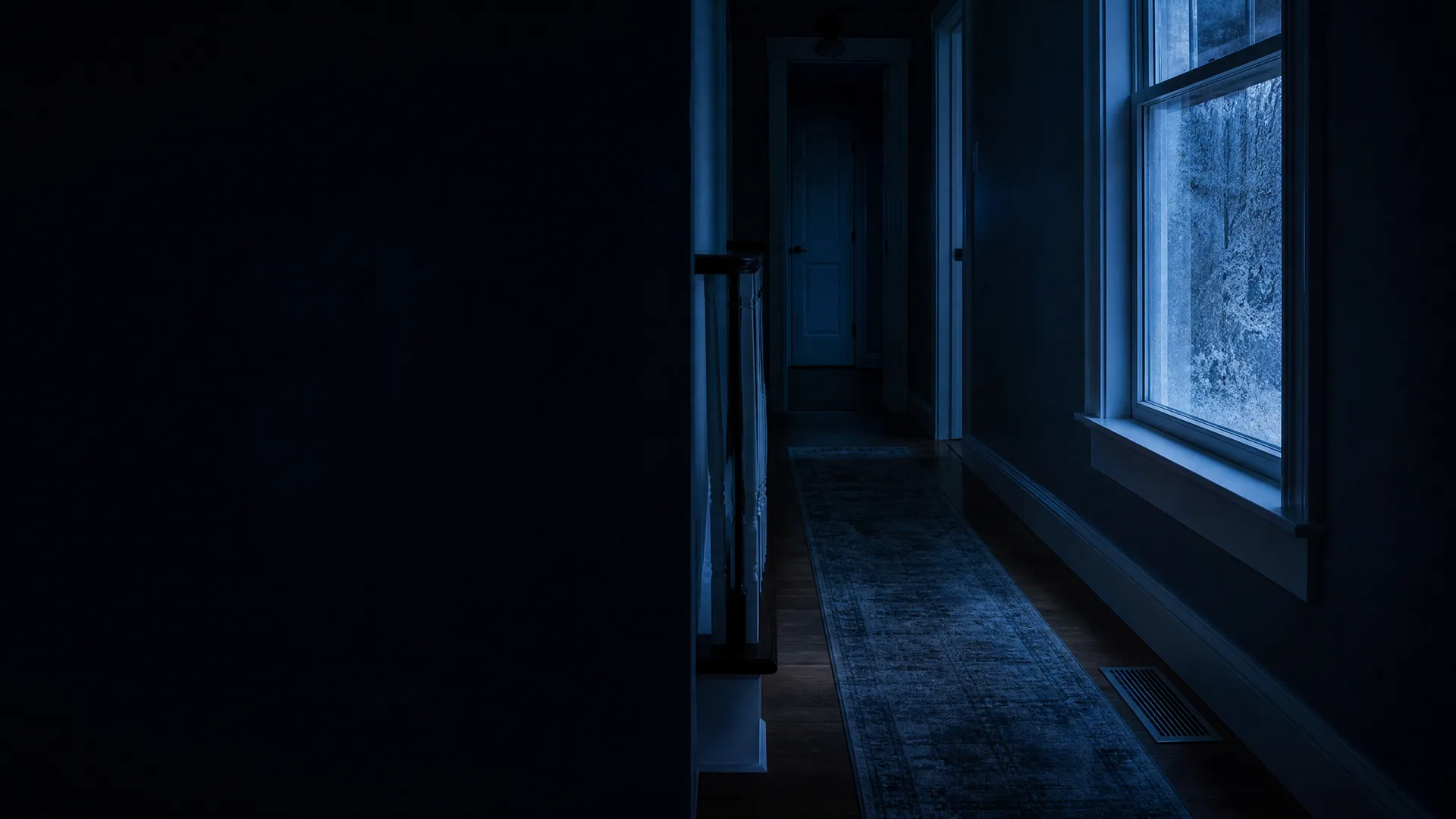
A dark interior hallway lit only by blue light from a window on the right, with a runner rug on a wood floor, a floor vent, a closed door at the far end, and a stair railing at left.

The clock on the nightstand reads 2:04. The vents have gone quiet, no air moving through them, and the hallway outside the bedroom door holds the kind of cold that settles into a house fast once the furnace stops. Frost has crept up the edges of the window at the end of the hall. The blue glow of a streetlight through it is the only light. You stand there a second, listening for the bang or the screech that woke the house, but now there's nothing, just the furnace sitting dead downstairs somewhere past 10 below what the thermostat wants. Outside, a Greene County night in January doesn't wait for morning to make itself known.

Winter nights average 25°F

25°F is the average overnight low here in December, January and February. That's the stretch when your furnace works hardest and a worn part is most likely to give out. If the noise you're hearing tonight is the start of a bigger failure, this is the time of year it happens.

NOAA nClimDiv 1991-2020

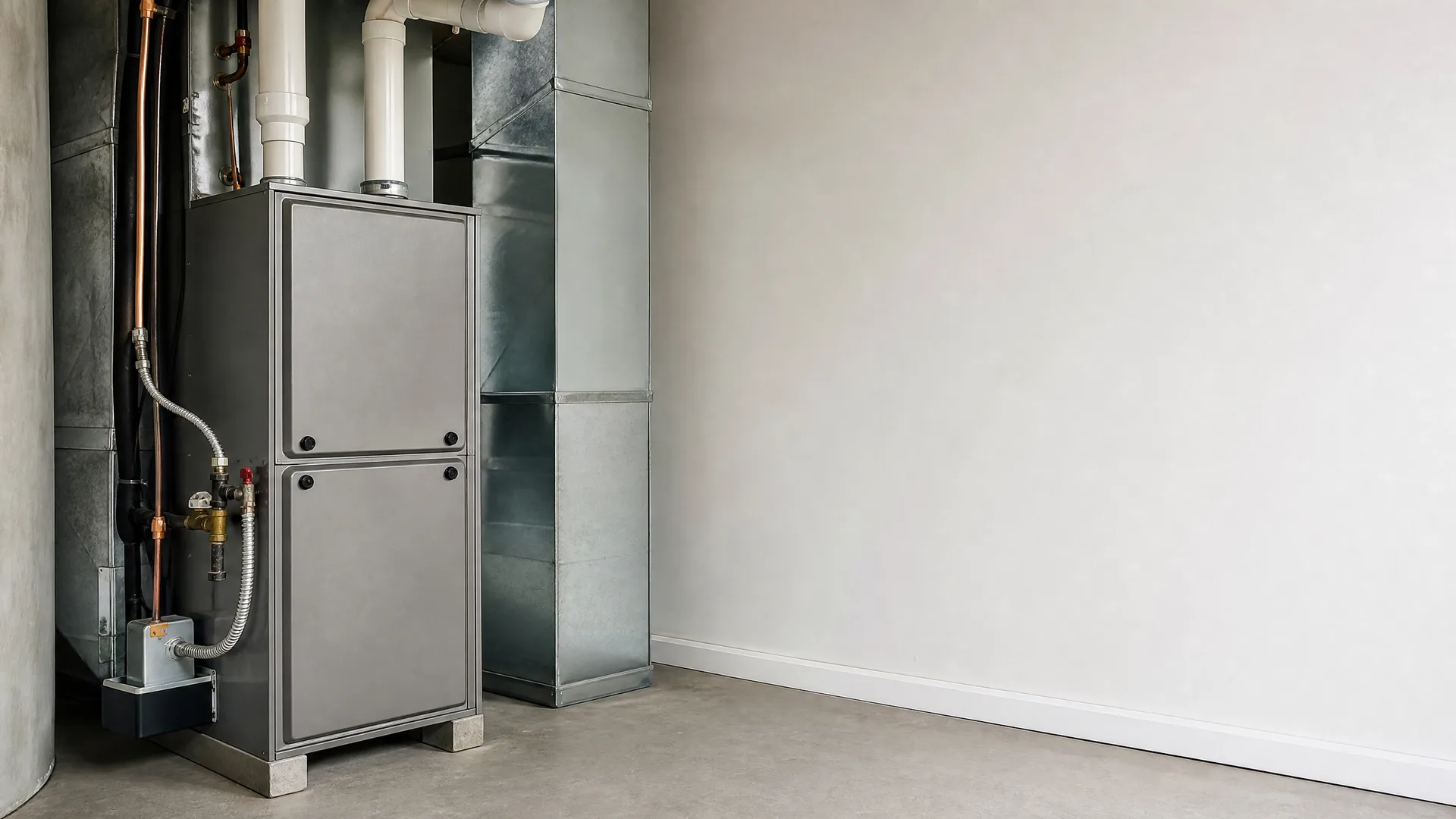
A gray high-efficiency furnace with white PVC vent pipes, copper and flexible piping, and galvanized sheet-metal ductwork stands against a wall in a room with a bare concrete floor and plain light-colored wall.

Waiting it out

You tell yourself it's not that loud, or it only happens sometimes, and you'll deal with it when there's time. Meanwhile the furnace keeps starting up the same way every night, the same bang or screech, and whatever is loose or worn keeps working itself looser. A part that would have been a simple swap today turns into a bigger repair, or a breakdown on a night when Greene County is well below freezing and the house is cold before anyone wakes up to fix it.

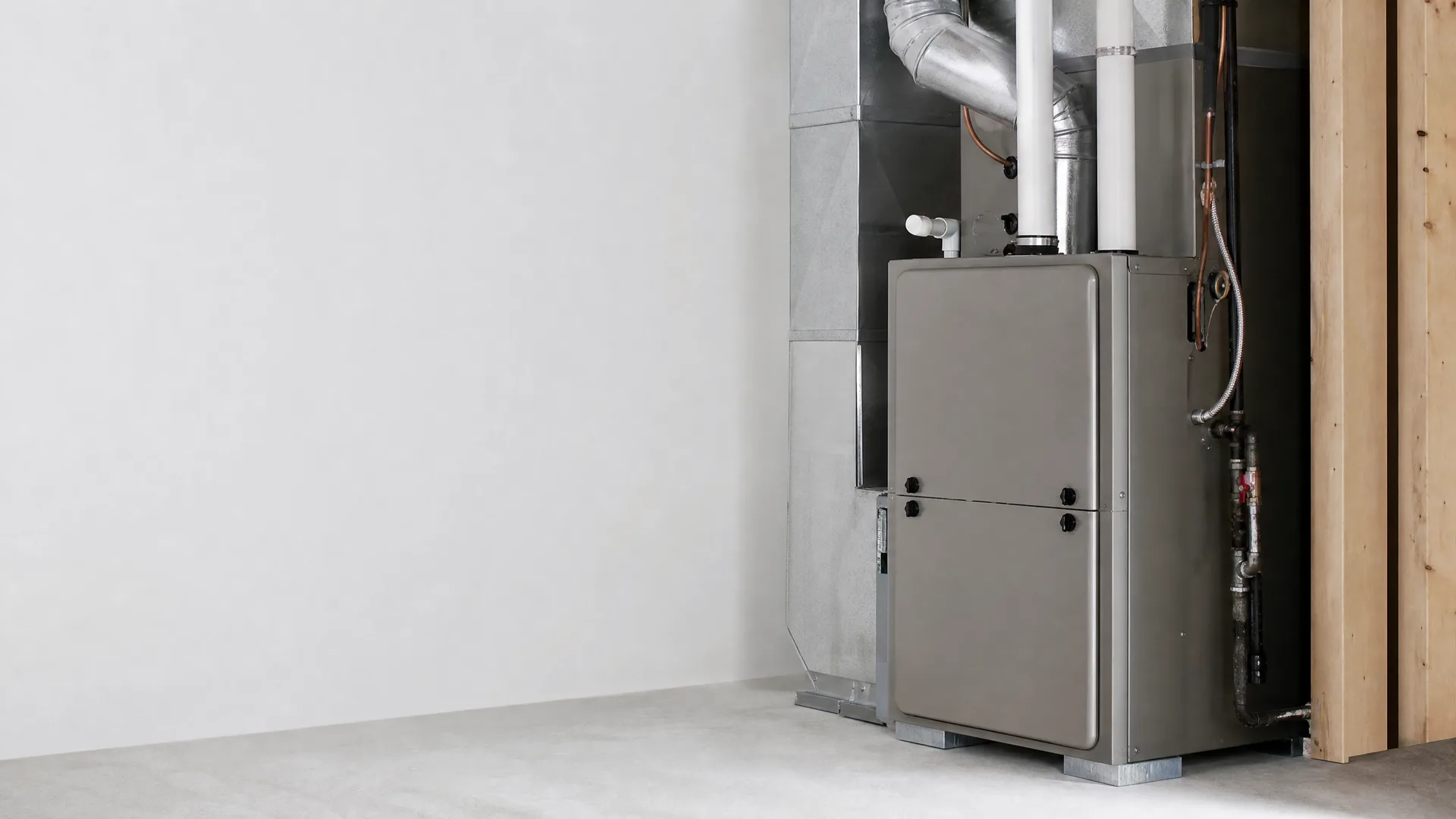
A gray residential furnace with attached sheet-metal ductwork, white PVC vent pipes and copper lines stands against a plain white wall on a concrete floor, beside exposed wooden framing.

Getting it looked at

A local contractor who works on furnaces all winter can usually tell from the sound alone whether it's the igniter, the burner or the blower motor, and knows which of those tends to fail first in the systems common around here. One call gets you one visit instead of a string of them, no explaining the noise over and over to different companies, no sorting through quotes. The furnace goes back to running the way it did before you ever noticed it.

A furnace that bangs or screeches is telling you something specific, not just something is wrong, but usually a dirty burner, a weak igniter, or a blower motor working loose. That noise is worth a call now rather than after it quits on a January night. A tech who works on furnaces around Greene County all winter has heard this exact bang or screech more times than he can count, and he'll know which part to check first instead of guessing his way through the furnace. You reach one licensed local contractor, not a handful of companies competing for the job, so you're not fielding five callbacks and repeating the same description of the noise each time. You explain it once, to the person who's actually coming out to fix it. Whatever is loose or worn in there isn't going to tighten itself back up. Getting it looked at now, while it's one part and not three, is the difference between a quiet fix and a cold house at 2 a.m.

A gray furnace with attached sheet-metal ductwork and PVC vent pipes stands in a basement with concrete walls and floor beside exposed wood framing and vertical pipes.

One form, no calling around

RepairFurnace or heatingGreene County, MO
Step 1 of 2

What ZIP code is the job in?