An unfinished basement featuring a grey forced-air furnace with metal ductwork, concrete block walls, exposed wooden joists, and a single hanging bare bulb.

Furnace Repair in St. Robert, MO

Tell us about the job

Takes about a minute. No obligation.

RepairFurnace or heatingPulaski County, MO
Step 1 of 2

What ZIP code is the job in?

September is the month to get ahead of it

Furnaces in St. Robert sit idle most of the year and start running again in October. A part that was already weak, a cracked heat exchanger, a failing igniter, a worn blower motor, tends to give out once the system is finally asked to work.

Heat runs here through April

Once a furnace is back on for the season, it stays on through the winter into April. A problem that shows up now does not go away on its own, and it has months left to get worse before the weather lets up.

7 months
October through April, your furnace is on duty
26°F
the average winter night it heats against
10 winter storms
in ten years, the nights a failure hurts most
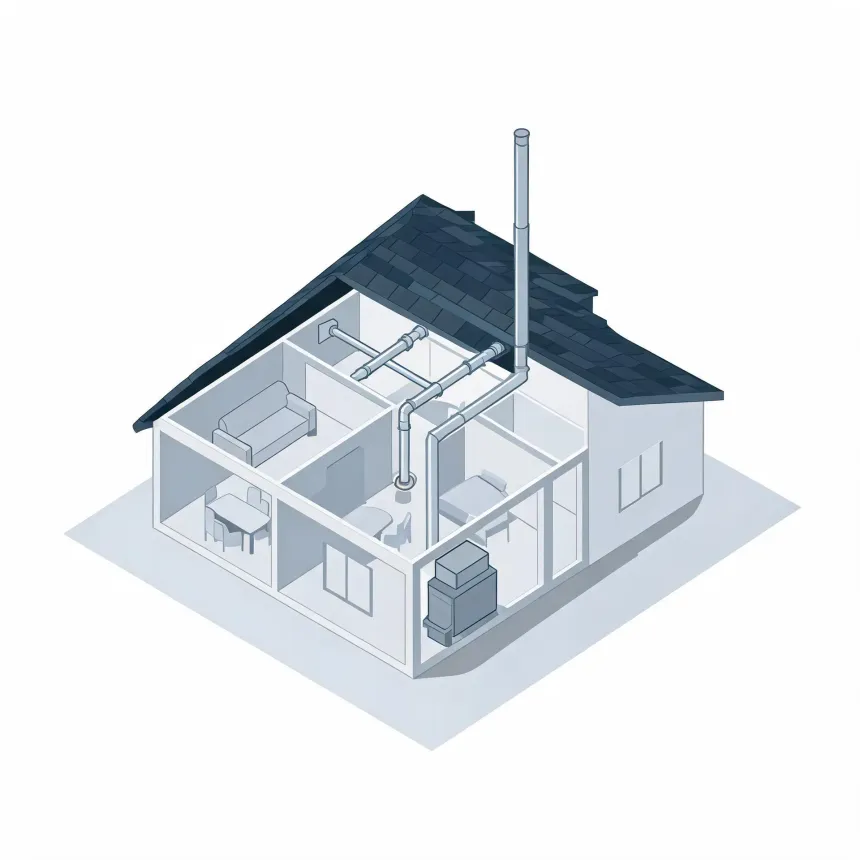
Isometric cutaway illustration of a single-story house showing interior rooms with furniture, ductwork and piping running to a tall vertical flue through the dark shingled roof, and a furnace-like appliance unit on the floor.
Your furnace works hardest from November through March.

NOAA nClimDiv, 1991–2020 normals

Furnaces here run about seven months, October through April.

Overnight lows average 26°F in winter here, so a furnace that breaks down needs fixing, not waiting out.

At $37.84 per million Btu, a furnace running wrong wastes money every day it's not fixed

Heat runs October through April
Winter nights average 26°F
Climate zone 4A
Half the homes here were built in 1994 or laterIf your furnace came with the house, it's probably not old enough to be the problem.

Most furnace breakdowns trace back to a handful of parts. The igniter is the one most likely to fail first, since it heats up and cools down every single cycle and that stress wears it out over time. The flame sensor gets a coating of oxidation after months of use and starts telling the control board there's no flame even when there is, so the system shuts itself down as a safety measure. Blower motors wear out at the bearings and start making noise before they quit outright. A cracked heat exchanger is the one that matters most, because it can let combustion gases into the air the blower pushes through the house, and that furnace needs to stay off until it's looked at. Dirty filters and blocked vents don't break anything by themselves, but they make the furnace work harder and push every other part toward failing sooner.

A furnace running wrong costs you every day you wait

Get the real problem found and fixed, not just patched, so it stops costing you for the rest of the winter.

Find a contractor
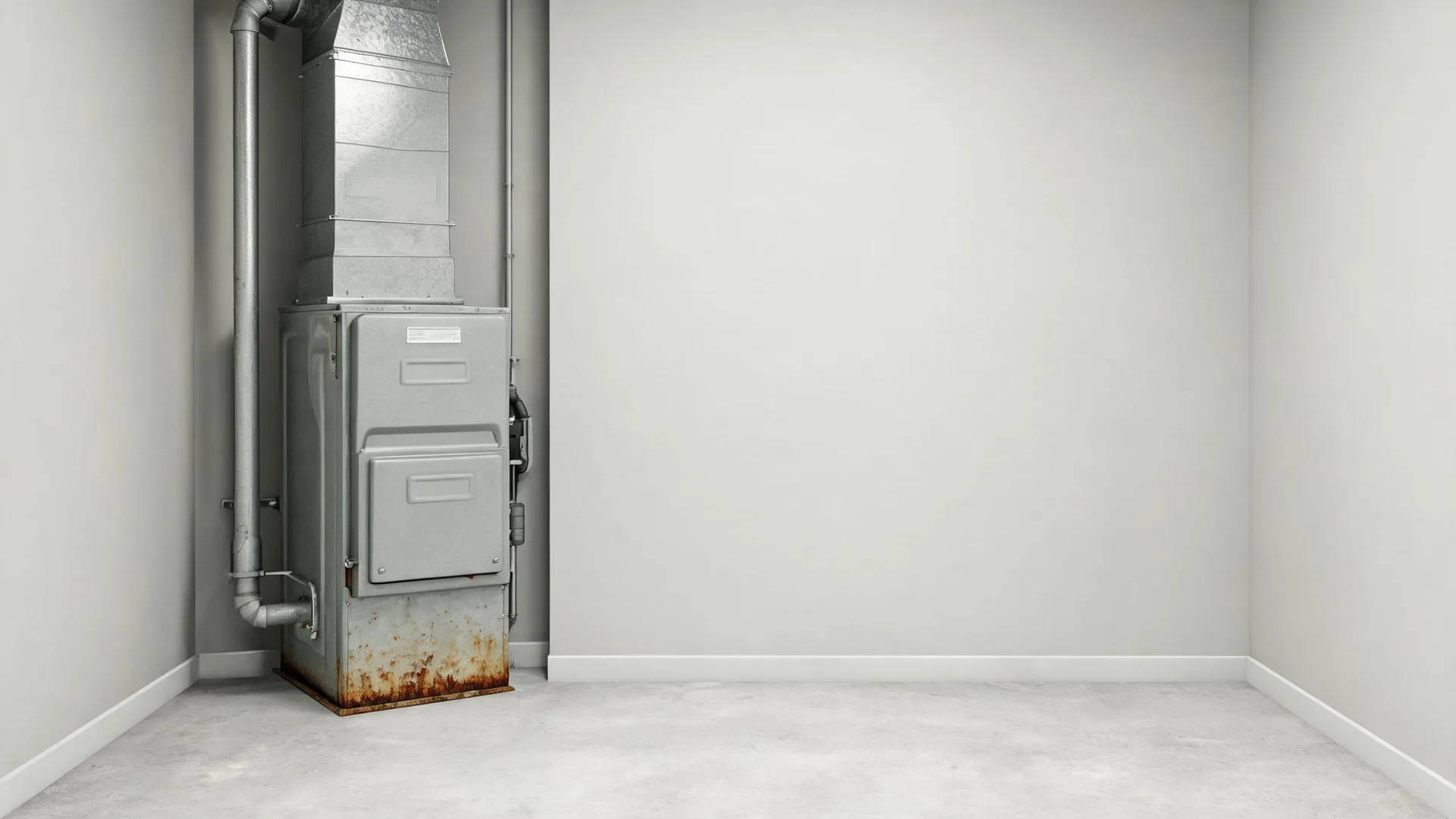
A gray high-efficiency gas furnace installed in an unfinished basement, surrounded by gas lines, a condensate drain, and sheet-metal ductwork.

One visit, one cycle watched start to finish

A diagnostic starts before any panel comes off. The tech asks what the furnace is doing, when it started, and whether it's one bad trip or a pattern. Then the panel comes off and it's mostly watching one cycle happen. Power to the igniter, does it glow. Flame sensor, is it reading a signal once the burner lights. Draft inducer, does it pull before gas is allowed to flow at all, since a furnace won't fire on purpose if it can't vent properly. A meter checks the flame sensor's signal in microamps, and a weak reading shows up before the furnace starts acting up. The heat exchanger gets a look too, since a crack can be close to invisible and that's the one finding that changes the whole conversation. Most visits end with one part named as the cause, not a guess at several.

Short cycling means something's wrong

A furnace that fires up, runs a few minutes, then quits before the house warms up is shutting itself off early for a reason. Most of the time it's a flame sensor that's lost its signal or a limit switch tripping because airflow is blocked. It won't fix itself by running more.

A noise that wasn't there before is the furnace telling you something

A squeal usually points to the blower motor bearings. A bang when it starts up is often a delayed ignition, gas building up a moment before it catches. Either one tends to get worse, not better, the longer the furnace keeps running.

A few things are worth checking before anyone comes out. Start with the filter. Pull it out and hold it up to a light. If you can't see through it, that alone can cause short cycling, a hot spell at the limit switch, or a furnace that just won't keep up. Next check the thermostat, make sure it's set to heat and the batteries aren't dead, since a blank or sluggish display can look exactly like a furnace that won't respond. Walk around the house and check that return vents and supply registers aren't blocked by furniture or rugs. If the furnace won't start at all, check the switch that looks like a light switch near the unit, it's an on off switch for the furnace and it gets bumped more often than people expect. Check the breaker too. None of this fixes an igniter or a cracked heat exchanger, but it rules out the easy stuff first.

A furnace failing on one part is a repair. An igniter, a flame sensor, a blower motor, any of those gets swapped out and the furnace goes back to running the way it did before. That's most breakdowns. Replacement starts to make sense when the breakdowns stack up, when something new fails every season instead of just once, because that pattern means the whole unit is wearing out at the same time and another part is already on its way out behind the one just fixed. A cracked heat exchanger is different from both. It isn't a worn part to swap, it's the furnace telling you it's done, and no repair brings that back. Outside of that one case, a furnace acting up is almost always one part asking to be replaced, not a reason to replace the whole thing.