





An unfinished basement interior featuring a large metal furnace unit, exposed ceiling joists, concrete walls, and scattered boxes and cables on the floor.

Furnace Repair in Raymore, MO

Tell us about the job

Takes about a minute. No obligation.

RepairFurnace or heatingCass County, MO
Step 1 of 2

What ZIP code is the job in?

Cass County saw 178 severe weather events between 2015 and 2024. Damaging wind caused 89 of those, hail caused 74, and six tornadoes touched down in that stretch too. A furnace doesn't take a direct hit from any of that, but the outdoor parts of a heating and cooling system sit right in the path. Wind-blown debris, hail, falling branches, all of it lands on equipment that has to keep working through winter. If something hit your system during a storm and it still seems to run fine, that doesn't mean nothing happened to it. Damage from a storm can show up weeks later as a breakdown that catches you off guard.

7 months
October through April, your furnace is on duty
24°F
the average winter night it heats against
55%
of homes here heat with gas, so most furnaces here burn gas
9 winter storms
in ten years, the nights a failure hurts most
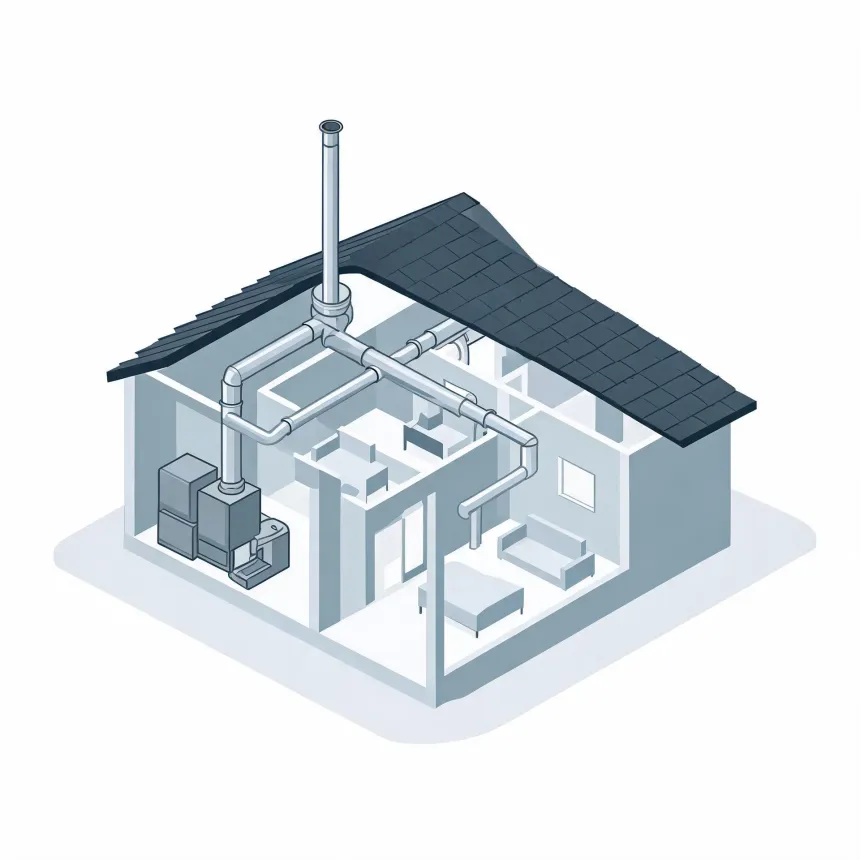
Isometric cutaway illustration of a small house showing a furnace unit connected to ductwork and a vertical flue pipe extending through the dark shingled roof, with sparse furniture in the rooms.
Your furnace works hardest from November through March.

NOAA nClimDiv, 1991–2020 normals

Furnaces here start working in October, after sitting idle since spring.

A weak part usually fails in those first cold weeks, not in the dead of January.

Half these furnaces are younger than they look

Half the homes here were built by 1992
Climate zone 4A
Heat runs October through April

With half the furnaces in the county dating to 1992 or later, a repair call is worth making before you assume the worst. A furnace that age was built to last two decades or more, and a breakdown now doesn't mean it's done. Have the technician find out what actually failed. A cracked igniter or a bad flame sensor is a cheap fix on a system with years left in it. Replacing a furnace that still has life in it costs you that life. Ask what's wrong before you decide what to do about it.

If a storm hit your system, find out now

If your outdoor unit took hail or debris this year, get it looked at even if the furnace seems to be running fine. Storm damage doesn't always show up right away, and a check now is better than finding out when it fails on a cold morning.

Find a contractor
A man in a cap, dark shirt and cargo pants, seen from behind, carries a canvas tool bag up wooden porch steps toward a blue front door.
A gas furnace with attached ductwork, gas piping, and condensate lines installed in a concrete-block basement.

What to check before you call

Before you pick up the phone, there are a few things worth checking. Go to the thermostat first. Make sure it's set to heat, not cool, and that the set temperature is actually above room temperature. A dead thermostat battery can look exactly like a dead furnace. Next, find your furnace filter and pull it out. If you can't see light through it, that's likely choking the airflow enough to cause real problems, from short cycling to a furnace that overheats and shuts itself off. Check the return air vents and supply vents around the house too, make sure none are blocked by furniture or closed all the way. Then look at the furnace itself. Most have a door switch that has to be fully seated for the unit to run at all, so make sure the panel is sitting flush and latched. If your furnace has a standing pilot, see if it's lit. If it uses an electronic igniter instead, listen for the sequence: a hum, then a click, then either a whoosh of flame or nothing. Check your breaker panel too. A tripped breaker or a blown fuse will kill the whole system, and it's worth ruling out before anything else. Last, check the exhaust vent outside where it exits the house and make sure nothing is blocking it. None of this is guesswork that risks the gas line or the electrical, it's just ruling out the simple causes before you pay someone to find them for you.

A small problem rarely stays small

A furnace that short cycles or trips its limit switch is already telling you something is wrong. Keep running it and a cracked heat exchanger can spread, a struggling inducer motor can burn out, or a clogged burner can scorch the flame sensor next to it. The parts around the failure point take the damage too.

Shutting it off can save the rest of it

If your furnace is banging, smells off, or trips its breaker repeatedly, turning it off and waiting for a technician costs you nothing but comfort. Letting it keep firing while something inside is already failing turns a one-part repair into a multi-part one, and sometimes into a furnace that's no longer worth fixing at all.

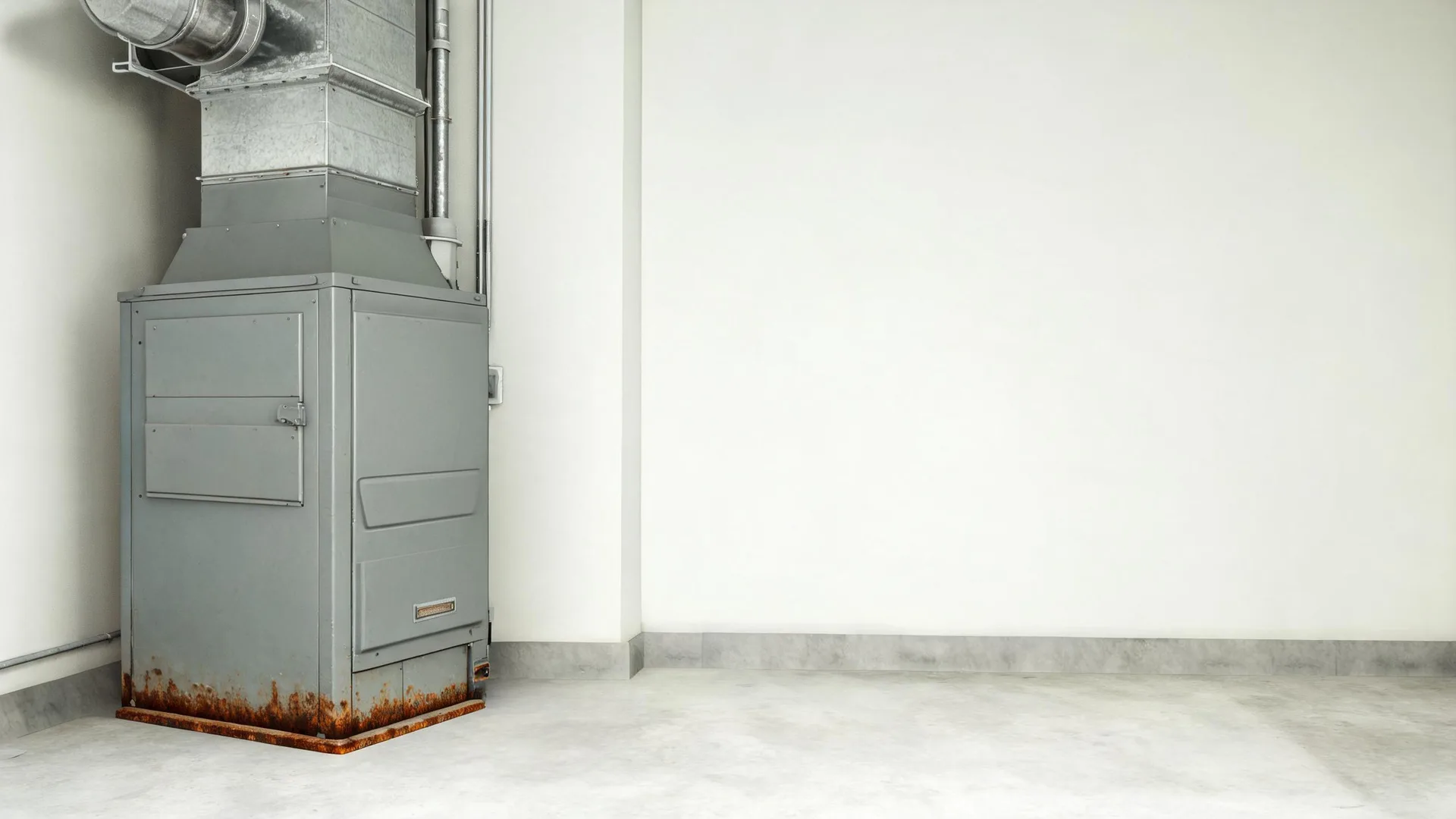
A gas furnace and sheet-metal air handler unit installed in an unfinished concrete basement.

A new furnace would cut about $190 a year off heating for a typical Cass County home.

  • A new high-efficiency furnace$780 a year
  • An older furnace$970 a year

Estimates for a typical Cass County home, compared with an older unit built to the previous federal minimum, from EIA household energy data, Missouri fuel prices and NOAA climate normals. Your home will differ.

Repair makes sense when one part has failed and the heat exchanger is sound.

Replacement makes sense when the heat exchanger is cracked or the furnace keeps needing parts.

A diagnostic call starts before the panel ever comes off. The technician asks what you noticed first, the smell, the sound, the error code blinking on the control board, because that order of events points at different parts. Then the covers come off and the meter comes out. Voltage gets checked at the transformer, then at the gas valve, then at the igniter or pilot assembly, tracing power through the circuit until it stops somewhere it shouldn't. A flame sensor gets pulled and looked at, since a coated sensor reads as a bad one even when it isn't. The inducer motor gets watched while it spins up, listening for the bearing noise that means it's on its way out. Airflow gets checked too, static pressure across the coil and filter, because a furnace starved for air trips its limit switch and looks like a dozen other problems. None of this is a guess and a parts swap. It's a process of elimination that ends with the technician telling you the actual part that failed and why, not just a part that might fix it.