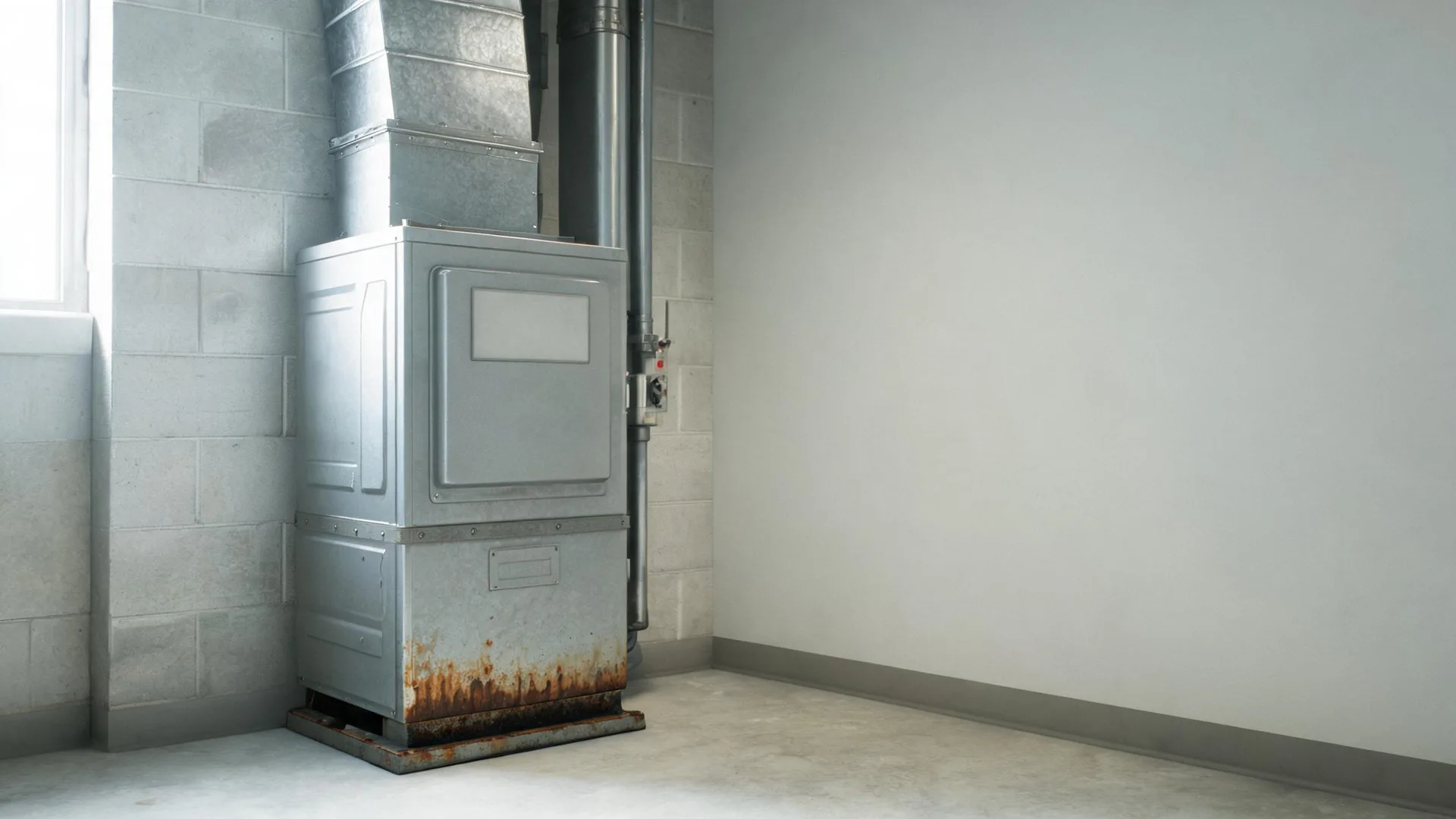
Storms come through often here
Butler County saw 152 severe weather events between 2015 and 2024, including 110 damaging wind events, 22 hail events, and 9 tornadoes. That's a lot of chances for an outdoor unit to take a hit.
Takes about a minute. No obligation.
Butler County saw 152 severe weather events between 2015 and 2024, including 110 damaging wind events, 22 hail events, and 9 tornadoes. That's a lot of chances for an outdoor unit to take a hit.
Nearly one in five Missouri households went at least a day without power in 2024. When the power goes out in a cold snap, a furnace that depends on electricity to run stops along with it.
NOAA nClimDiv, 1991–2020 normals
A furnace that won't start can mean a tripped switch or breaker, not a failed part.
Check the switch that looks like a light switch near the furnace, and check the breaker, before assuming the worst.




If the furnace came with the house, get the repair done rather than start pricing a replacement. A technician can tell you fast whether it's a tripped switch, a worn igniter, or something that signals the unit is closer to the end. Most of the time here, it's not the end. With outages and storm damage already a real risk in this county, a furnace with years left in it is worth keeping ready rather than swapping out early. The mobile homes here are the one exception worth a second look, since their furnaces wear differently and a repair call is the right time to ask about that.
If hail or wind came through recently and the furnace is acting up now, don't assume the two are unrelated. A technician can check the outdoor unit and the furnace itself in one visit and tell you if the storm had anything to do with it.
Find a contractor
A furnace fails for the same handful of reasons most years. The igniter wears out from repeated heating and cooling every time it fires, and it's one of the most common reasons a furnace won't start at all. Flame sensors coat over with a thin layer of residue and stop telling the control board a flame is present, so the system shuts itself down as a safety measure. Blower motors wear at the bearings from years of running, and a motor working harder than it should will usually run hot and shut off early. Filters left too long choke airflow, and that makes the whole system work against itself, from the blower straining to the heat exchanger running hotter than it was built for. Flame sensors and igniters are quick fixes. A cracked heat exchanger is not, and it's the one failure that means the furnace needs to be shut down rather than patched.
A furnace in trouble usually says so before it quits for good. It might short cycle, running for a minute or two and shutting off before the house warms up. It might blow air that's gone lukewarm instead of hot. You might hear a clicking sound as it tries to ignite and fails, over and over. Some furnaces get loud in ways they weren't before, a rattle from a loose panel or a screech from a motor bearing wearing out. Any of these is worth a call before the furnace stops working altogether.
A furnace that's struggling usually keeps running anyway, just less safely and less efficiently. A dirty flame sensor will let a furnace limp along, shutting off a little sooner each time, until it finally won't restart. A blower working against a clogged filter puts more strain on the heat exchanger behind it. Waiting rarely saves the call. It just means the technician is diagnosing a bigger problem when they get there.
A furnace that's struggling is still burning gas and still running a flame through the heat exchanger, even when something downstream isn't working right. A cracked heat exchanger gets worse under heat cycling, not better, so every additional run makes the crack more likely to spread. A blower motor with worn bearings runs hotter the longer it's forced to work, and heat is what finishes off a motor that's already failing. Shutting the furnace off and calling for a repair stops the damage where it is. Leaving it running just means more parts are under stress when the technician finally gets to look at it.
A repair call usually ends one of two ways. Either the part that failed is small and cheap next to the furnace itself, like an igniter or a flame sensor, or the technician finds something that points at the whole unit, like a cracked heat exchanger or a blower motor that's failed more than once. Age by itself doesn't decide it. A furnace that's been maintained can outlast one that hasn't, even if they're the same age. What matters more is whether the failures are stacking up, one system after another, or whether this is the first real problem it's had. A technician looking at it in person can tell you which kind of repair this is, and whether it's the first of many or just one part giving out.