Storms come through often here
Platte County saw 169 severe weather events between 2015 and 2024, including 90 hail events and 68 rounds of damaging wind. That's a lot of chances for an outdoor unit to take a hit.
Takes about a minute. No obligation.
Platte County saw 169 severe weather events between 2015 and 2024, including 90 hail events and 68 rounds of damaging wind. That's a lot of chances for an outdoor unit to take a hit.
Nearly one in five Missouri households went at least a day without power in 2024. A gas furnace still needs electricity to run the blower and ignition, so an outage leaves the house without heat even with the gas line fine.
NOAA nClimDiv, 1991–2020 normals
Check the thermostat before you check anything else.
A dead battery or a setting bumped to off looks exactly like a failed furnace, and it costs nothing to rule out.




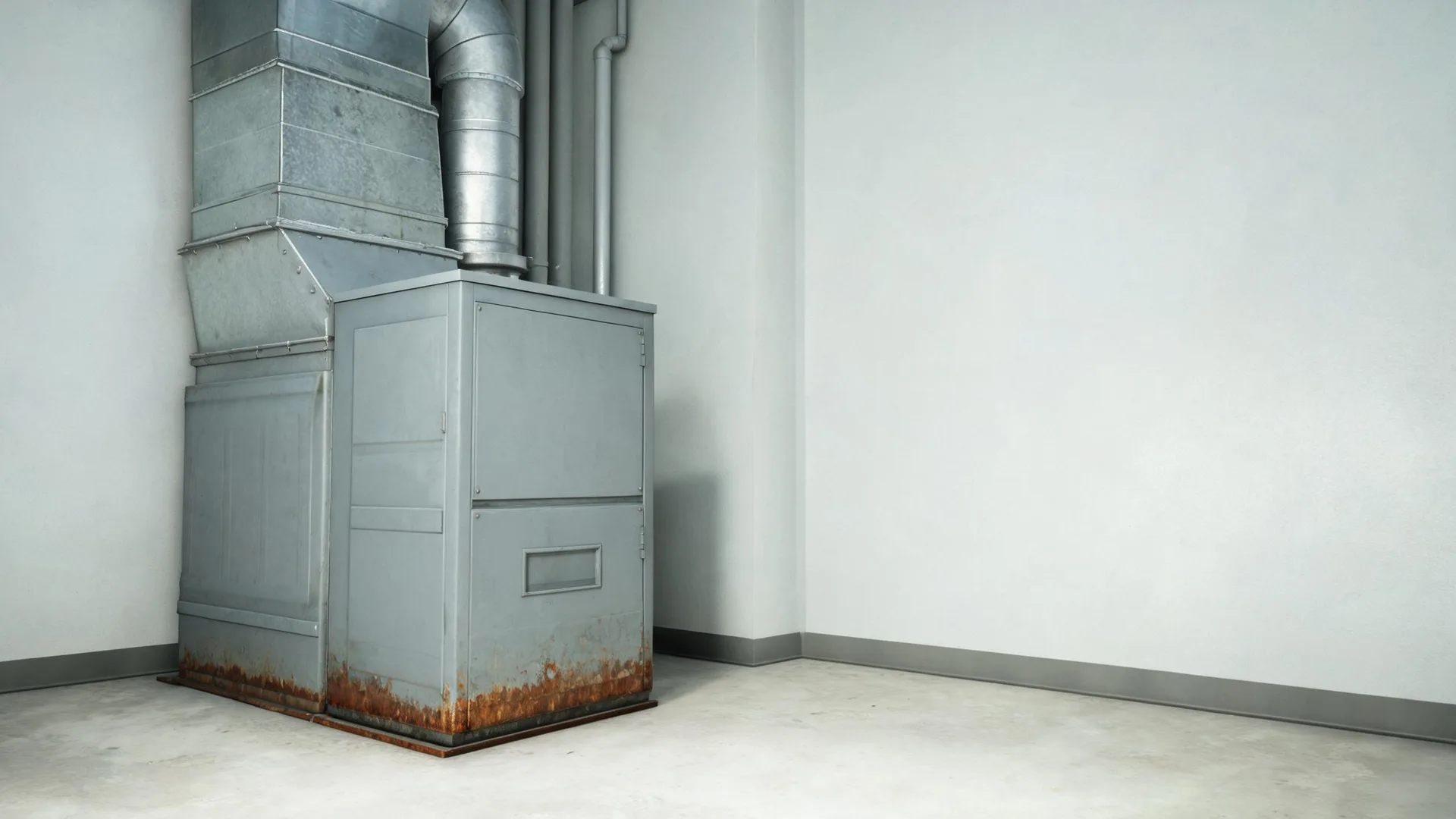
If your furnace came with a newer build here, calling a repair technician first is the right move, not a replacement crew. A furnace that's a few years into its life has a working blower, a working heat exchanger, and parts that are still made and stocked. Most failures at that age come down to one component: a flame sensor, an igniter, a control board. Those get swapped, not rebuilt. Get the actual install date off the unit's data plate if you can find it. That number tells a technician more in five seconds than the age of the house ever will.
If your furnace has an outdoor component that took hail or debris this year, get it looked at even if the heat still comes on. And if a power cut has knocked it out before, ask the technician what it would take to get heat back faster next time.
Find a contractor
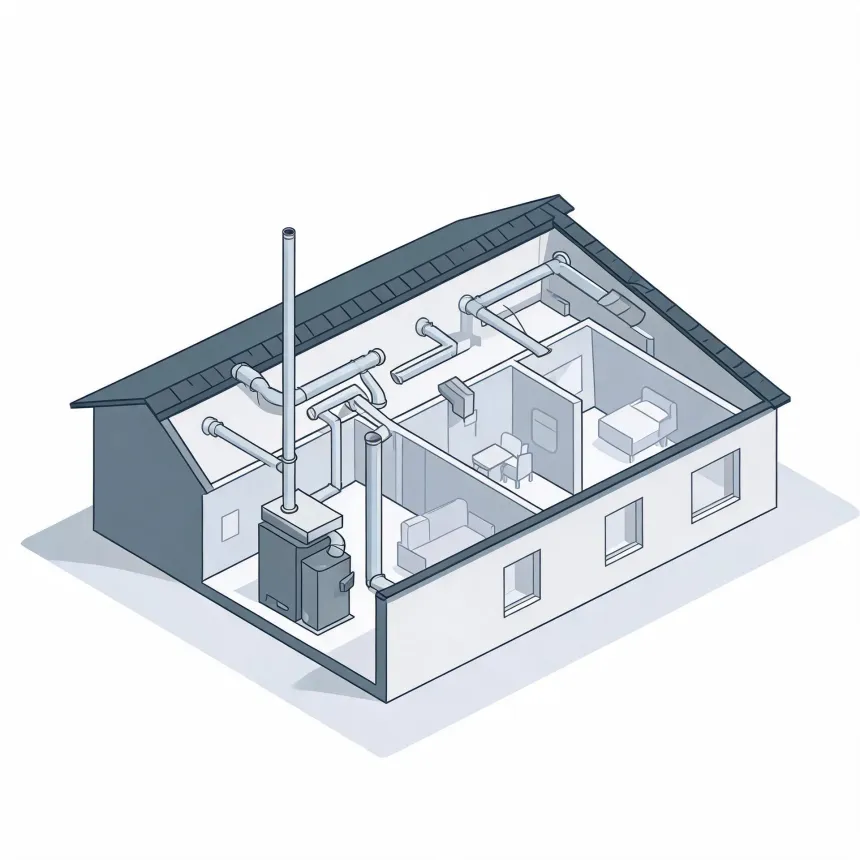
A furnace fails the same handful of ways almost every time. The igniter cracks or wears down until it can't light the gas. The flame sensor coats over with a film and stops telling the control board a flame is there, so the system shuts itself down as a safety measure. The control board itself takes a power surge or just ages out. Blower motors wear on their bearings over years of running and start making noise before they quit outright. None of these have much to do with how hard the furnace works in any one season. They're wear parts, and they fail on their own schedule whether the furnace ran constantly or barely at all that week. A furnace that cycles on and off a lot, short bursts of heat rather than long steady runs, puts more wear on the igniter and the board than one that runs in long stretches. That's a reason to ask a technician whether the system is sized and set up right, not just whether a part needs swapping.
Metal fatigue in a heat exchanger spreads once it starts. Heat the crack, cool it down, heat it again, and it works like bending a paperclip back and forth. Keep running the furnace and the crack opens further, which is also a safety problem since that's the barrier between the flame and the air going into the house.
When a furnace overheats and the limit switch cuts the burners, that's not a fault to push through. It usually means airflow is restricted somewhere, a clogged filter, a blocked vent, a blower that's not moving enough air. Forcing it to keep firing after that just runs the heat exchanger hotter than it's built for.
Estimates for a typical Platte County home, compared with an older unit built to the previous federal minimum, from EIA household energy data, Missouri fuel prices and NOAA climate normals. Your home will differ.
Repair makes sense when one part has failed and the heat exchanger is sound.
Replacement makes sense when the heat exchanger is cracked or the furnace keeps needing parts.
A diagnostic visit starts before any panel comes off. A technician asks what the furnace was doing right before it quit, what sounds or smells showed up, whether the thermostat screen was blank or lit. Then they pull the cover and check the obvious things first, the filter, the flame through the sight glass, whether the igniter glows or sparks. Most of the visit is testing, not guessing. A multimeter checks the flame sensor's signal and the control board's output, because a part can look fine and still be failing electrically. Once the bad part is found, the technician usually knows right there whether it is a quick swap or something that means a bigger conversation about the whole system.