




A row of dark-sided buildings with brown shingled gable roofs behind trimmed hedges, with a mown lawn in the foreground and leafy trees under an overcast sky.

Furnace Repair in Neosho, MO

Tell us about the job

Takes about a minute. No obligation.

RepairFurnace or heatingNewton County, MO
Step 1 of 2

What ZIP code is the job in?

Newton County sees more than its share of rough weather. Between 2015 and 2024 the county logged 219 severe weather events, including 105 cases of damaging wind and 99 hail events. Eight tornadoes touched down in that same stretch. Hail and flying debris can damage an outdoor unit's cabinet, coil or fan without stopping it from running, so a furnace that still fires up after a storm isn't automatically fine. Statewide, almost one in five households went at least a full day without power in 2024, and a furnace that depends on electric ignition or a blower motor goes down with it.

7 months
October through April, your furnace is on duty
27°F
the average winter night it heats against
7 winter storms
in ten years, the nights a failure hurts most
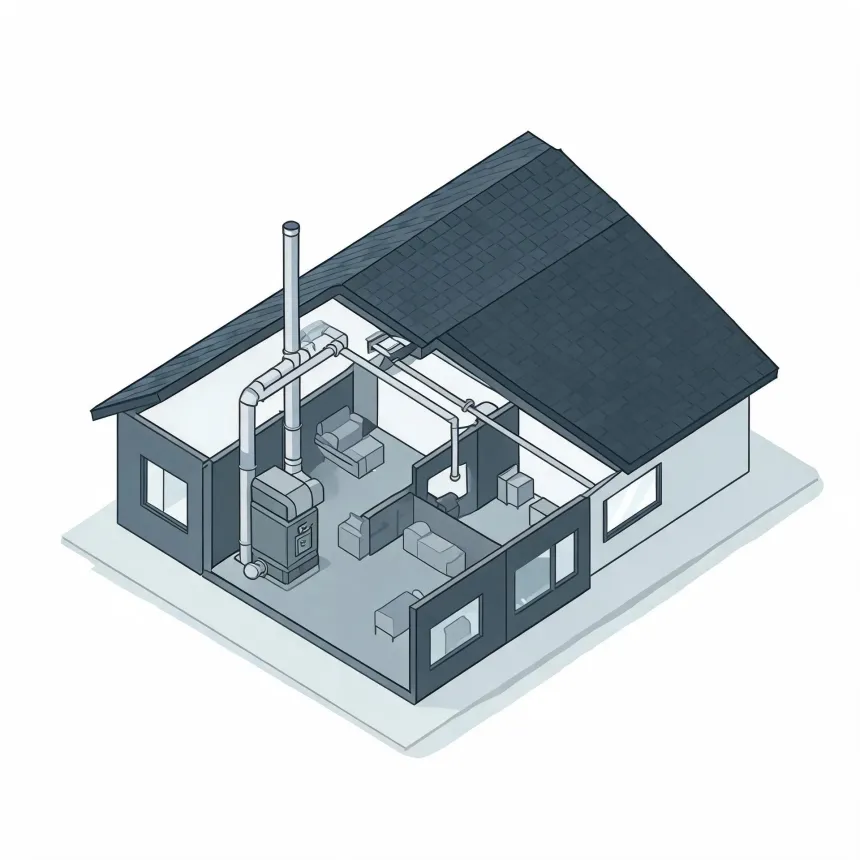
Isometric cutaway illustration of a single-story house showing interior rooms with furniture, a furnace unit connected to ducting and vertical flue pipes running through the roof.
Your furnace works hardest from November through March.

NOAA nClimDiv, 1991–2020 normals

A cracked heat exchanger can leak exhaust into the air a furnace is pushing through the house.

Shutting the furnace off until it's checked costs less than one more cycle running.

Half the homes here were built by 1984, so a lot of furnaces still have years left in them

Half the homes here were built by 1984
Climate zone 4A
Heat runs October through April
Built to start coldFurnaces here sit idle until October, then run through April

If your furnace came with the house, check when that was built. A lot of houses in Newton County are from 1984 or later, which puts a lot of furnaces well within their working life. That matters when you're deciding whether to fix what's broken or start looking at replacement. A furnace with years left in it is almost always worth repairing, especially with a part failure or an ignition problem rather than a cracked heat exchanger. Get the actual age from a contractor before you decide anything, since the make and model on the unit will tell you more than a guess.

After a storm, have the furnace checked even if it still runs

If your furnace took a hit from last season's storms, electric ignition and the blower motor are the parts likely to show it. A furnace that still lights doesn't mean the outage or the debris left it alone. Worth having it looked at before cold weather puts it to work.

Find a contractor
A man in a cap, gray work shirt and tan pants climbs porch steps toward a blue front door, carrying a canvas tool bag, with a blue ceramic planter of white flowers beside him.
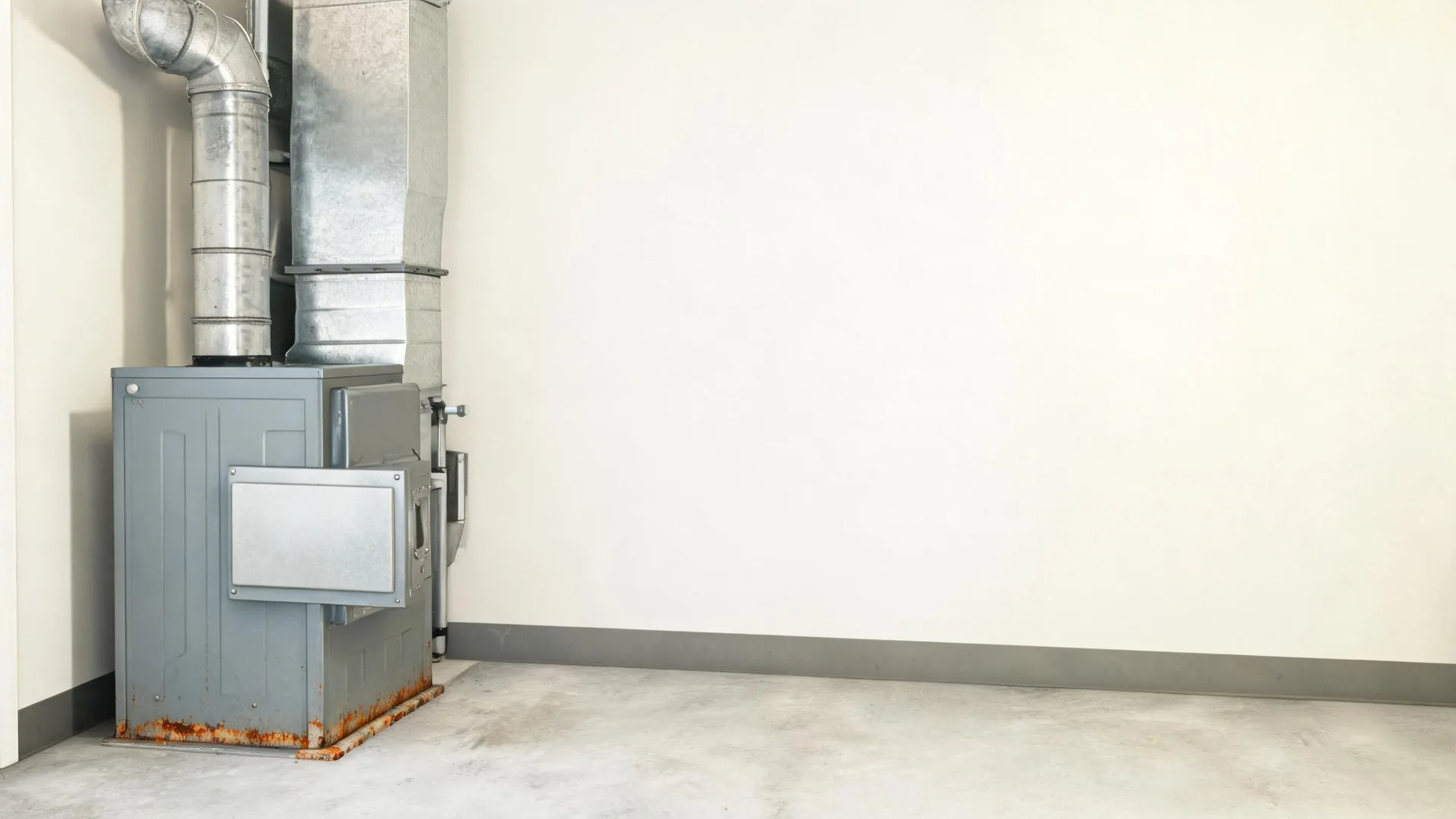
A gray gas furnace with attached ductwork and piping installed in an unfinished concrete basement.

What to check before you call

Before anyone comes out, there are a few things worth checking yourself. Start at the thermostat. Make sure it's set to heat and the set temperature is actually above room temperature, and if it runs on batteries, swap them. Next, check the filter. Pull it out and hold it up to a light. If you can't see light through it, it's choking off airflow and the furnace may be shutting itself down to protect against overheating. Go to the breaker panel and look for a tripped breaker on the furnace circuit. If it's tripped, reset it once. If it trips again, stop and leave it alone. If your furnace has a standing pilot, check whether the pilot light is lit. If it's out, most units have a reset sequence printed right on the access panel. Look at the switch on the furnace itself, often mounted on or near the unit and shaped like a regular light switch. It's easy to bump off during other work nearby. Check the vent hood or exhaust pipe outside the house for blockages like a bird's nest or ice buildup, since a blocked exhaust path can shut a furnace down as a safety measure. If you smell anything like rotten eggs, don't keep flipping switches or checking anything else. Leave the house and call from outside.

The furnace rarely dies without warning

A short cycle, a burner flame that looks yellow instead of blue, a blower that runs but pushes cool air, a smell of something warm and electrical: these show up before the furnace actually quits. Most failures give notice first through a sound or a smell or a cycle that isn't right, days or weeks before the no-heat call.
Know which signs mean stop and which mean schedule

A furnace that short cycles or runs longer than it used to is worth a call this week. A furnace that smells like rotten eggs, trips a breaker repeatedly, or shows soot around the burner compartment needs to be shut off now and looked at before it runs again. The difference between those two is whether the furnace is wearing out or actively unsafe to operate.

Most furnace failures trace back to a handful of parts, and the igniter is the one that goes most often. It's a thin strip that heats up to light the gas, and that heating and cooling cycle every time the furnace runs eventually cracks it. A flame sensor is next. It tells the furnace a flame is actually present, and once it's coated with a thin layer of residue it can't do that job, so the furnace shuts the gas back off a few seconds after ignition. Blower motors wear out too, usually the bearings first, and you'll hear it as a grinding or squealing sound before it quits outright. A dirty flame sensor can be cleaned, but a cracked igniter or a seized motor has to be replaced. Keeping the filter changed on schedule is the one thing that slows down wear on all three, since restricted airflow makes the blower work harder and can cause the kind of overheating that shortens an igniter's life.

A repair makes sense when the problem is one part doing the wrong thing while the rest of the furnace is sound. An igniter that won't glow, a flame sensor that won't hold a signal, a blower motor that's started to grind: these get fixed on their own and the furnace goes back to normal. Replacement starts to make sense when the failures stack up, one part fixed this year and another next year, because that pattern usually means the whole unit is aging out rather than one piece happening to fail. The heat exchanger is the one part that changes the decision by itself. A cracked exchanger means the furnace is no longer safe to run regardless of how well everything else works, and at that point the condition of the rest of the unit decides whether it's worth rebuilding around a new exchanger or not worth it at all. A contractor who's inspected the unit can tell you which situation you're actually in.