A row of dark-sided single-story houses with gray shingled roofs behind trimmed hedges and a mown lawn, framed by overhanging tree branches under an overcast sky.

Furnace Repair in Eldon, MO

Tell us about the job

Takes about a minute. No obligation.

RepairFurnace or heatingMiller County, MO
Step 1 of 2

What ZIP code is the job in?

Seven months of real work

Furnaces in Eldon run from October through April. That's most of the year, with overnight lows near 26 degrees in January. A furnace carrying that load wears the same way furnaces anywhere do. Nothing about Eldon makes it wear faster.

So look for the usual cause

A furnace that won't light, short cycles, or blows cold air almost always comes down to something ordinary. A bad igniter. A dirty flame sensor. A loose thermostat wire. Find which one it is and the fix is usually straightforward.

7 months
October through April, your furnace is on duty
26°F
the average winter night it heats against
6 winter storms
in ten years, the nights a failure hurts most
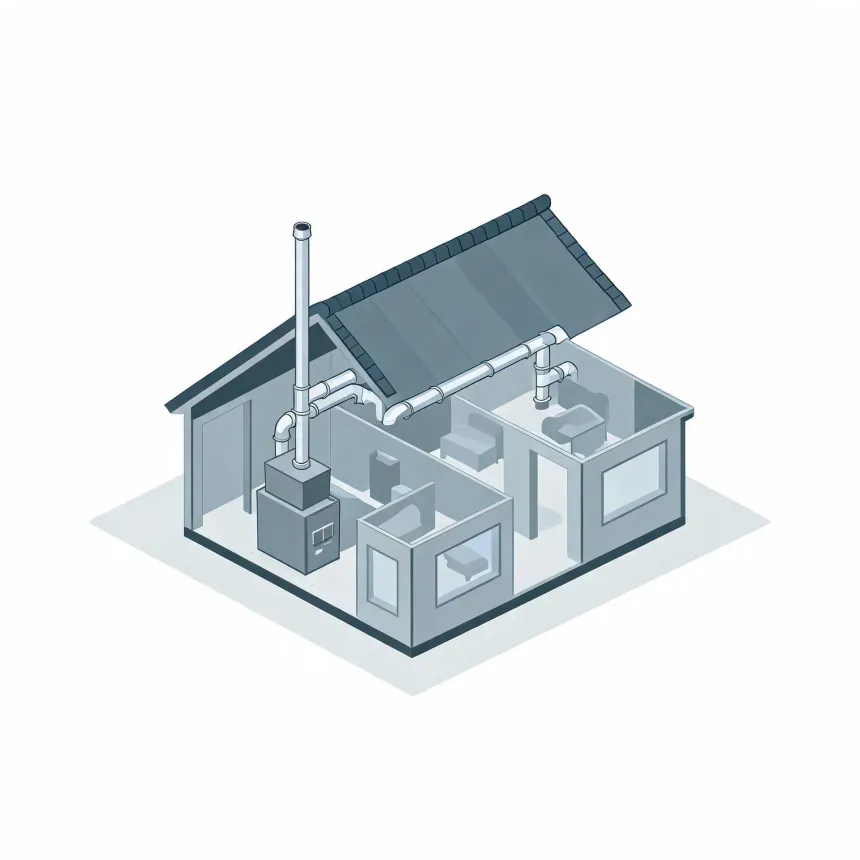
Isometric grayscale illustration of a cutaway house showing an interior furnace with a tall flue pipe and ductwork running to rooms under a partially lifted roof.
Your furnace works hardest from November through March.

NOAA nClimDiv, 1991–2020 normals

October is when furnaces in Eldon get tested after months of sitting idle.

A weak igniter or a bad flame sensor usually shows itself in the first cold week, not the tenth.

Half the homes here were built in 1985 or later, so a lot of furnaces still have years left in them

Half the homes here were built by 1985
Climate zone 4A
Heat runs October through April
A broken furnace costs more hereElectricity in Missouri ran $37.84 per million Btu in 2024.

Most furnace trouble shows itself before the system quits for good. A furnace that used to start right up now hesitates, clicking before it catches, or not catching at all. One that used to run quiet starts making a sound it didn't used to make, a rattle, a squeal, a hum that wasn't there before. Short cycling is one of the clearest signs, heat coming on and shutting off again before the house actually warms up. Warm air turning to cold air partway through a cycle usually means the flame lit and then dropped out, rather than failing to light at all. A burning smell on startup is worth mentioning the first time it happens, not after it keeps happening. None of these mean the same thing every time, but all of them mean the furnace is telling you something before it stops telling you anything.

A furnace that runs badly here costs you every month it stays that way

A furnace short cycling or struggling to light still draws power the whole time it's doing it. At Missouri's electricity costs, that's not a small drag while you put off the call. Getting the actual cause found and fixed stops the waste as soon as it's done.

Find a contractor
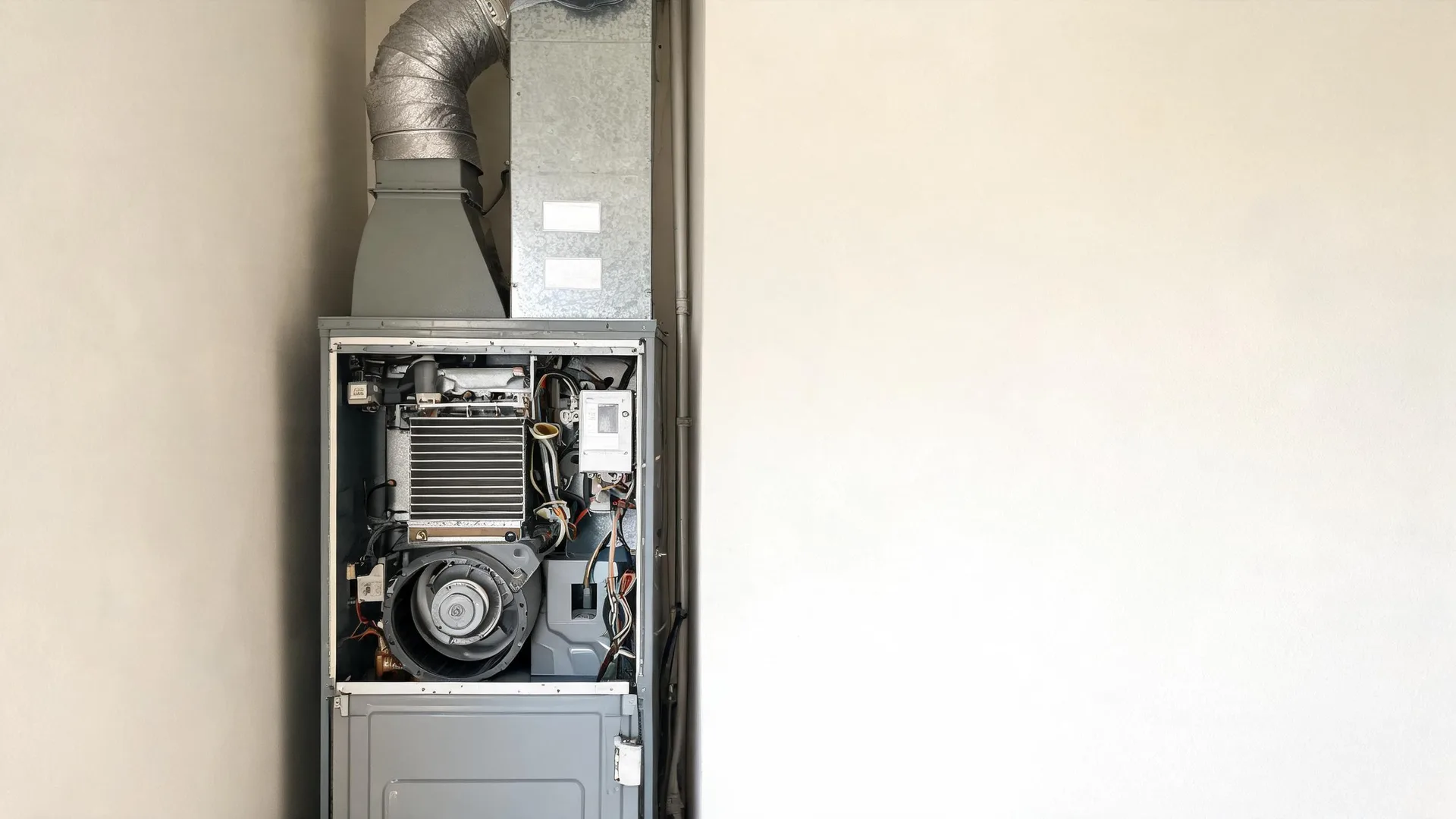
A gas furnace with attached ductwork, gas piping, and condensate lines installed in a concrete-block basement.

What you can rule out yourself

Before you pick up the phone, check the thermostat first. Make sure it's set to heat and the set point is actually above room temperature, not sitting right where it already is. Check the batteries if it uses them. Then go look at the furnace itself. If it's gas, see if the switch on the unit or the one on the wall nearby got bumped off. Check the breaker too, a furnace that won't start at all is sometimes just a tripped breaker and nothing more. Look at the air filter. A filter so clogged that air can't move through it will make a furnace shut itself off as a safety measure, and that can look like a lot of other problems it isn't. If you can see the flames through the viewing window, they should be steady and blue. Yellow, flickering flame is worth mentioning to whoever comes out. Past that, leave it alone. Opening the cabinet to look at the igniter or flame sensor doesn't tell you much without the tools and experience to read what you're looking at.

Most failures are wear, not damage

The igniter cracks a little more every time it heats up and cools down, until one day it doesn't get hot enough to light the gas. The flame sensor builds up a film from normal combustion until it can't tell the flame is there. Neither one failed because something went wrong. They just reached the end of how many cycles they had.

The blower motor fails differently

A blower motor usually goes from running to not running, sometimes with a humming sound or a burning smell first. That's a different kind of wear than the igniter or flame sensor. Bearings inside it wear down over years of spinning, and when they go, the motor seizes or draws too much current and shuts itself off.

A furnace that short cycles or struggles to light rarely fixes itself by running more. A cracked igniter gets a little weaker every time it fires, and a furnace that keeps trying to light on a failing igniter is asking a damaged part to keep doing its job. Eventually it stops working mid-cycle instead of at a convenient time. A dirty flame sensor follows the same pattern. The film on it builds up a little more each time the furnace runs, until the sensor can't tell there's a flame at all, and the furnace locks itself out rather than let gas build up unburned. Neither problem announces itself as serious at first. It just gets more likely to leave you without heat the longer it's ignored, and the repair itself doesn't get any bigger for the wait.

A diagnostic starts with the thermostat and the breaker, the same things you already checked, because the tech needs to rule those out before anything else matters. From there it's the furnace itself. The tech pulls the cover and watches it try to start, looking for what happens and what doesn't. Does the igniter glow. Does it glow but fail to light the gas. Does it light and then the flame drop out a few seconds later. Each of those points somewhere different, to the igniter itself, to a dirty flame sensor, to a gas valve not opening the way it should. Once the tech sees which part of the sequence is breaking down, testing that part directly, usually with a meter, confirms it before anything gets replaced.