Three lit brick homes on a tree-lined residential street photographed at dusk.

Furnace Repair in Cuba, MO

Tell us about the job

Takes about a minute. No obligation.

RepairFurnace or heatingCrawford County, MO
Step 1 of 2

What ZIP code is the job in?

September is the month to get it looked at

Furnaces in Crawford County sit idle from spring through summer, then go back to work in October. A weak igniter or a failing limit switch usually doesn't show itself until the first cold snap asks the system to run.

A breakdown in October isn't bad luck

When a furnace that sat quiet for months finally gets pushed to run every day, whatever part was already marginal is what gives out first. Fixing it right means finding that part, not just resetting the system and hoping.

7 months
October through April, your furnace is on duty
24°F
the average winter night it heats against
8 winter storms
in ten years, the nights a failure hurts most
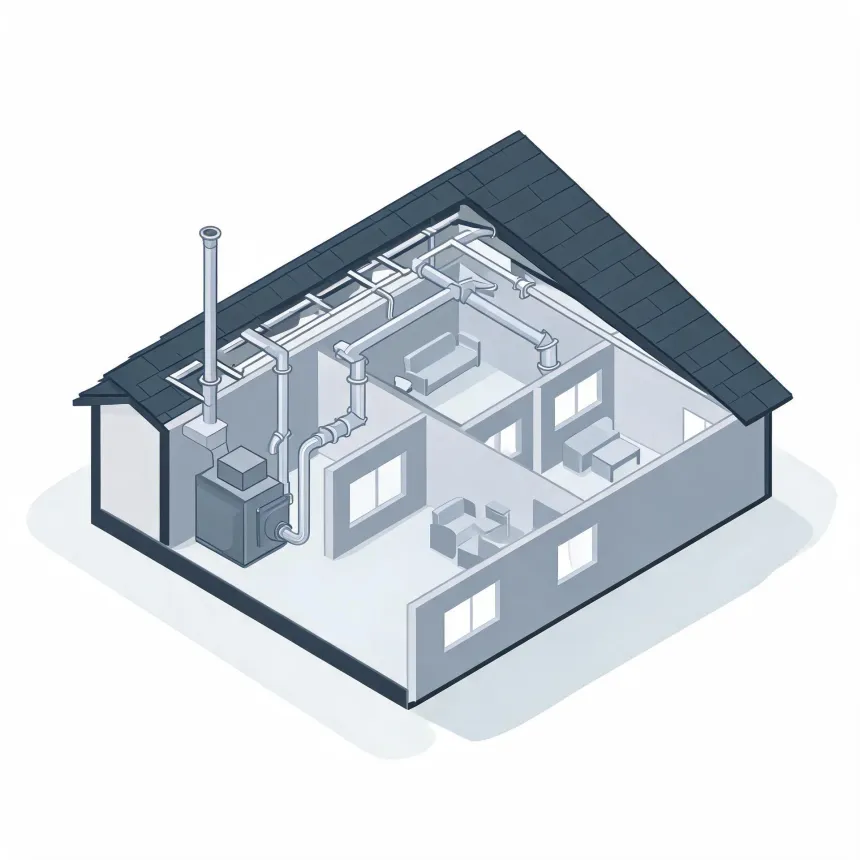
Isometric cutaway illustration of a single-story house showing interior rooms, a furnace unit with flue pipe, and branching ductwork running through the ceiling space under a dark shingled roof.
Your furnace works hardest from November through March.

NOAA nClimDiv, 1991–2020 normals

A furnace that short cycles, running for a few minutes and shutting off, is working against a dirty flame sensor or a clogged filter long before anything bigger breaks.

Let it keep doing that and the part straining to compensate, usually the igniter or the blower motor, is the next thing to fail.

Missouri power costs add up fast when a furnace is running harder than it should

Climate zone 4A
Heat runs October through April
Winter nights average 24°F
Nothing unusual here, just the usual furnace problemsHalf the homes in Crawford County were built in 1981 or earlier, half later, and furnace age doesn't change what's likely wrong

A furnace that's short cycling or struggling to hold a cycle isn't just annoying. It's pulling power the whole time it runs, and at $37.84 per million Btu, a furnace working harder than it should shows up on the bill before it shows up as a breakdown. That cost doesn't wait for the part to fail completely. It's there every day the problem goes unfixed. Get the real cause found now, while it's a flame sensor or a filter, and not after it takes the igniter or the blower motor with it.

Get it looked at early

Problems tend to show up in the first weeks of the season, when the load hits a part that was already weak.

Find a contractor
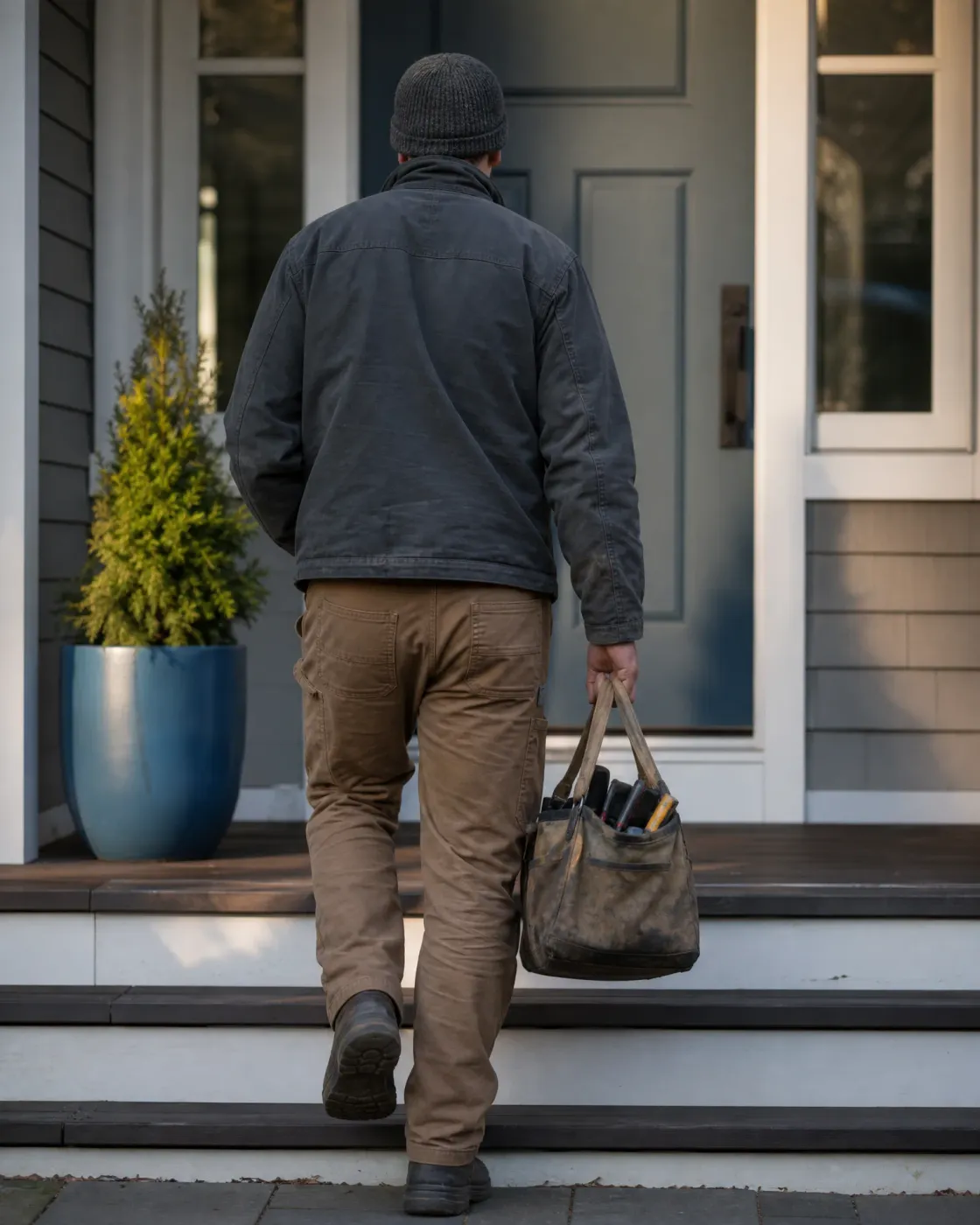
A man in a dark jacket, knit hat and tan work pants climbs porch steps toward a gray front door, carrying a worn canvas tool bag, with a potted shrub in a blue planter at left.
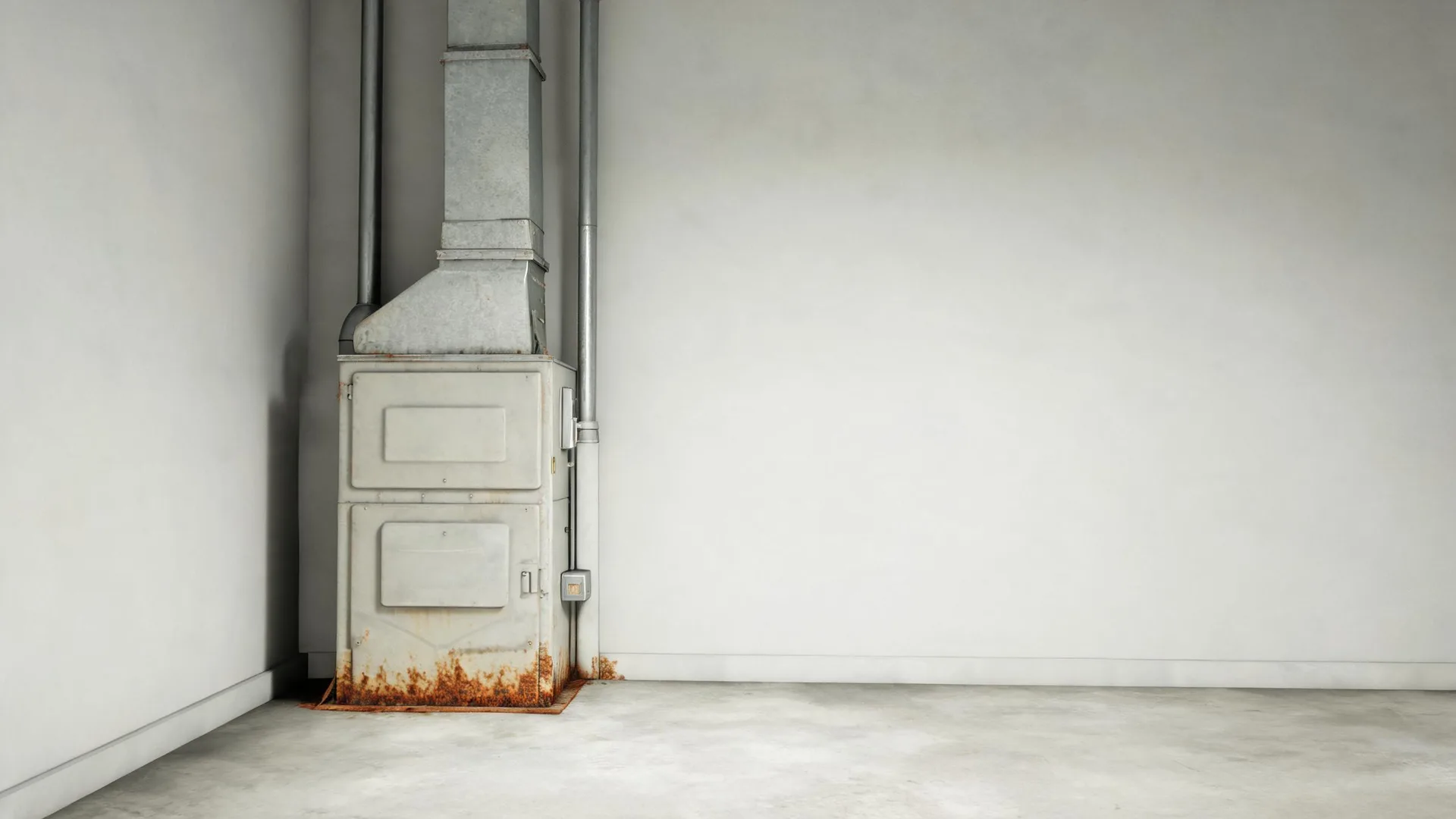
A gray residential gas furnace installed in an unfinished basement, connected to sheet-metal ductwork and PVC pipes.

The part that fails is usually the one that's been working the whole time

Most furnace failures trace back to one part that wears a little every cycle until it finally gives out. The igniter glows hot every time the furnace starts, and that repeated heating and cooling is exactly what makes it brittle over time. The flame sensor coats with a thin layer of residue cycle after cycle until it can't tell the control board a flame is present, so the gas valve shuts back down. Blower motor bearings wear from the hours of runtime, not from any one hard start. None of these fail because of a single bad day. They fail because they've been running the same motion for years and this is the one that didn't hold.

A cracked heat exchanger gets worse under load

A small crack doesn't show up when the furnace is sitting idle. Under heat it expands, and combustion gases that should go out the flue can get pulled into the air the blower pushes through the house. Every additional cycle flexes that crack a little more.

A struggling blower strains the motor meant to outlast it

When airflow is restricted, the blower motor has to work harder to push the same amount of air. That extra load shows up as heat in the motor windings. Bearings built to run for years start wearing down in months when the motor never gets to run the way it was designed to.

Before calling anyone, check the thermostat first. Make sure it's set to heat, not just fan, and that the setpoint is actually above room temperature. Next, go to the furnace itself and look at the filter. Pull it out and hold it up to a light. If you can't see light through it, that's airflow the blower is fighting against, and swapping it in takes a few minutes. Check that the switch on the furnace itself, usually near the door panel, is flipped to on, and that the door panel is seated all the way shut, since most furnaces won't run with it loose. Last, look at the vent pipe outside where it exits the house and make sure nothing is blocking it, no debris, no nest, nothing stacked against it. If the filter's clean, the switch is on, the door's shut tight, and the vent is clear, and it still won't run or won't hold a cycle, that's the point where it's a part inside, not something you can see or reach.

A furnace is worth fixing when the failure is one part in a system that's otherwise sound, which is most of the time. An igniter, a flame sensor, a pressure switch, these get replaced on their own and the rest of the furnace keeps going. What changes the math is the heat exchanger. That's the part that can't be swapped out without basically rebuilding the furnace around it, so a crack there usually means it's time to replace the whole unit instead of patching one piece of it. Age matters less than what's actually broken. A furnace that's been maintained and loses a blower motor is still a furnace worth repairing. One that's already had the heat exchanger go, or that's losing a second major part in the same year, is telling you it's done working this hard to keep up.